
Pepsi: The Recycling Rethink

Pepsi: The Recycling Rethink

Sustainability marketing breaks when the system stays the same

Most sustainability marketing fails when the operating reality does not change, and the message asks consumers to do more while leaving the friction, reward, and moment of action unchanged.

That is exactly the problem here. Special Australia says two out of every three plastic and aluminium containers in Australia still do not get recycled, and Pepsi’s promotion in New South Wales (NSW) only worked because it added a materially better incentive to an existing 10c deposit system in a promotion that ran until 22 November 2025.

The Pepsi example is one of the stronger sustainability ideas in recent memory because it changes the behaviour system, not just the brand message. It also won a Gold Spike in Creative Commerce at Spikes Asia 2026.

Pepsi moved the incentive into the machine

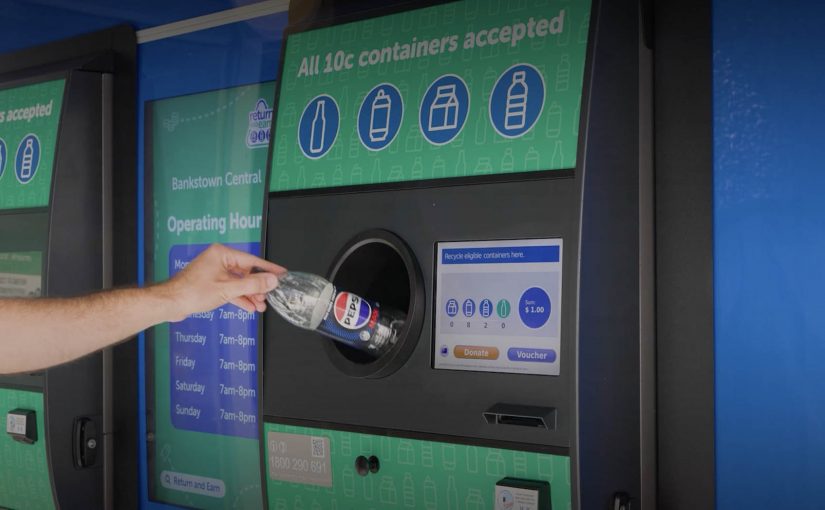
Pepsi worked with TOMRA and the NSW Government-run Return and Earn program to add new code to existing reverse vending machines. A reverse vending machine is an automated kiosk that identifies eligible drink containers and issues the deposit refund. The updated flow let a Pepsi barcode trigger an additional voucher and QR journey on top of the standard 10c return, turning a fixed refund mechanic into a live, brand-specific incentive layer inside an existing public recycling system. Alongside the standard 10c refund, the program also added an A$100,000 bonus prize pool, with rewards ranging from A$100 to A$50,000 for eligible Pepsi containers returned through voucher-printing machines in New South Wales.

In operating terms, this is a physical touchpoint workflow redesign, not a media idea bolted onto recycling.

That distinction matters. The innovation was not the poster, the social edit, or the sustainability language. It was the decision to move the brand intervention into the verified transaction itself, where intent, identity, reward, and action already meet.

The real question is not whether consumers care about recycling. It is whether the system makes the desired action feel worth doing right now.

Because the reward is triggered inside the act itself, the behaviour no longer depends on recall or guilt. It depends on immediate reinforcement.

Why this lands beyond one Pepsi promotion

Award-entry materials published on Lions platform The Work say Pepsi container recycling rose 16% in the first week, that 242,000 people participated after eight weeks, and that the initiative delivered a claimed 37% increase in ROI. The same materials say the code was built for broader rollout, while TOMRA says its reverse vending footprint exceeds 87,000 installations in more than 60 markets.

That is the commercially interesting part. The scarce asset here is not ad inventory. It is installed infrastructure that already sits inside a trusted public behaviour loop.

The lesson for enterprise teams is familiar. You usually get more lift by redesigning the moment architecture than by layering one more awareness burst on top of an unchanged flow.

This is why the idea reads like business-tech translation rather than campaign theatre. Pepsi translated a brand objective into machine logic, barcode recognition, partner coordination, and operational rollout across an existing public system.

It is not infinitely portable. Scale would still depend on program operators, machine access, software control, barcode governance, regulatory approval, fraud prevention, and economics that still work after the novelty wears off.

What enterprise teams should take from Pepsi’s recycling redesign

If you want behaviour change, start by auditing the live touchpoint, not the comms plan. Find the moment where the action is verified, identify what data the system already sees, and then ask whether that data can trigger a better reward, message, or next step without rebuilding the whole stack. What Pepsi and its partners changed was not consumer intent. They changed the structure around the decision.

The takeaway is straightforward: when a habit is stuck, stop spending all your energy on persuasion and redesign the transaction layer where the behaviour actually happens.


A few fast answers before you act

What did Pepsi actually change?

Pepsi did not just run recycling creative around the program. It worked with TOMRA and the Return and Earn system to make Pepsi barcodes trigger an additional voucher and QR-based reward flow inside existing reverse vending machines.

Why is this stronger than a normal sustainability ad?

A normal ad leaves the recycling action unchanged. This idea changed the reward logic at the point of verified behaviour, which gives it more operating value than another awareness message.

Could other brands copy the model?

In principle, yes. Special says the functionality is compatible with TOMRA’s broader machine network, and TOMRA says its reverse vending footprint spans more than 60 markets. Whether another brand could actually deploy it would depend on local program requirements, operator permissions, and commercial logic.

What would stop it scaling?

The main blockers are governance and economics, not creativity. A rollout would need machine access, software control, regulatory approval, barcode integrity, fraud safeguards, and a reward model that still makes sense once expanded.

Did it produce measurable results?

Award-entry materials published on Lions platform The Work say Pepsi container recycling rose 16% in the first week, that 242,000 people participated after eight weeks, and that the initiative delivered a claimed 37% increase in ROI.
S-Oil: HERE Balloons

S-Oil: HERE Balloons

Seoul is often described as having one of the world’s highest levels of gasoline consumption, and parking space is scarce. The everyday cost is not just frustration. It is fuel burned while circling for a spot. One widely cited estimate frames it as roughly 15km a month driven just to find parking, which can add up to about a litre of fuel wasted per driver.

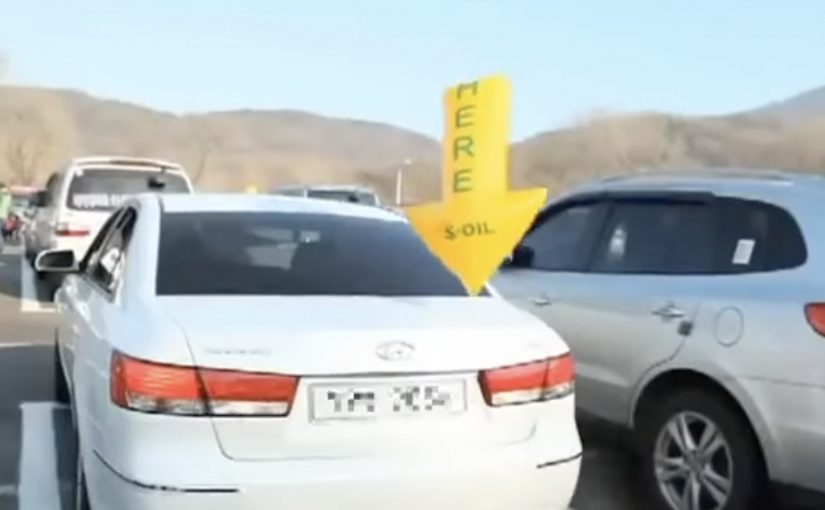
To reduce that waste, South Korean oil brand S-Oil teamed up with Cheil Worldwide and tried a simple visibility hack. In practice, that means turning hidden parking availability into a physical signal drivers can read from a distance. Bright yellow HERE balloons were set up for each parking space. When a car parked, the balloon dropped. When the car left, it rose again. Drivers could spot the balloons from far away and head straight to open spaces without wandering.

A parking signal you can see from across the lot

The mechanism is low-tech but precise. Each space gets a tall, arrow-shaped balloon tethered so that occupancy physically pulls it down. Availability lets it float up. The whole system turns a hidden status. “Is this space free?” into a visible skyline of yes and no.

In dense Asian megacities where time, congestion, and emissions compound daily, the best “smart city” ideas are often the ones that remove searching rather than adding instructions.

The real question is how quickly you can make a hidden status visible enough to remove wasted movement at scale.

Why it lands

This works because it attacks a behaviour, not an attitude. Drivers do not need to be persuaded to care about fuel. They just need the environment to stop making them waste it. The balloons cut decision time, reduce aimless loops, and make the correct action obvious without signs, apps, or learning curves.

Extractable takeaway: When your outcome depends on reducing “search”, do not ask people to change intent. Change visibility. Make the correct option legible from far away, and the behaviour shifts on its own.

What the results are described to show

Campaign reporting describes the one-day test as saving about 23 litres of fuel across roughly 700 cars. The same reporting frames the real opportunity as scale. If you replicate a small efficiency across many lots and many days, the cumulative savings become meaningful.

What parking and place teams can steal

  • Turn status into a skyline. If availability is the problem, make it visible at distance.
  • Prefer passive systems over active ones. No app installs, no user training, no instructions needed.
  • Design for the first two seconds. The idea must be understood instantly from a moving car.
  • Measure the behavioural delta. Track circling reduction, time-to-park, and fuel impact, not just “awareness”.

A few fast answers before you act

What are S-Oil “HERE” balloons?

They are arrow-shaped balloons installed above parking spaces that rise when a space is free and drop when a car occupies it, so drivers can spot availability from a distance.

What problem does the idea solve?

It reduces fuel and time wasted while drivers circle looking for a space by making empty spots immediately visible.

Why use balloons instead of an app?

Balloons work for everyone instantly, without installs, connectivity, or attention on a screen. The signal is in the environment where the decision happens.

What results were reported?

Campaign reporting describes a one-day test where roughly 700 cars saved about 23 litres of fuel, with larger savings possible if scaled.

How can a city or brand adapt this approach?

Pick a “hidden” status that causes wasted movement, then create a physical signal that is readable at distance and updates automatically with the real-world state.

Volkswagen: The BlueMotion Label

Volkswagen: The BlueMotion Label

A magazine gets read, then it gets tossed. The campaign framing cites a blunt number: 77% of magazines, along with their ads, end up in the trash, which makes the medium itself feel like waste.

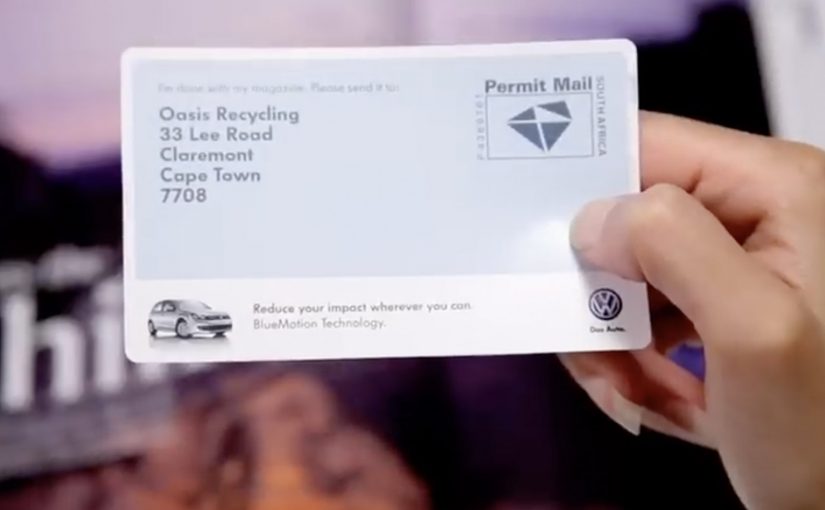
So when Volkswagen wants to promote the eco-conscious thinking behind its BlueMotion vehicles, Ogilvy develops a print insert that does not just talk about recycling. It makes recycling the default next step.

The insert is designed to get people in Cape Town to recycle their magazines via the city’s post boxes. Once you are done reading, you use the insert and drop the magazine into a post box, turning postal infrastructure into a recycling pathway instead of sending the paper to landfill.

When the medium becomes the message

The mechanism is a print ad that changes the fate of the print medium. Instead of adding more paper persuasion, it converts the entire magazine into something that can be routed to recycling, using a familiar behavior, posting, to remove the friction of “finding a recycling option”.

In consumer marketing, “sustainability” claims land best when the communication channel follows the same rules the product is asking people to adopt.

The strongest sustainability advertising makes the medium do part of the environmental work itself. The real question is whether the communication changes the waste behavior around the product, or just describes a greener intent.

Why it lands

This works because it removes hypocrisy. If you are going to sell eco-conscious thinking, your ad cannot behave like disposable clutter. By turning the magazine itself into the recyclable object, the campaign gives people a satisfying feeling of doing the right thing with almost no extra effort, and it makes the brand promise feel practical rather than moralizing.

Extractable takeaway: If your benefit is “less waste”, design the communication so it physically reduces waste, and let the proof be the experience, not the copy.

What to borrow from the BlueMotion Label

  • Replace messaging with utility. If you can change behavior directly, you do not need to preach.
  • Use existing infrastructure. People already know how to use post boxes, so adoption is friction-light.
  • Make the action one-step. The closer the action is to the moment of disposal, the higher the follow-through.
  • Make the proof visible. A physical insert is something people can show, talk about, and demonstrate.

A few fast answers before you act

What is “The BlueMotion Label”?

A Volkswagen BlueMotion print insert designed to make magazine recycling easy by letting readers use post boxes to route finished magazines into a recycling flow.

Why is this stronger than a standard eco-themed print ad?

Because it behaves like the promise. It reduces waste through the ad itself, instead of adding more disposable paper to argue about sustainability.

What behavior change does it target?

Moving magazines from “trash by default” to “recycle by default” at the exact moment people finish reading.

What is the key execution ingredient?

Friction removal. The action must be simple enough that people will do it immediately, without searching for a recycling option.

When should brands use this pattern?

When your claim depends on credibility, and you can redesign the medium or distribution so the communication itself demonstrates the value.