BredaPhoto: Infiltrating Holiday Prints

BredaPhoto: Infiltrating Holiday Prints

BredaPhoto is a photo festival in the Netherlands. In 2010 it ran between September 16 until October 24. During this period, Breda lives and breathes photography. Photographers from all over the world come to show their vision on a present world that feels upside down.

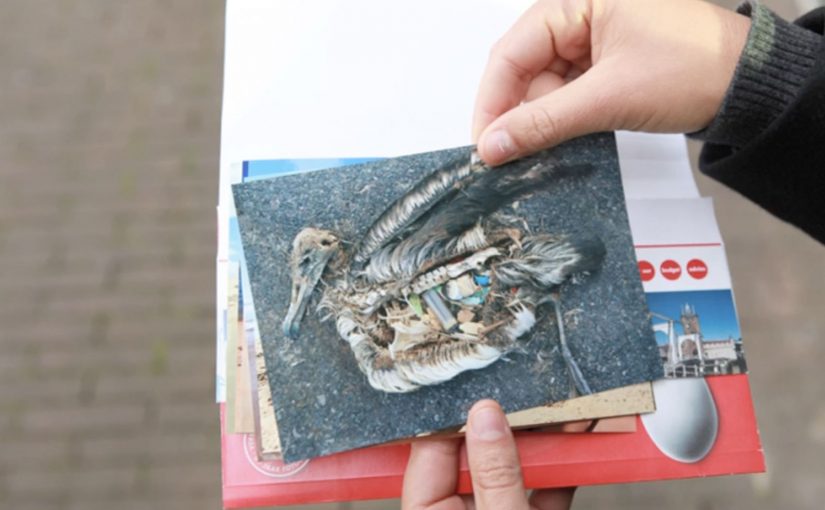
In order to encourage more people from the surrounding areas to visit the festival in 2010, the team used the end of the Dutch holiday season to step directly into the comfort zone of their target group. They tied up with 12 regional photographic shops who, while printing holiday photos, also provided a photo from the BredaPhoto festival.

The contrast between the holiday photos and the festival images was so stark that it is reported to have drawn 55,000 visitors, described as a record for the festival.

Holiday prints as a distribution channel

The insight is almost embarrassingly practical. After holidays, people already walk into photo shops with emotion in hand and a willingness to look at images. BredaPhoto does not try to interrupt that behavior. It inserts itself into it.

The mechanic: a surprise image in the envelope

The “infiltration” is literal. Every time someone picks up their printed holiday photos, they also receive one festival photo. No extra decision. No extra trip. The festival’s work lands in the same stack as the family memories it will be compared against.

In European cultural festivals, partnerships that piggyback on an existing routine like printing holiday photos can outperform broad awareness media because they reach people at a moment of high receptivity.

Why the contrast does the persuasion

Holiday photos are comfort. Festival photography is often confrontation, curiosity, or a sharper point of view. Put them side by side and the festival image does not need a manifesto. The viewer feels the difference instantly, and that feeling creates the urge to see more.

Extractable takeaway: If your product is “new perspective”, deliver one sample at the exact moment people are already consuming the old perspective, then let comparison do the selling.

What this is really optimizing

This is not just reach. It is qualified reach. Anyone printing holiday photos has already self-identified as someone who cares about images, and the distribution happens locally, which reduces the friction between “interesting” and “I could actually go”.

The real question is how to put one credible sample of the festival in front of the right local audience before asking them to commit a visit.

This is a smarter local-growth play than buying broad awareness and hoping interest shows up later.

What event marketers should steal from this

  • Hijack a routine with built-in attention. Choose a behavior where people already expect to look carefully.
  • Make sampling unavoidable but tasteful. Put the sample in the default flow, not behind an opt-in form.
  • Use contrast as your copy. If the product difference is visual, show it next to the audience’s baseline.
  • Localize distribution. When the event is physical, use channels that keep the distance to action short.

A few fast answers before you act

What did BredaPhoto do to attract visitors in 2010?

They partnered with regional photo shops and slipped a festival photo into customers’ holiday print orders, so people encountered the festival work while collecting their own photos.

Why does this work better than a normal poster campaign?

Because it reaches people when they are already engaged with images, and it delivers a concrete sample of the festival’s point of view instead of a promise.

What is the key design principle behind the tactic?

Make the first experience of the product frictionless. One unexpected image in the envelope is enough to trigger curiosity and intent.

Why were photo shops the right channel for this?

Because the audience was already in a visual mindset and already handling printed images, which made the festival sample feel relevant instead of intrusive.

What kind of events should copy this approach?

Events that sell perspective, taste, or discovery. Especially when the audience already has a routine where they consume similar media, like prints, tickets, playlists, or screenings.


Mercedes-Benz: Flying Car

Mercedes-Benz: Flying Car

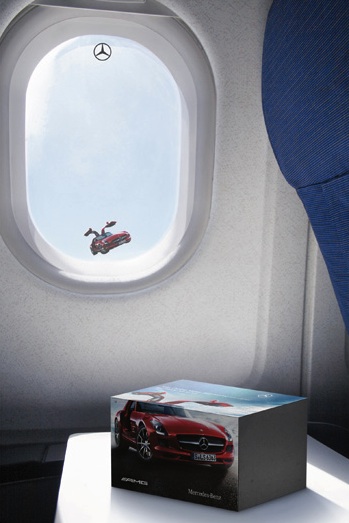
Mercedes-Benz, with the help of Ponto de Criacao from Brazil, executed a highly segmented vertical action to increase visibility for the brand among top executives and business people. Here, “vertical action” means a narrowly targeted activation placed in a single corridor that concentrates the exact audience you want.

Flying Car by Mercedes Benz

As a courtesy, passengers also received a miniature car.

Flying Car by Mercedes Benz

In one month, 100% of the target audience was reached, nearly 400 executives.

In premium automotive marketing aimed at senior business travelers, attention is scarce and context is often the only reliable way to earn it.

When the audience is this narrow and valuable, precision distribution can outperform broad reach because the placement becomes the idea.

Why this placement is so effective

The mechanism is simple and the payoff is immediate. By turning the aircraft window into the “media unit,” the mind completes the illusion, which makes the moment feel native, surprising, and worth retelling.

Extractable takeaway: When your audience is concentrated in a repeatable corridor, design a message that only works in that context so the situation does the persuasion for you.

  • Context does the work. The illusion only makes sense in-flight, which turns a standard window view into a brand moment.
  • Precision beats scale. Shuttle flights concentrate the exact audience Mercedes-Benz wanted, without wasting impressions.
  • Low friction, high memorability. A simple sticker creates an instant “did you see that?” effect, then the miniature car extends the memory.

What to take from it

The real question is which high-value corridor your audience repeats, where attention is naturally high, and where your message can feel native instead of intrusive.

When the audience is narrow and valuable, distribution can be the idea. This activation did not rely on complex tech. It relied on selecting the right corridor, placing the message where attention is naturally high, and creating a visual that feels native to the moment.

  • Start with the corridor. Identify the repeatable moment where your audience is already together and already looking.
  • Make the context do the explaining. Build the visual so it only makes sense there, so the placement becomes the punchline.
  • Extend the memory. Add a small, simple takeaway that keeps the moment alive after the corridor ends.

A few fast answers before you act

What was “Flying Car” by Mercedes-Benz?

It was a targeted activation that placed SLS AMG window stickers on shuttle flights, creating the illusion of the car “flying” outside the aircraft window for executive travelers.

Why use shuttle flights for this?

Because those routes clustered top executives and business travelers, delivering near-perfect audience fit with minimal wasted reach.

What role did the miniature car play?

It extended the experience beyond the flight as a physical takeaway, reinforcing recall after the moment passed.

What is the transferable pattern?

Pick a narrow, high-value corridor, design a context-native visual that only works there, then add a small extension to carry the memory forward.

How do you apply this pattern without access to flights?

Find any repeatable corridor that concentrates your audience, then design a context-native cue that only works in that moment and can be carried forward with a simple takeaway.

LavOnline: Tomato Splat

LavOnline: Tomato Splat

A direct mail piece that dares you to make a mess

In Italy, awareness and penetration of online laundry services is described as low. LavOnline asked DDB Milan to build awareness and engagement by stressing two core benefits. Speed and simplicity.

The target was narrowed to young managers and professionals. People who work long hours and struggle to find an open shop after leaving the office. The solution was a playful direct mail pack sent to 1,000 time-strapped recipients that turns “laundry” into an action you can do in seconds.

The mechanic: splat a tomato, watch it spring back

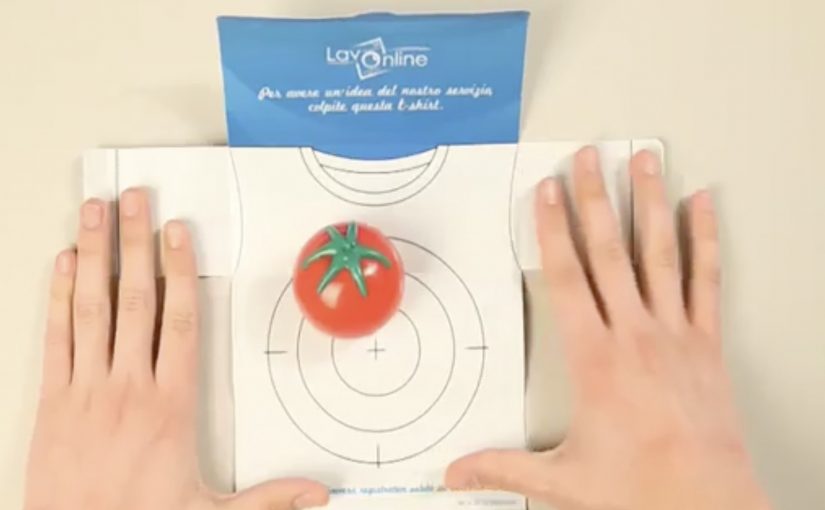
The mailer opens into a white t-shirt shape with a target at the center. Inside is a squishy tomato toy that recipients are encouraged to splat. The toy “splat” moment creates a satisfying mess, then reforms back into a neat tomato, mirroring the promise of a fast, simple service that handles stains without fuss.

Recipients are then pushed to act. If they enjoyed the experience, they are prompted to register on www.lavonline.it, try the service, and tell friends.

In consumer services marketing, interactive direct mail can outperform broad awareness when the physical action demonstrates the product promise faster than a paragraph of copy can.

Why it lands

The idea is built around a smart contradiction. To sell “no hassle laundry,” you briefly invite the audience to create hassle on purpose. That tension makes the piece memorable, and the reset behavior turns the metaphor into proof. It is also office-friendly. It sits on a desk, attracts curiosity, and naturally recruits secondary viewers who want to try the splat for themselves.

Extractable takeaway: If your promise is “simple and fast,” build a physical interaction that creates a tiny problem, then resolves it instantly. The resolution is the message people remember.

What the numbers are trying to prove

Results are reported as unusually strong for a targeted mailer. Within four weeks, 32% of recipients registered, 8% tried the service, and overall site traffic increased by 15%. The bigger point is not the percentages. It is that a single tactile mechanic turned a low-awareness category into a story people wanted to repeat. The real question is how to make an invisible service feel tangible before asking for sign-up. This is a stronger awareness play than a conventional mailer because the interaction makes the service promise feel real.

What to borrow from Tomato Splat

  • Make the benefit physical. Do not describe speed and simplicity. Demonstrate them with an action that resolves fast.
  • Target by daily friction. “No time after work” is a sharper trigger than broad demographics.
  • Design for desk spread. If the object invites a second person to try it, your reach multiplies inside the office.
  • Keep the CTA immediate. One link, one next step, no extra explanation required.

A few fast answers before you act

What is LavOnline’s “Tomato Splat” campaign?

It is an interactive direct mail activation where a mailed pack invites recipients to “splat” a tomato toy on a t-shirt target, then uses that quick reset metaphor to promote a fast, simple online laundry service.

Why use a physical mailer for an online service?

Because the physical interaction creates attention and memory in a category people ignore, then funnels that attention to a single online registration step.

What is the core creative mechanic in one line?

Create a small mess, then instantly restore order. A tactile metaphor for stain removal and convenience.

Why does this work for busy professionals?

The interaction is fast, playful, and office-compatible, and it speaks directly to the “no time after work” friction that blocks traditional laundry trips.

What is the main transferable principle?

When your value proposition is experiential, make the audience perform a micro-version of the experience, then connect it to a frictionless next step.