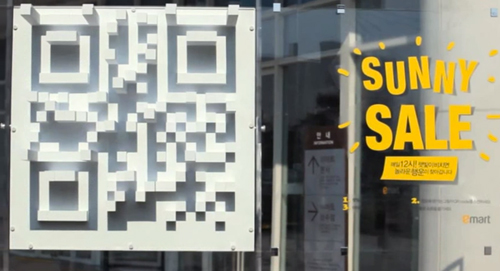
Last month, McDonald’s in Canada created a billboard that could only be seen in the night with car headlights.
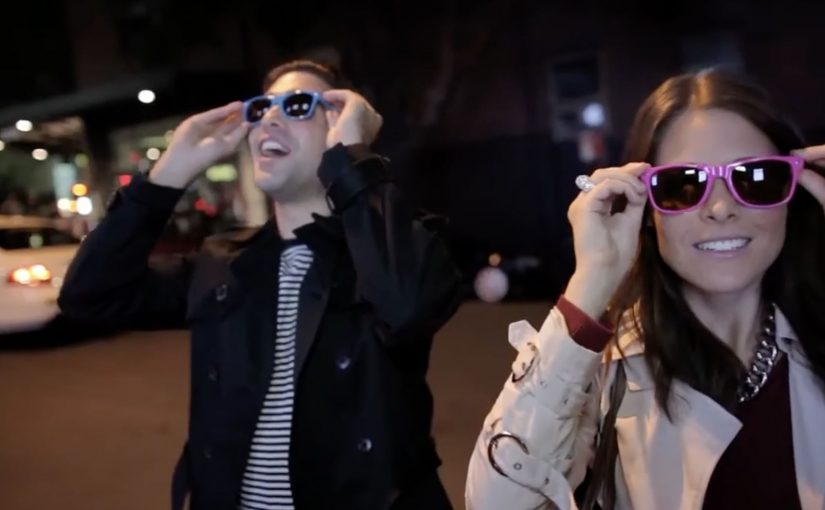
Now Lynx, for its “Unleash the chaos” campaign in Australia, replaces the windows of a house in Sydney with special LCD screens. Sexy hostesses stationed outside hand out polarized sunglasses to passersby, and the glasses suddenly unveil the chaos going on inside the house.
In consumer marketing, “invisible” media works best when the reveal is a reward that feels discovered, not delivered.
What makes this an “invisible ad”
An invisible ad is a message that is intentionally hidden in plain sight, then revealed only when the audience meets a condition. Here, the condition is wearing polarized lenses, which gate what the screens are able to show.
The result is a street-level experience that looks ordinary to everyone, but becomes explicit and chaotic for the people who opt in by putting on the glasses.
The mechanism: selective visibility creates instant intrigue
The setup is simple and bold. Take an everyday terrace house. Swap its windows for LCD panels. Hand out sunglasses that make the content readable. Suddenly the street becomes a live demo, with the audience in control of whether they see it.
Coverage of the activation describes it as part of the Lynx Anarchy launch, produced as a filmed stunt to capture reactions and extend reach beyond the street.
Why it lands: it feels like a secret you earned
Outdoor advertising usually broadcasts. This flips the script. The street stays “clean” until you choose to participate, and that choice makes the reveal feel more personal, more exclusive, and more share-worthy.
It also borrows a familiar human impulse. If someone hands you “special glasses”, you want to know what you’re missing without them.
What the brand is buying with this kind of stunt
- Permissioned attention. People self-select into the experience rather than being interrupted.
- A built-in talk trigger. The format is easy to explain and retell, even without showing the content.
- Proof of product personality. The medium embodies the message. Chaos is not only said, it is staged.
What to steal for your next “hidden in plain sight” idea
- Make the reveal binary. Either you see nothing, or you see everything. Half-reveals feel like malfunctions.
- Let the audience choose. The opt-in moment (taking the glasses) is what creates commitment.
- Design for spectators too. Even people who do not opt in should understand that something is happening, and feel curious.
- Film reactions as a second asset. The live moment is local. The reaction video travels.
A few fast answers before you act
What is a brand “invisible ad”?
It is an ad designed to look blank or ordinary until a specific condition reveals it, such as headlights at night or special glasses in daylight.
What is Lynx doing in the Invisible Ad stunt?
Lynx replaces a house’s windows with screens and hands out polarized sunglasses that reveal hidden content, turning an ordinary street view into a private, chaotic reveal.
Why use polarized sunglasses as the trigger?
Because it creates an opt-in moment. People decide to participate, and that choice makes the reveal feel earned and more memorable.
What is the strategic benefit of hiding the message?
Hiding the message creates curiosity, controls who sees the explicit content, and makes the experience feel like a secret worth sharing.
How do you scale a one-street activation?
By designing it to be filmed, then distributing the reaction footage as the wider campaign asset.