ALIS: Election Poster Skate Attack

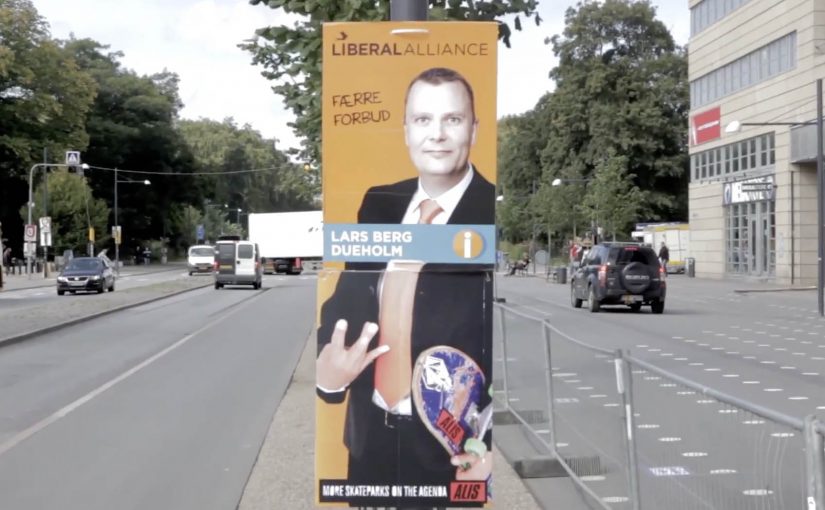
Original Danish election posters go up as usual. Then ALIS adds a few new visual elements that flip the meaning, ending with a simple line: “more skateboards on the agenda.”

“Take action in your life and reALISe your dreams” is the intention behind ALIS, established by Albert Hatchwell and Isabelle Hammerich and grown from an underground movement in Christiania into a company that creates opportunities and inspiration.

In a fun and well-thought guerrilla activity in Denmark, ALIS takes existing election posters and extends them with a skateboarding twist. The result sits right on the boundary between civic campaigning and street culture, using the familiarity of political posters to smuggle in a different agenda.

A guerrilla twist on election season

The mechanic is simple. Start with something everyone recognizes, a candidate poster. Add just enough to reframe it. Then leave it in the wild so people discover it, photograph it, and spread it for you.

In Nordic youth-culture marketing, repurposing civic symbols can earn disproportionate attention when the tone stays playful rather than destructive.

Why it works as shareable street media

It is instantly legible. You do not need to know the brand, the candidate, or the backstory. The “before and after” reads in a second, and the idea feels like a wink rather than a lecture.

Definition-tightening: this is an ambient execution. It uses the city’s existing media inventory, posters already placed for public attention, and turns it into a new message layer without buying more space.

What ALIS is really buying

This is identity reinforcement. ALIS signals what it stands for, skateboarding and youth culture, by inserting itself into a mainstream moment and making it feel slightly more “theirs”. The budget stays low because the distribution is social. The street provides the first audience. Cameras and sharing provide the second.

What to steal for your next low-budget stunt

  • Borrow a familiar format. Start with something people already read without thinking.
  • Change one thing that changes the meaning. The smallest edit with the biggest reframe wins.
  • Design for photos. If it does not capture clearly, it will not travel.
  • Keep it non-destructive. Playful add-ons land better than anything that looks like vandalism.

A few fast answers before you act

What is “Election Poster Skate Attack”?

A guerrilla-style ALIS action that adds skateboard-themed elements to existing Danish election posters, ending with the message “more skateboards on the agenda.”

Why use election posters as the canvas?

Because they are already designed to grab attention in public space. A small twist on a familiar political format becomes instantly noticeable.

What makes this feel “earned” rather than “paid”?

The distribution comes from discovery and sharing. People see it, smile, photograph it, and pass it on without needing media spend.

What is the main risk with poster hacks like this?

Being perceived as vandalism. The execution needs to read as a light, non-destructive add-on, not damage.

How can a brand apply the pattern safely?

Borrow a recognizable public format, alter it with a single clear reframe, and ensure the intervention is reversible and legally defensible.
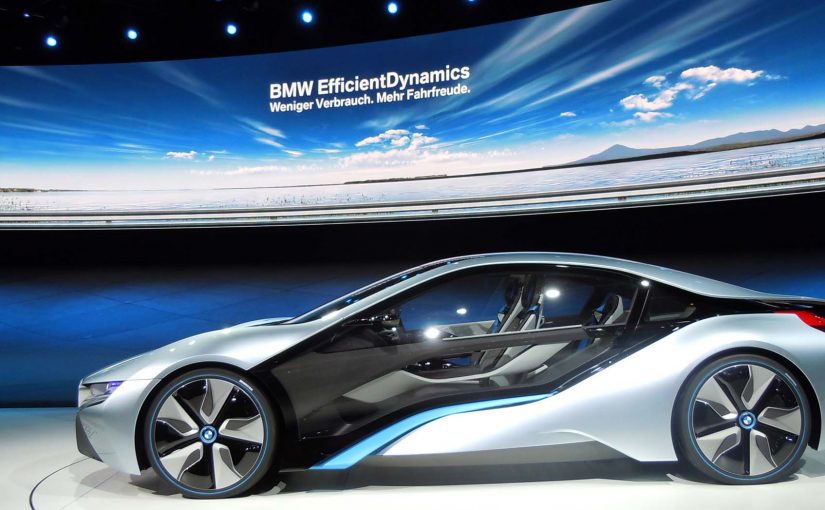
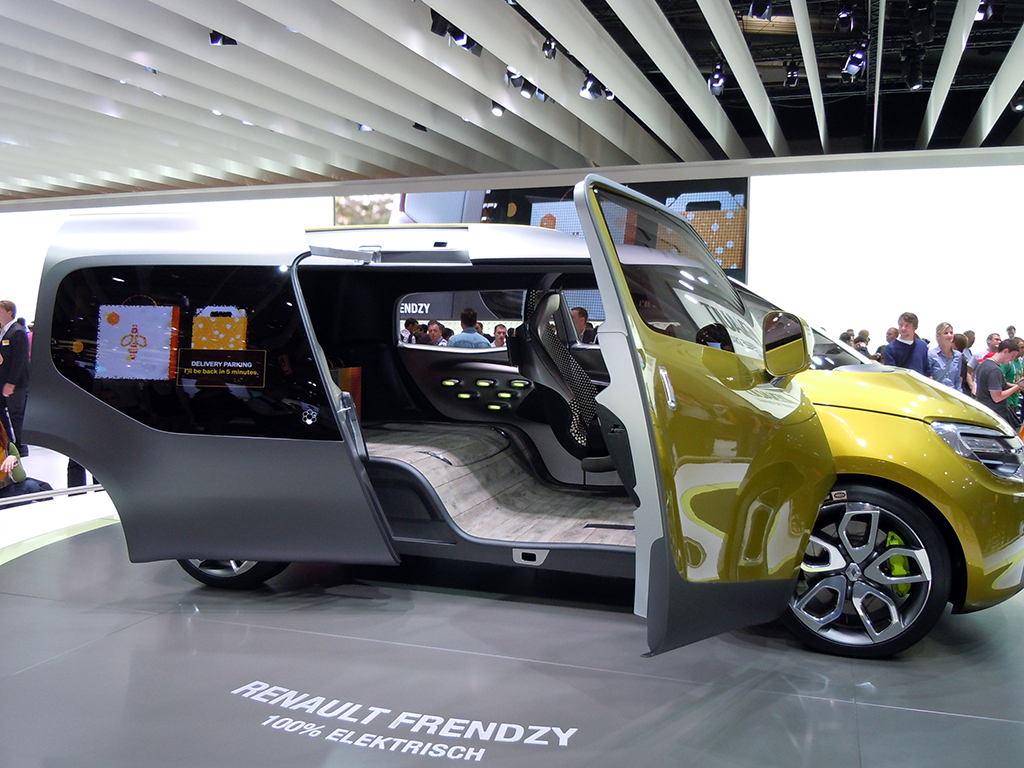
IAA Walk of Innovations – 2011

I was at the IAA 2011 this Saturday, and I got a glimpse of our automobile future. It felt awe-inspiring. Almost all electric. Fully computerized. Interactive dashboards and even window displays.

But while I looked at the cars with amazement, I kept a close look out for innovative implementations of “today’s” cutting-edge technologies. I was curious to see how car makers use touch displays, social media, QR codes, and augmented reality to engage visitors at such a massive event.

Renault Frendzy. 100% Electric

Here is a quick photo report of what I found interesting and innovative at the show.

Volkswagen

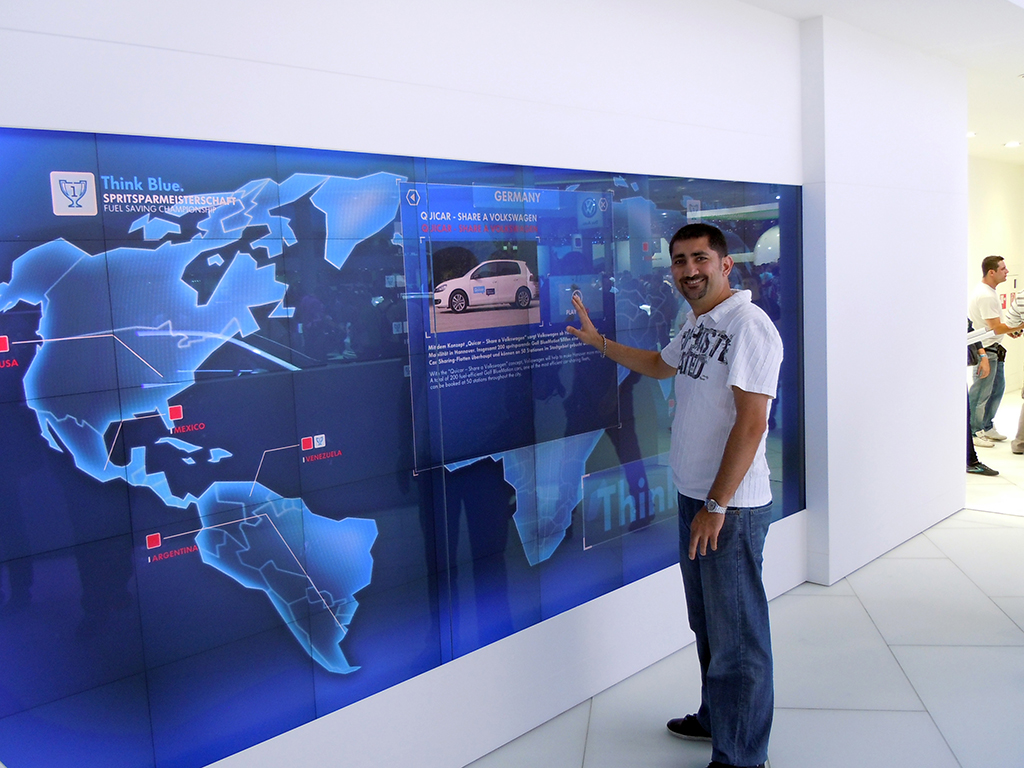
Volkswagen Interactive Motion Display

The Volkswagen BlueMotion technology was presented through a huge motion-based interactive display. Visitors did not need to touch the display. They used various gestures to navigate through the menu options.

Renault

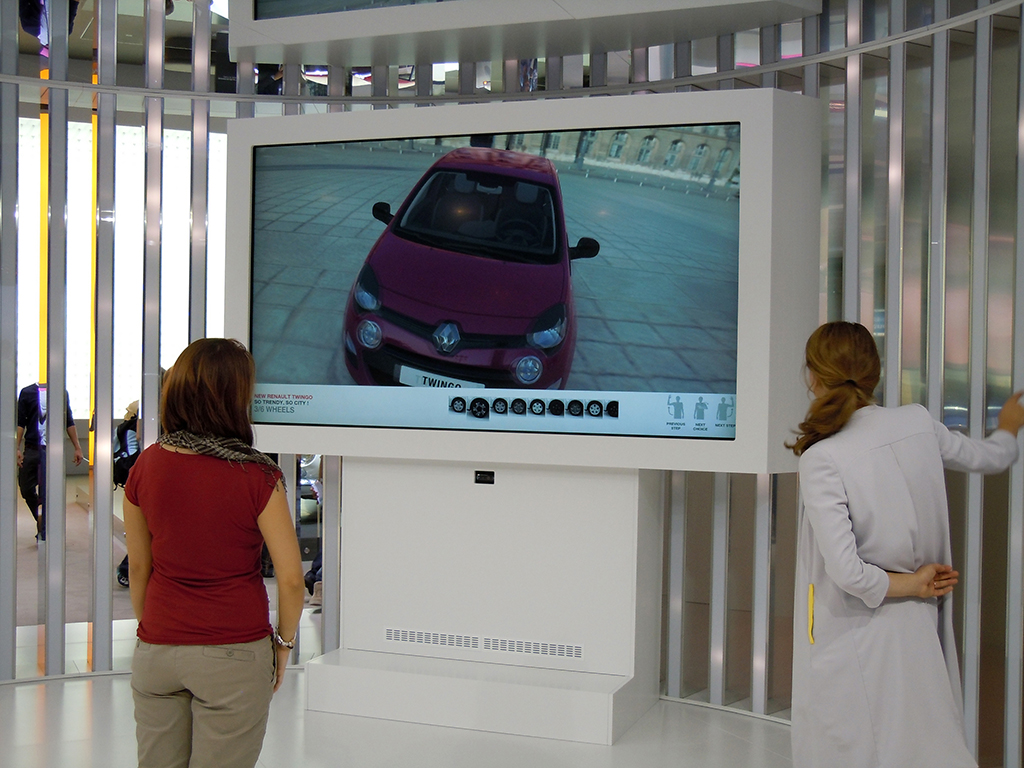
Renault Twingo

Visitors used the motion-based interactive display to learn more about the Renault Twingo. They could also change the colors of the model and watch demo videos.

Hyundai

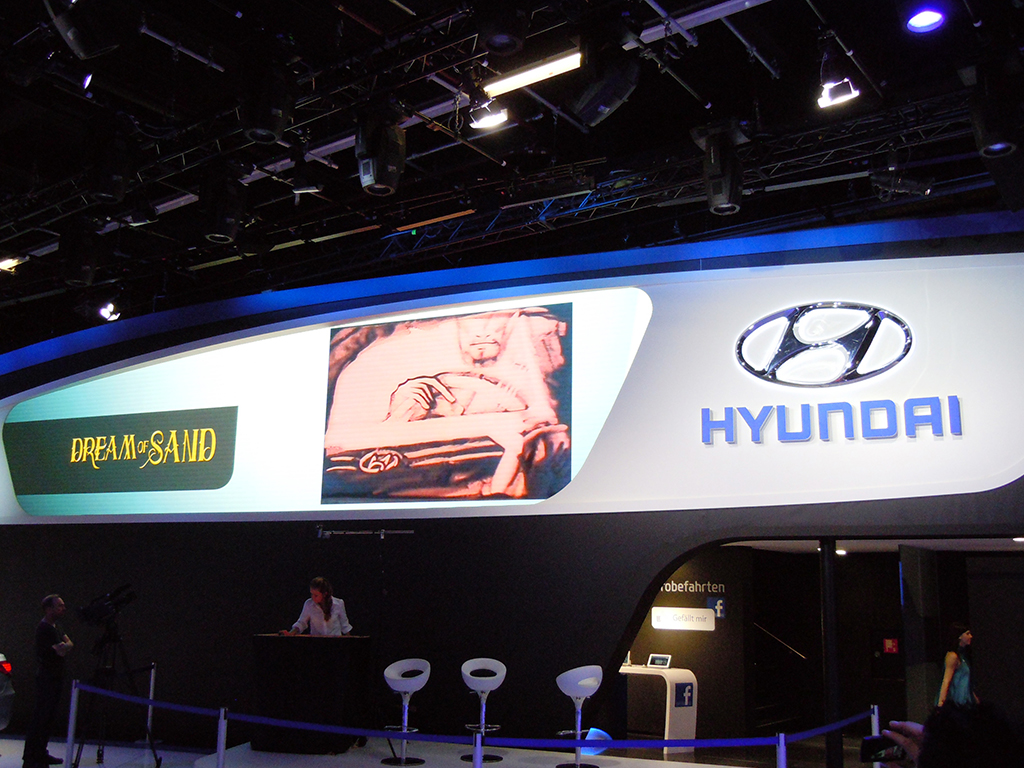
Dream of Sand

The main draw at the Hyundai stall was the “Dream of Sand” show by Svetlana Goncharenko and Natalya Netselya, who created vivid pictures in real time using sand.

Hyundai was also one of the only car brands trying to connect the stand with Facebook. Visitors needed to “Like” the Facebook page in order to be part of a lucky draw that gave them a chance to drive a Hyundai dream car. Important details like the fan page URL and contest information were not visible, or not easily accessible.

Skoda

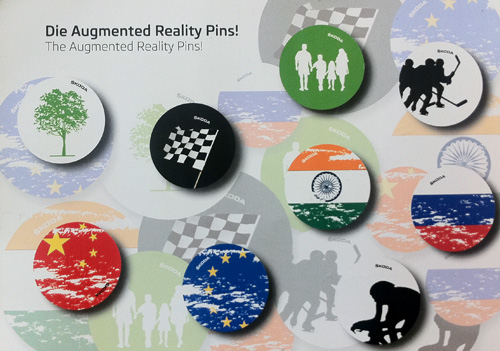
Skoda Augmented Reality Pins

Skoda gave visitors augmented reality pins. The Junaio AR app was used to scan the pin and activate the augmented reality. Most of the pins were gone by the time I got there, so I scanned the info card instead. It did not trigger the 3D surprises that the pins would, but it did offer a set of regional videos.

Citroën

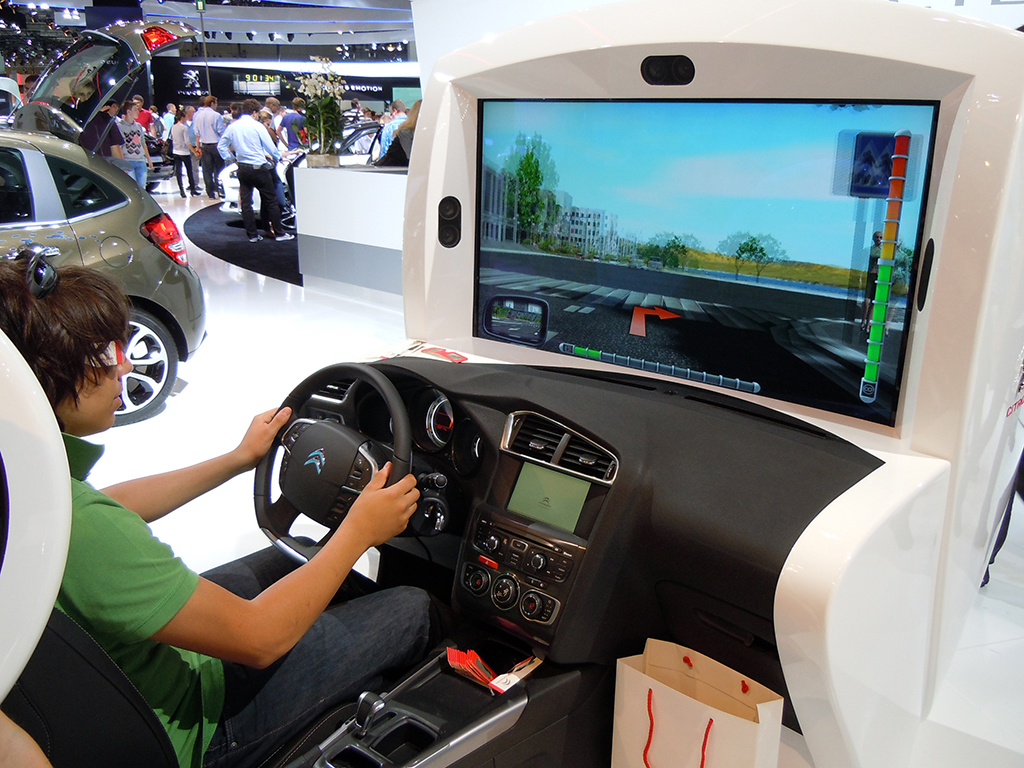
Citroen Eco Drive

At the Citroën Eco Drive simulator, visitors could take the car for a 3D test drive.

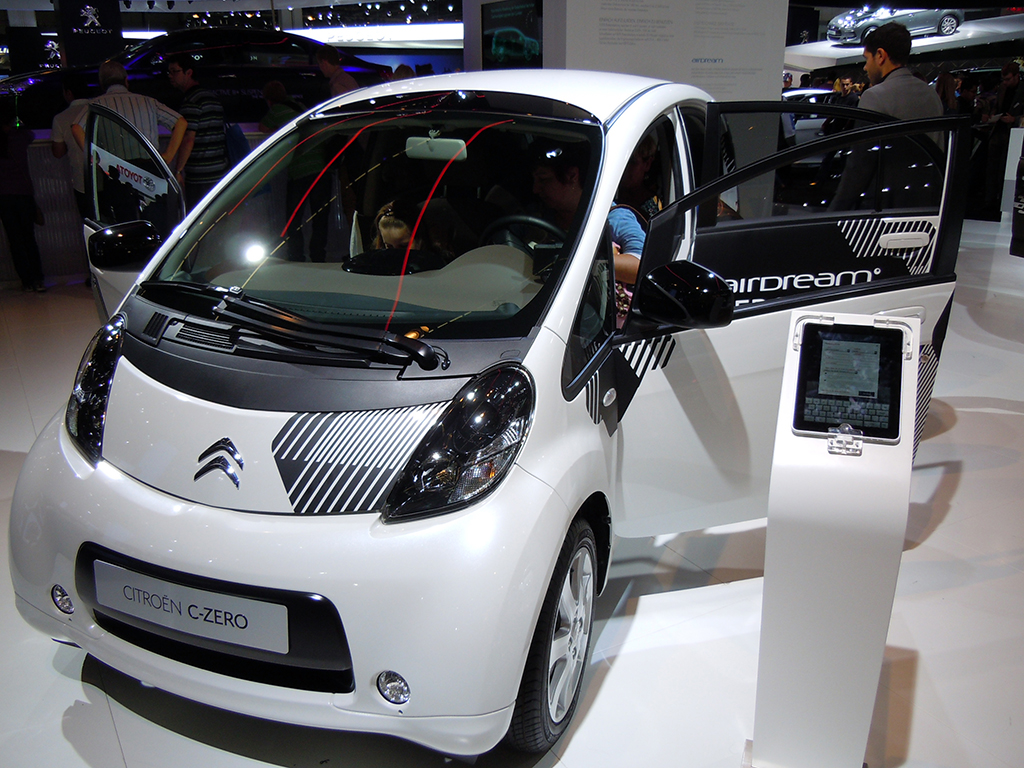
Citroen C-Zero

iPads were used by many car manufacturers to interactively share model specifications, videos, brochures, and to take automated enquiries from high-potential buyers.

Opel

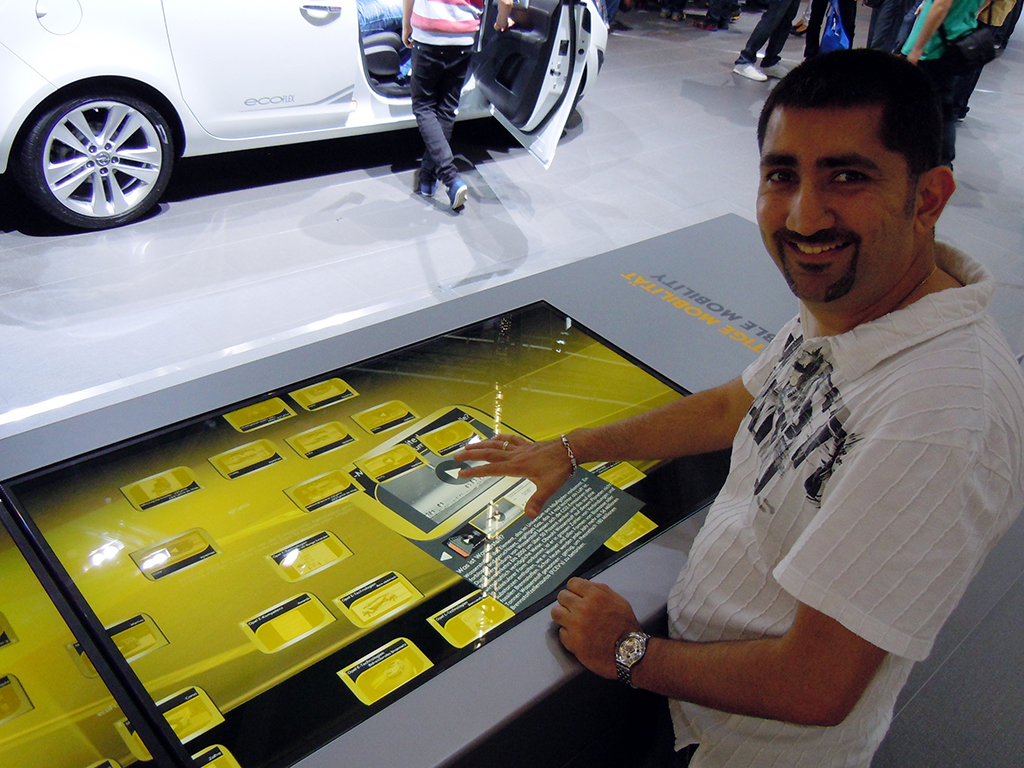
Opel Microsoft Surface setup

Opel used Microsoft Surface technology to share information about its cars. This was my first live experience with Surface. It worked much like the Apple touch interface, even though it did not feel as sensitive and smooth.

Ford

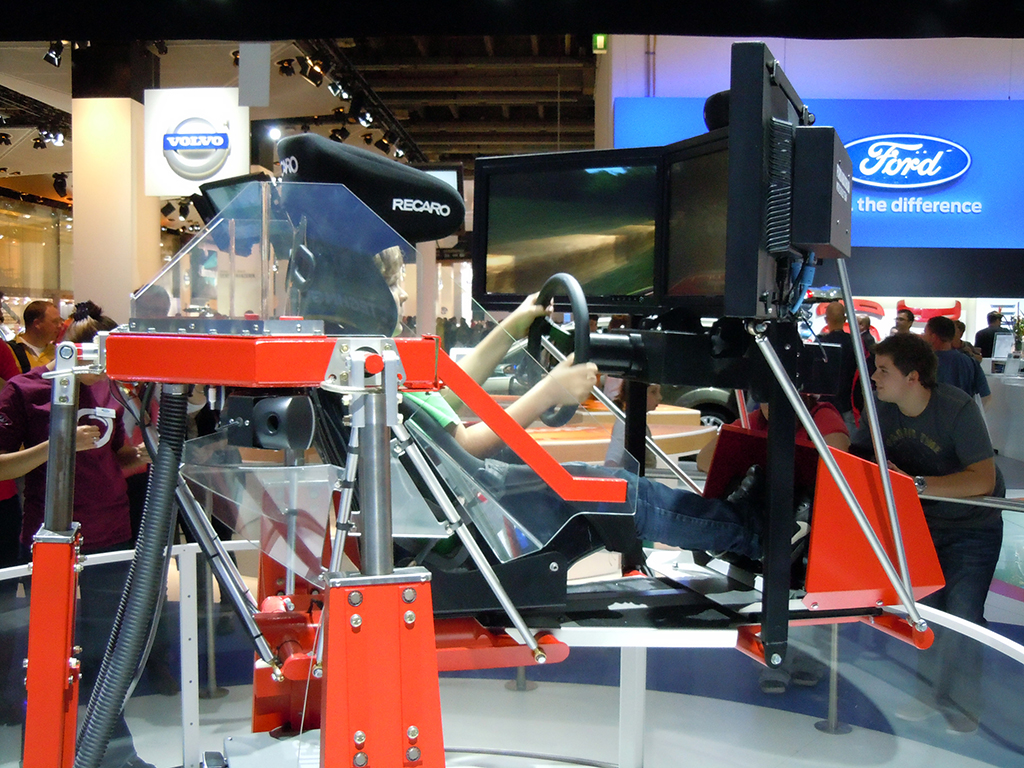
Ford Simulator

Ford, like Citroen and Volvo, set up a car simulator at its stand.

Ford Stamps

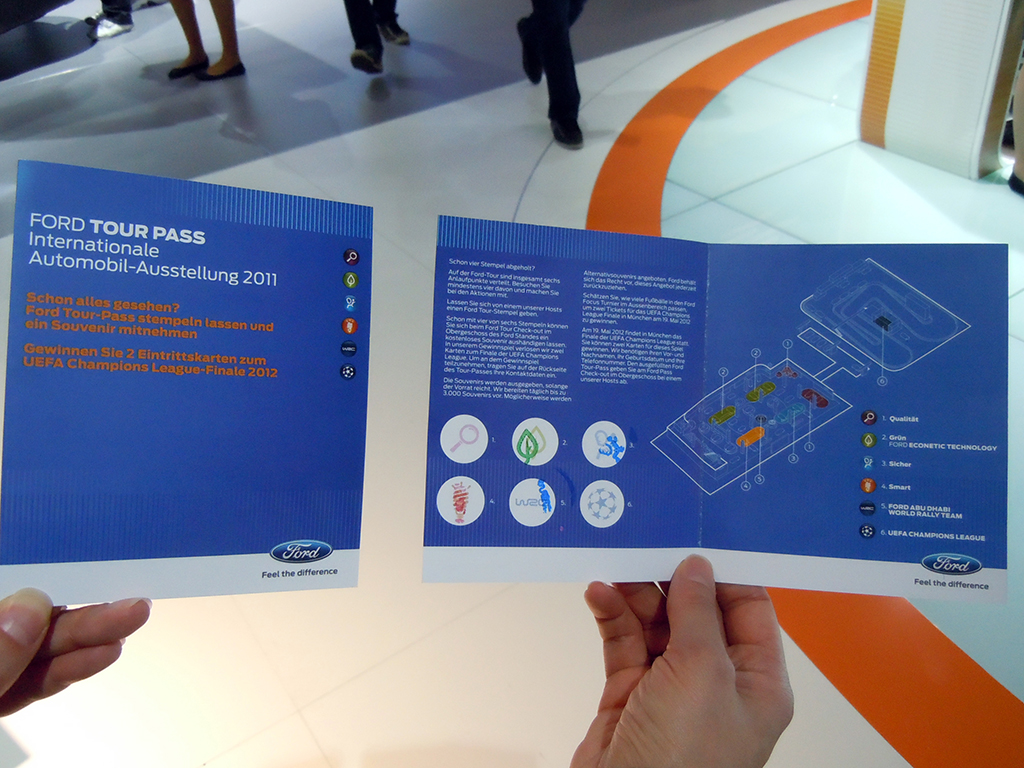
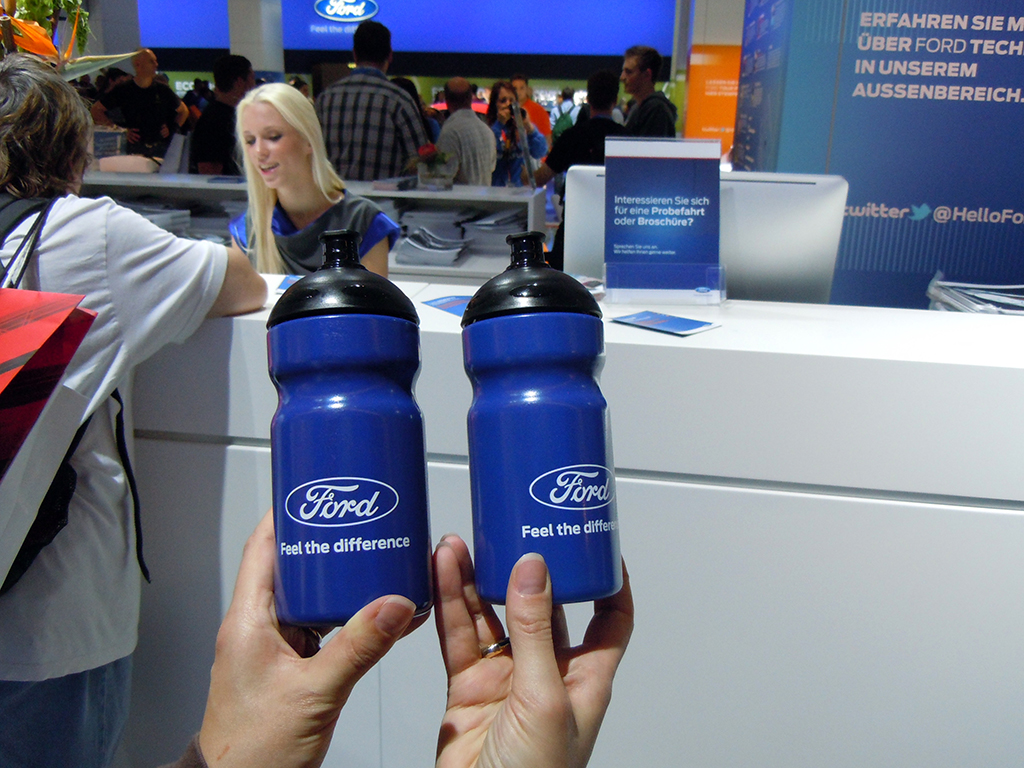
They also engaged visitors with a small “collect the stamps” game. The game made visitors go to each section of the Ford stand, correctly answer some easy questions related to the car and technology, collect the stamps, and get Ford-branded water bottles. Visitors could also play further and win two tickets for the UEFA Champions League Final in 2012.

Ford Bottles

Chevrolet

Chevrolet Volt

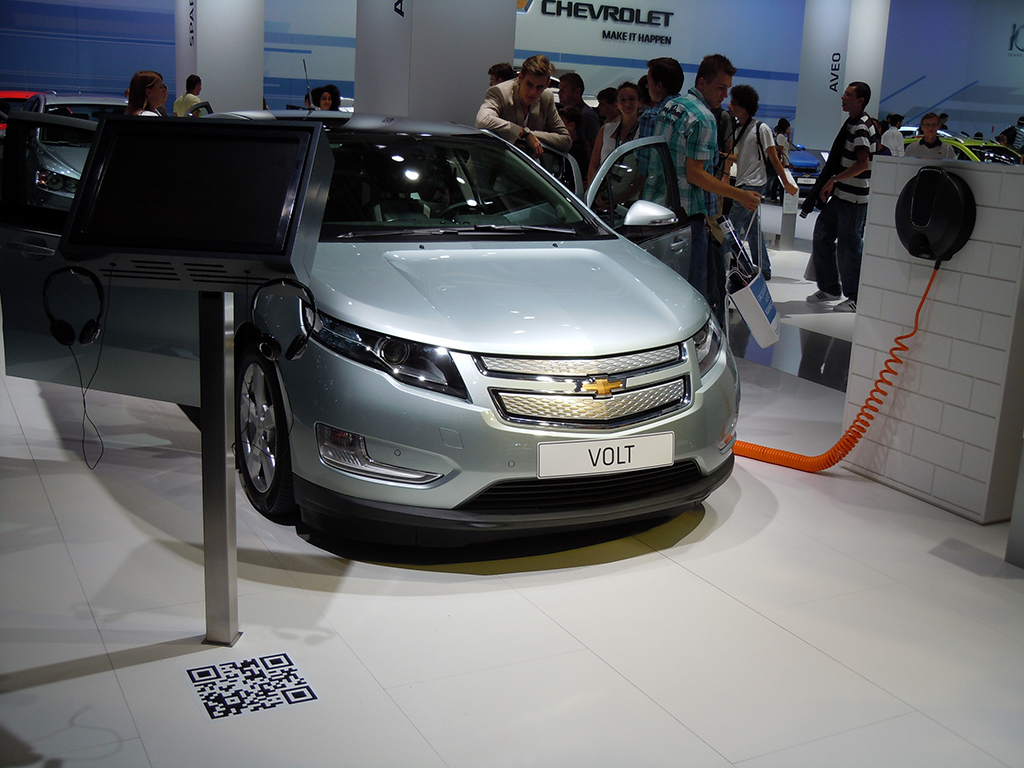
Visitors could scan the QR code on the floor to view a short Chevrolet Volt specs video.

Volvo

Volvo Sailing

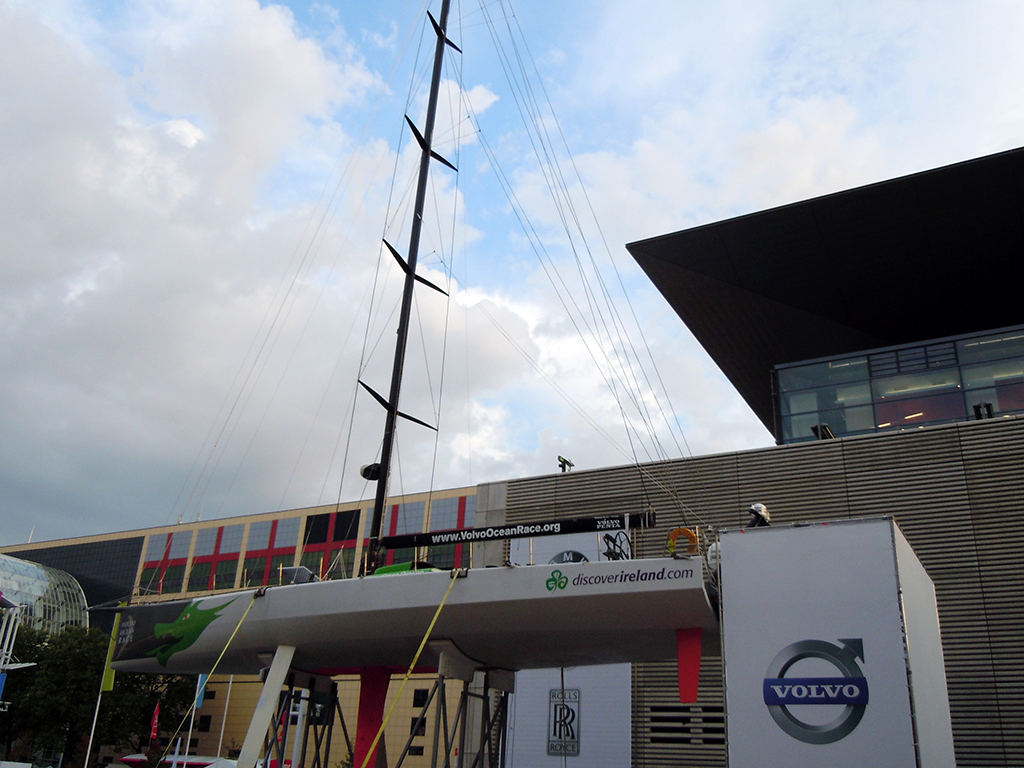
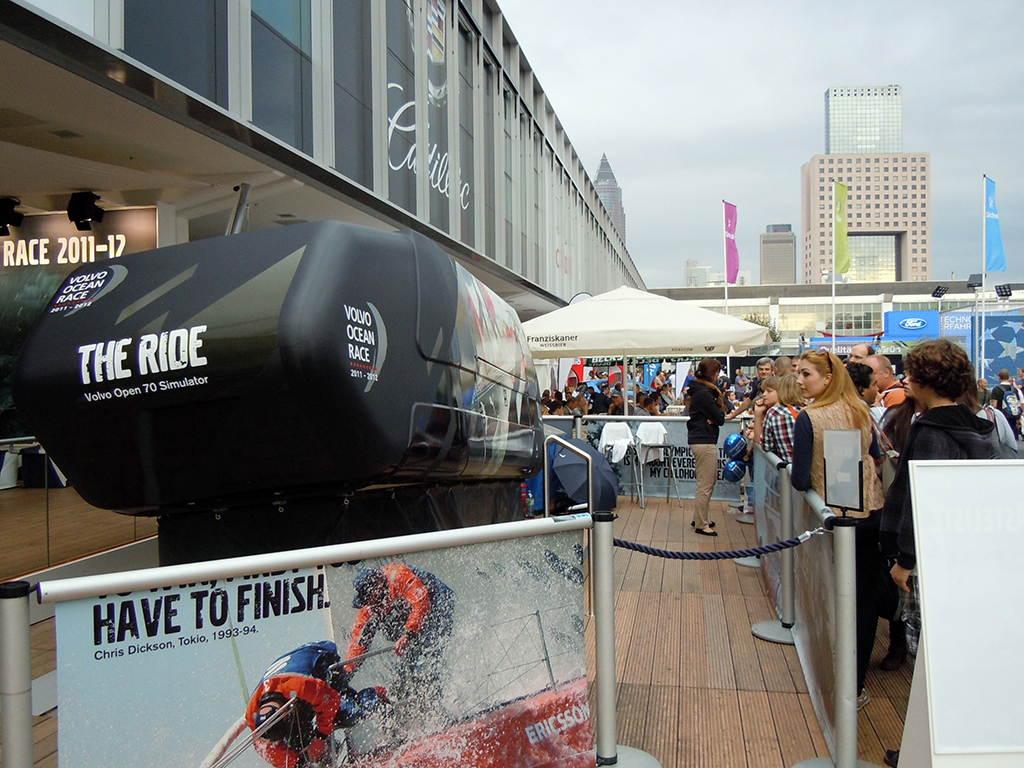
The Volvo Open 70 Simulator gave visitors a first-hand experience of what the Volvo sailing team goes through when they go sailing in the ocean.

Volvo Sailing Simulator

On taking the ride I slid steeply from left to right on the seat. There was also non-stop wind blowing on my head, with regular splashes of water. It created a strong 4D-style experience.

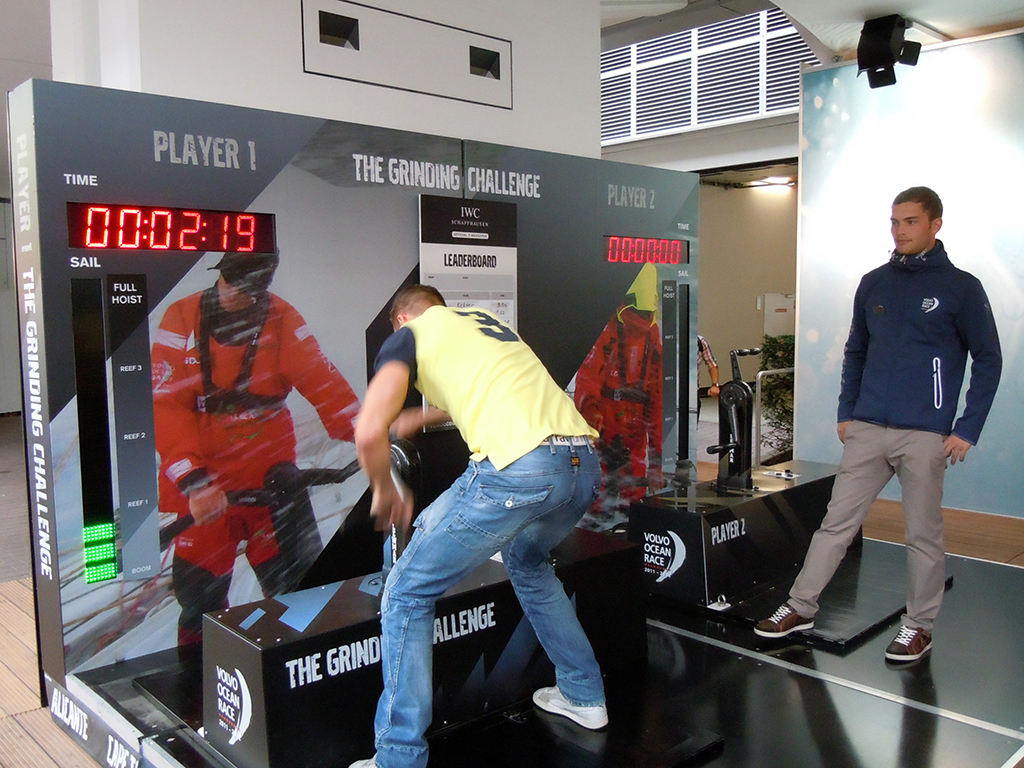
Visitors could also try to hoist a virtual sail. On my second attempt I hoisted the sail in 12.3 seconds. The current record was set at 9.03 seconds by one of the previous visitors.

Volvo Sail Hoisting

Mini Cooper

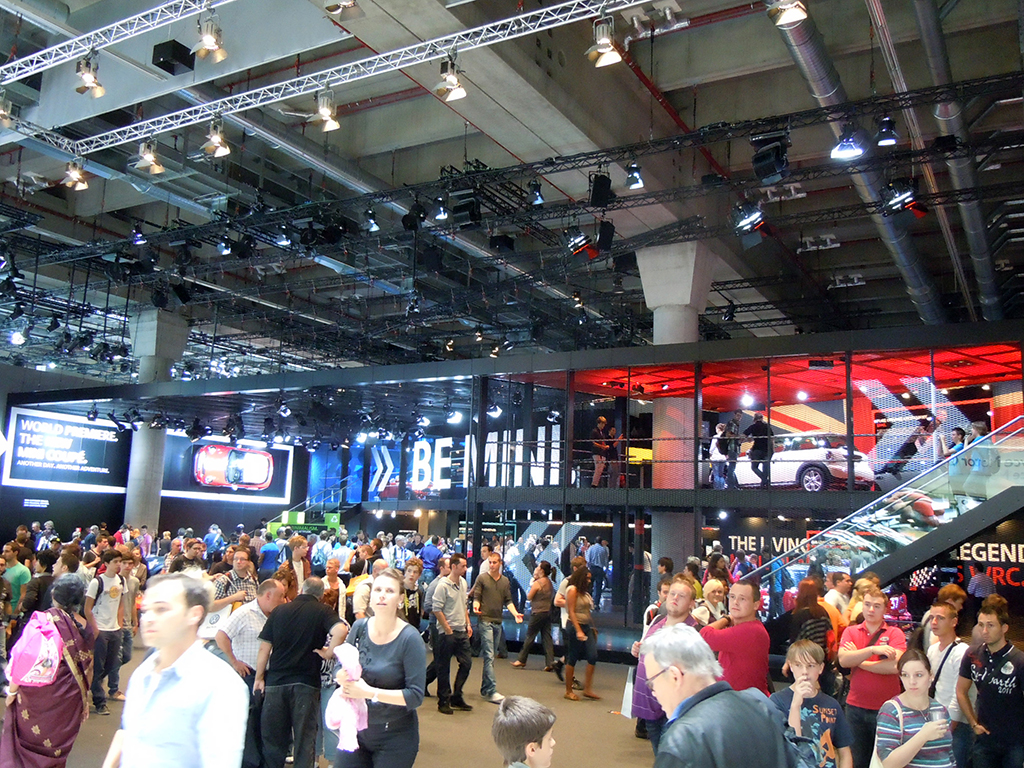
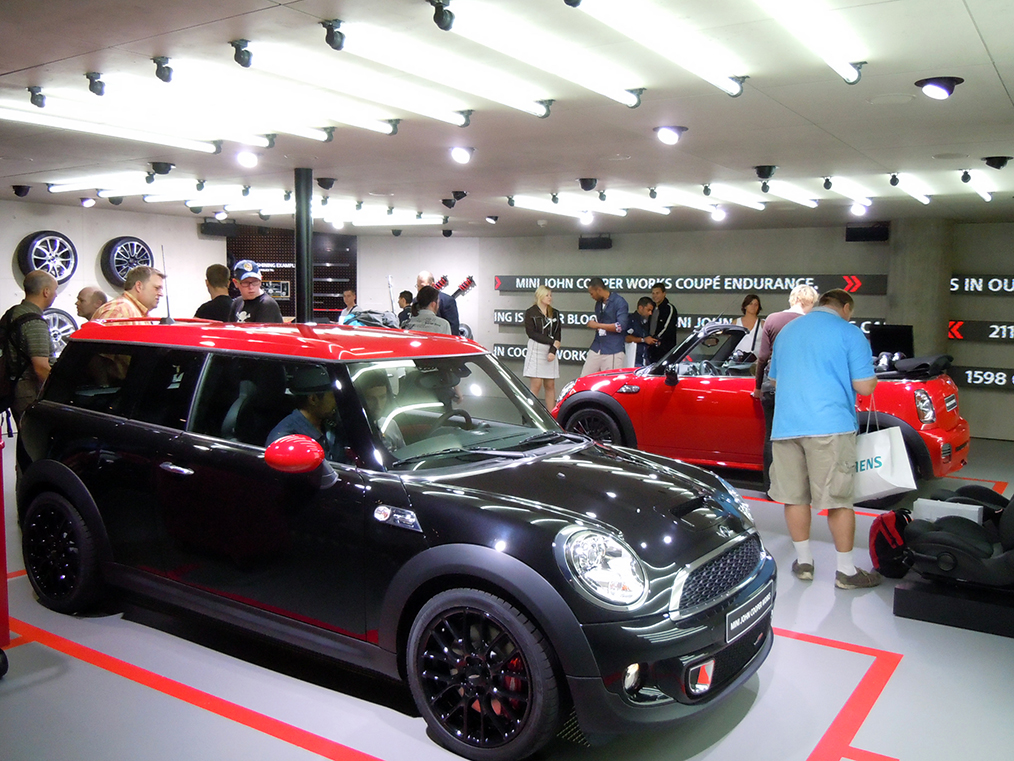
Mini Cooper stand overview

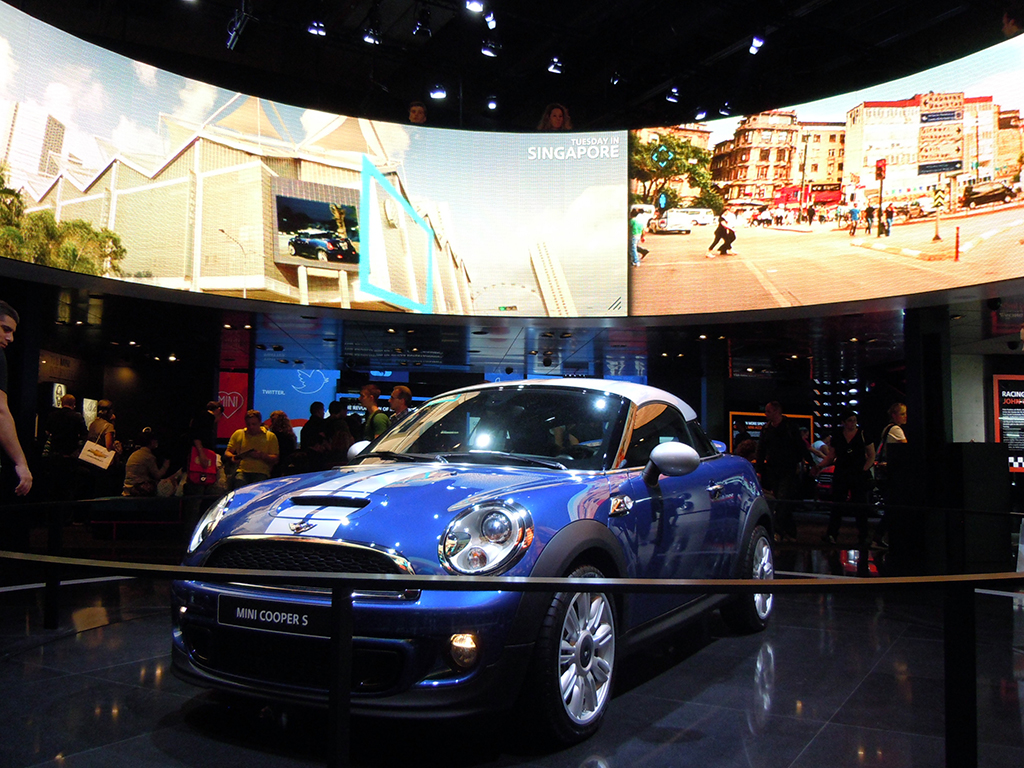
I really enjoyed visiting the Mini Cooper stand. The displays were amazing. A beautiful Mini surrounded by a bright circular display appeared as one entered the stand.

Mini Display

Minis in multiple colors were on display with various digital displays across the walls.

Mini Cooper multiple cars and wall displays

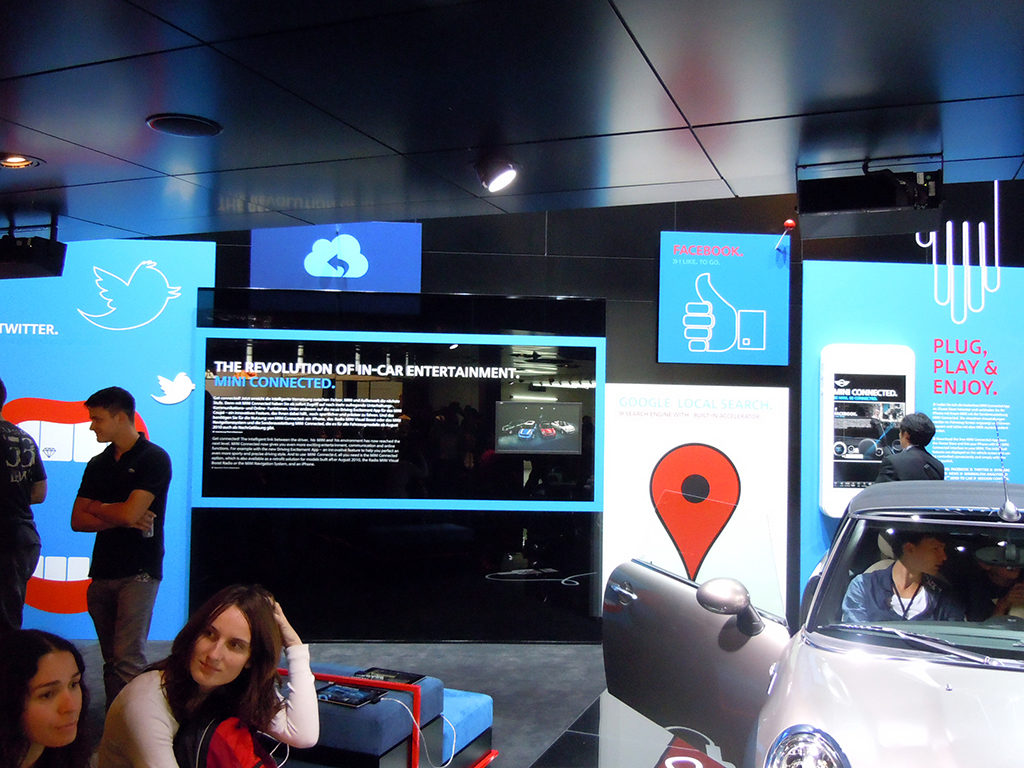
They also showcased their new iPhone app for the car, positioned as the intelligent link between the driver and the Mini. The app claimed to help the driver perfect a more sporty and precise driving style.

Mini iPhone App

I also spotted Lancia, Fiat, and Alfa Romeo promoting their iPhone apps via simple leaflets.

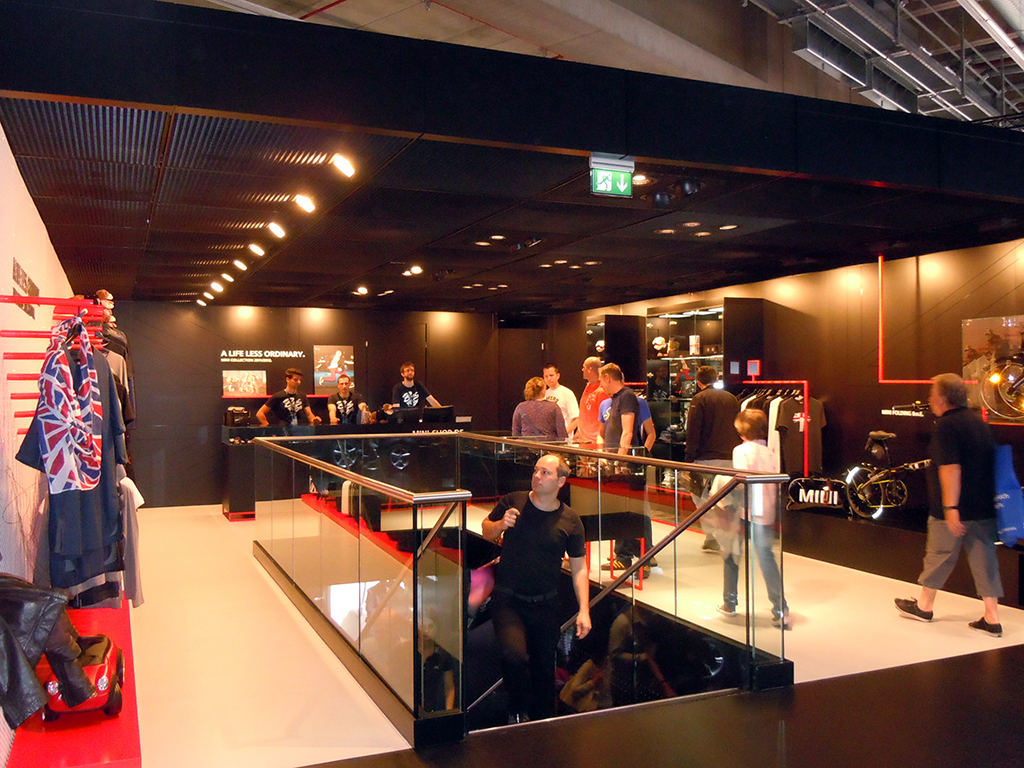
Mini Souvenirs

A souvenirs section greeted visitors on the first floor of the stand.

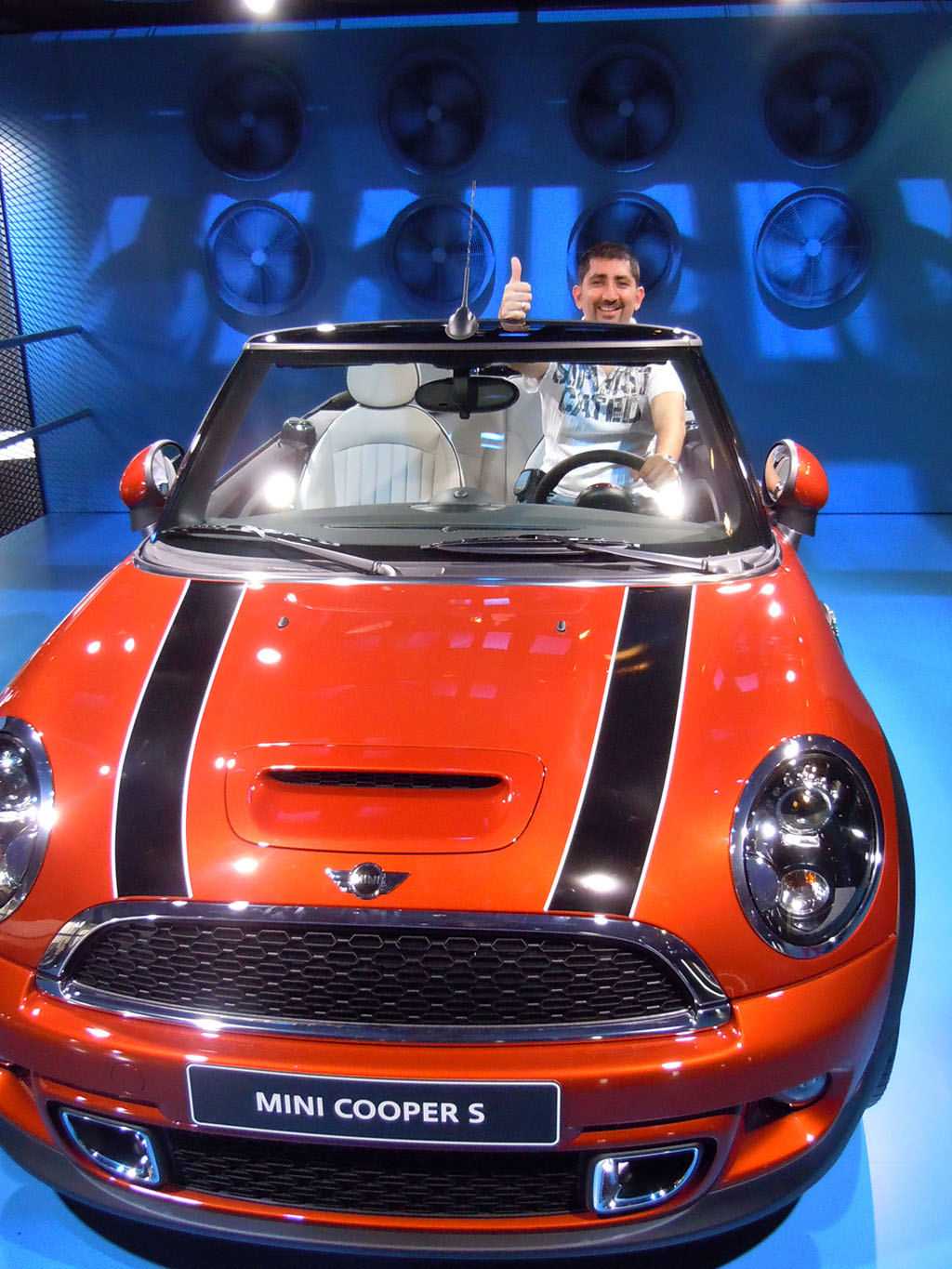
Got my Mini

In the end I got to drive my own Mini!

BMW

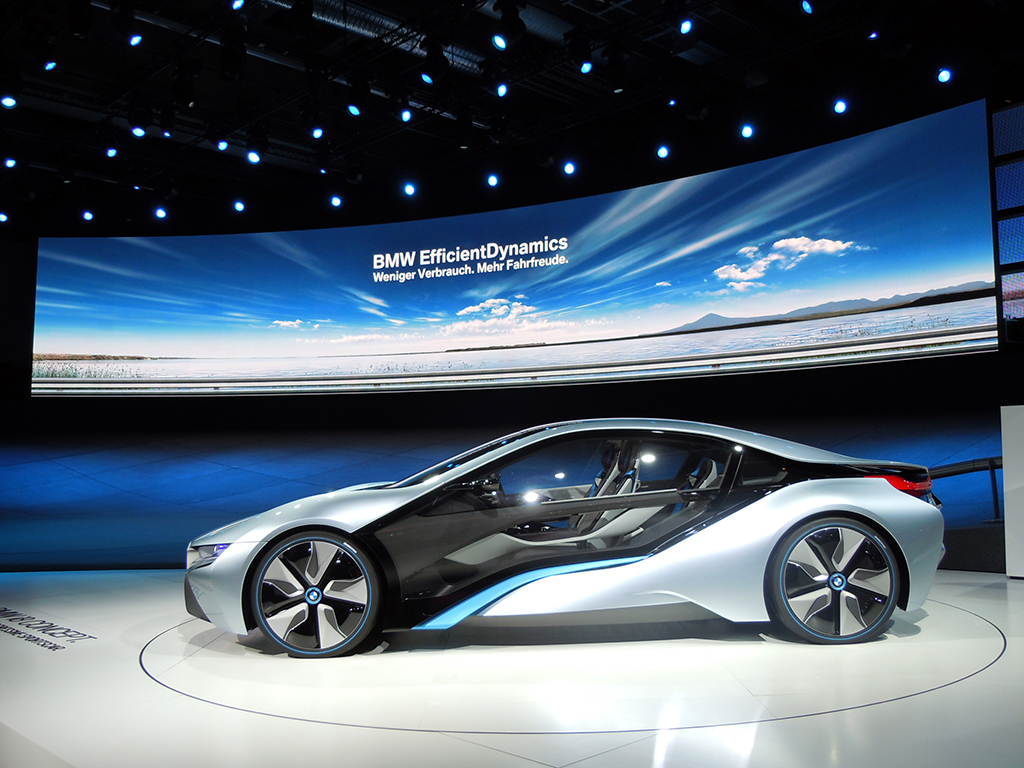
BMW. Mission Impossible Ghost Protocol car

The BMW stand was the biggest in terms of size and digital displays. Two of the most stunning concept cars from IAA were here. The car from the photo above appears in the Hollywood blockbuster “Mission Impossible: Ghost Protocol.”

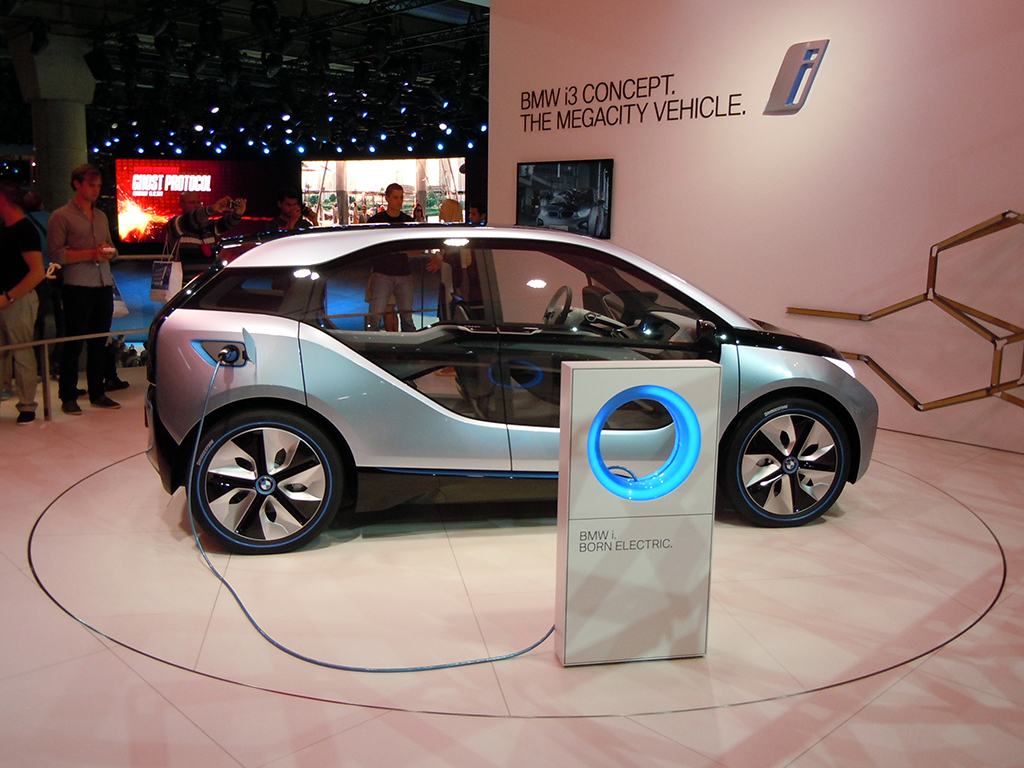
BMW i3 Concept

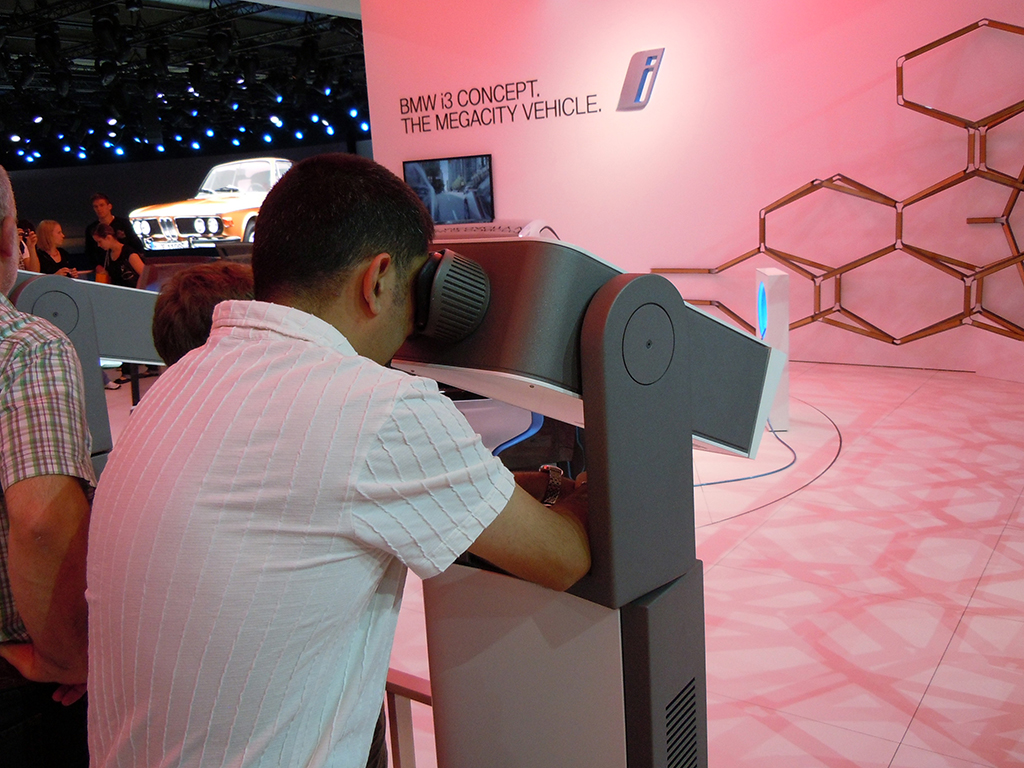
At the BMW i3 Concept city car area, I found an interactive telescope through which I could watch videos and product demos. To select a video, I had to move the telescope around and point it at what I wanted to play.

BMW i3 Concept Presentation via Interactive Telescope

Closing note from the show floor

I spent seven hours at IAA. It was totally awesome. The only car stalls I could not visit were those of Mercedes and Audi. There were simply too many people crowding those stands, and if I had waited, I would have missed at least half of what else I saw during my time there.

I look forward to the next Internationale Automobil Ausstellung in two years. Till then, this is Sunil signing off from IAA 2011.


A few fast answers before you act

Q: What is this post?
A photo report of IAA 2011, focused on practical uses of touch, motion control, social mechanics, QR codes, and augmented reality on brand stands.

Q: What is the single strongest engagement pattern across stands?
Interactive interfaces that pull visitors into exploration. Motion-based screens, simulators, and hands-on experiences that create a reason to stay.

Q: Which activations stand out most?
Volkswagen’s gesture-based BlueMotion display. Volvo’s Open 70 sailing simulator with wind and water. Ford’s stamp-collection game that drives exploration.

Q: Where does mobile show up most clearly?
Brands promote iPhone apps via leaflets and app demos, plus iPads used widely for specs, videos, and lead capture.

Q: What is the practical takeaway for event experience design?
If you want people to engage at scale, make the interaction obvious, physical, and rewarding. Then make the next step easy to find.

Rehau “Money Rain”

Utility rates for heating and energy keep growing. In turn people in Russia waste huge amounts of money through windows that cause heat loss during the cold Russian winters. Rehau windows however prevents such heat loss and considerably saves expenses for heating. So ad agency Voskhod decided to demonstrate how people waste money, by literally throwing it out of their low-quality windows.

The promotion generated public excitement. More than 200 media channels covered the story, including the most popular TV channels, broadcasting stations, newspapers and web-sites. Throwing out 240,000 rubles (US$7000) got Rehau free media that reached over 40 million Russians and their message of “Heatonomy” spread all over the country.