Lynx Sexy Rugby Rules: Rugby 101

Lynx Sexy Rugby Rules: Rugby 101

The Rugby World Cup is currently underway in New Zealand, and there is no better time than now for Lynx to do what they do best in their advertising: push sex appeal front and center. Reportedly passing 600,000 views in its first week, it suggests plenty of people are “learning” the rules of rugby.

Mechanically, it is Rugby 101 delivered as a faux-serious, straight-faced rules explainer, with the on-field demonstrations staged for maximum attention rather than maximum clarity. Because the familiar explainer wrapper is instantly legible, viewers click quickly, and the cheeky demonstrations give them a reason to forward it.

In mass-reach men’s grooming marketing, this kind of “rules explained” format is a reliable way to ride a cultural moment and turn it into shareable entertainment.

The real question is whether you can borrow a “helpful explainer” wrapper without damaging trust when the content is really designed for provocation.

This works for Lynx because provocation is already part of its brand contract, but it is a poor fit for brands that need to be taken literally.

Why this is timed to the tournament

When a big tournament is on, casual viewers suddenly need a quick refresher. Lynx hijacks that natural demand with a piece of content that looks like a helpful explainer, but behaves like a viral film.

Why it spreads even if you already know rugby

The viewing motivation is not really education. It is surprise, cheek, and the simple social impulse to forward something that feels slightly taboo, especially when it is framed as “sport content” during a major sports moment.

Extractable takeaway: If you can wrap a bold brand move inside a familiar utility format, you lower the friction to watch, and you increase the odds that people share it as “useful” instead of “an ad.”

What Lynx is actually reinforcing

This is classic Lynx branding: confidence, flirtation, and provocation, packaged into a format that is easy to justify watching because it is “about rugby rules.” The product is not the story. The personality is the product.

What to borrow from the “rules refresher” wrapper

  • Attach to a live moment. The closer you are to the cultural peak, the less explanation you need.
  • Use a familiar wrapper. A “rules refresher” is instantly understood, so the audience knows what they are getting.
  • Design for forwarding. If the content is made to be shown to a friend, distribution becomes part of the creative.
  • Keep the premise simple. One joke, one format, one payoff. No extra plot required.

A few fast answers before you act

What is Lynx “Sexy Rugby Rules”?

It is a Rugby 101 style explainer video released during the Rugby World Cup that uses provocative on-field demonstrations to turn a rules refresher into viral entertainment.

Why launch something like this during the Rugby World Cup?

Because more people are searching for quick rules explanations during a tournament, so the format earns attention without needing heavy media spend to explain itself.

Is this meant to genuinely teach rugby?

Not primarily. The “rules” wrapper gives it a reason to exist, but the real goal is shareable entertainment that fits the Lynx brand tone.

What makes this kind of content travel?

Simple premise, instantly recognizable format, and a payoff that people feel compelled to forward as a joke or talking point.

What is the key lesson for campaign timing?

If you can piggyback on a live cultural event, you can spend less time building context and more time maximizing the share moment.
Shopping & Money: When Payment Disappears

Shopping & Money: When Payment Disappears

Shopping is 24×7. It happens everywhere, not just in a store or on a website.

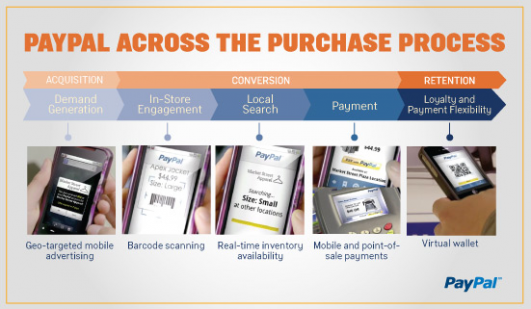
The intersection of smartphones, social media, online and offline shopping puts the consumer squarely in control. The shopping journey is no longer linear. Discovery can start in a social feed, comparison can happen on a phone while standing in front of a shelf, and purchase can happen without ever “going to checkout”.

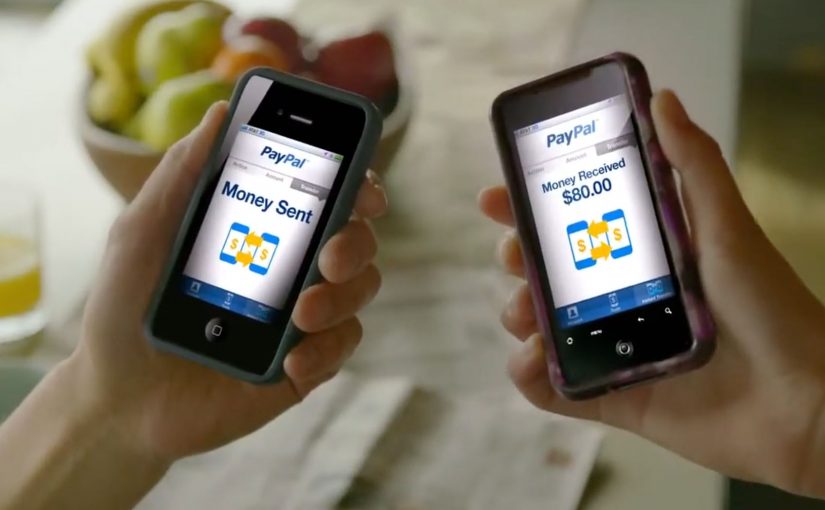
That shift is exactly what PayPal leans into with a hype video depicting what the future of shopping might look like. The story is not only about paying faster. It is about payment disappearing into the experience, powered by PayPal’s next generation payment platforms as they aim to re-imagine money. Here, “payment disappearing” means the transaction runs in the background while the shopper stays focused on choosing and receiving.

Payment is becoming invisible

We already see the building blocks all around us.

  • The phone becomes the remote control for shopping. Discovery, decision, and purchase collapse into one device.
  • Identity and trust become the key. Not the physical wallet.
  • The act of payment moves from a moment to a background process. It becomes an outcome of intent, not a step.

Because identity and trust signals can be verified upfront, the system can authorize transactions without forcing a visible checkout moment.

What changes is not only how you pay. It is when you pay. Or more precisely, whether you even notice it.

In European enterprises and global retail ecosystems, the first battles play out around who can make identity, trust, and permission work consistently across channels.

In commerce ecosystems, the player that owns identity, trust, and the payment layer can influence far more than checkout. It can shape the full shopping journey.

The consumer is in control. Brands and retailers adapt or fade

When consumers can shop anytime and anywhere, the competitive battlefield shifts.

Extractable takeaway: The winning journey makes payment an invisible outcome of intent, while trust and permission stay visible enough for the customer to understand and control.

  • Convenience becomes design. You win by removing friction, not by adding features.
  • Context beats channel. The store is not a place. It is a moment, a need, a trigger.
  • Attention becomes the scarce currency. If payment is effortless, the real fight is for preference, trust, and relevance.

In this model, money is not the centerpiece. The experience is.

What the PayPal vision is really selling

Commerce becomes ambient.

PayPal’s narrative previews a broader shift. Commerce becomes ambient, meaning buying and paying blend into everyday moments instead of a distinct checkout step.

The hype is the packaging. The strategic message underneath is that payment platforms want to sit one layer deeper in the journey. Not at the end, but throughout.

They aim to become the connective tissue between identity, intent, and transaction.

This is why the video matters. It is not a product demo. It is a stake in the ground. The future of shopping is continuous, and the future of money is embedded.

Design moves when payment disappears

If payment disappears, a few questions matter more than ever.

The real question is who sets the rules of identity and trust when payment fades into the background.

Brands and retailers should design journeys so payment is an invisible outcome of intent, while the consumer stays in control of trust and permission.

  • Relationship ownership. Decide who owns the consumer relationship when the transaction becomes frictionless.
  • Trust, privacy, permission. Define how trust, privacy, and permission evolve when identity becomes the wallet.
  • Loyalty without a moment. Re-think loyalty when the purchase moment is no longer a moment.

The brands and retailers who win treat checkout as a symptom. Not a destination.


A few fast answers before you act

What does “payment disappears” actually mean?

Payment becomes a background step. The shopper focuses on choosing and receiving, while the transaction happens with minimal explicit action.

Why is the smartphone central to this shift?

It combines identity, context, discovery, and transaction capability in one always-on device, collapsing steps that used to be separate.

What is the strategic risk for retailers?

If the payment layer owns identity and trust, it can also mediate choice. Retailers risk becoming interchangeable unless they add differentiated experience value.

What is the opportunity for brands?

To design end-to-end journeys that reduce friction and increase relevance. When paying fades away, experience quality becomes more visible.

What is the hardest part to get right?

Trust and permission. Invisible payment only scales when consumers feel in control and understand when and why transactions occur.

ALIS: Election Poster Skate Attack

ALIS: Election Poster Skate Attack

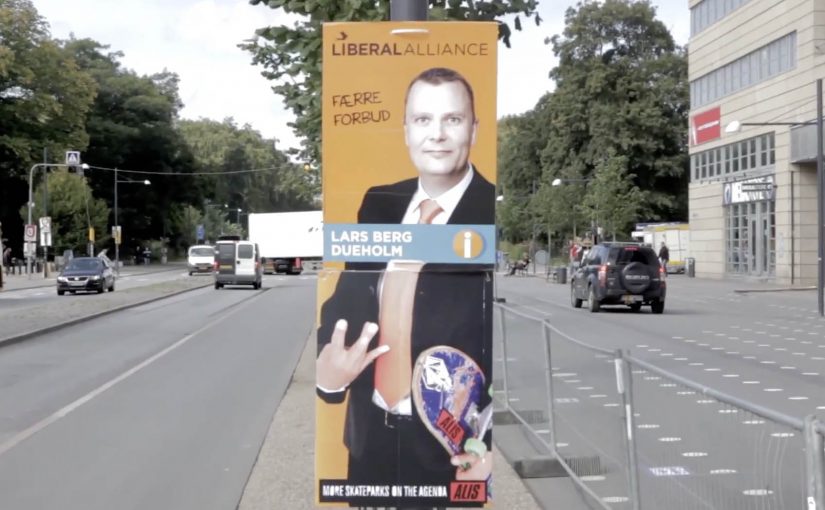
Original Danish election posters go up as usual. Then ALIS adds a few new visual elements that flip the meaning, ending with a simple line: “more skateboards on the agenda.”

“Take action in your life and reALISe your dreams” is the intention behind ALIS, established by Albert Hatchwell and Isabelle Hammerich and grown from an underground movement in Christiania into a company that creates opportunities and inspiration.

In a fun and well-thought guerrilla activity in Denmark, ALIS takes existing election posters and extends them with a skateboarding twist. The result sits right on the boundary between civic campaigning and street culture, using the familiarity of political posters to smuggle in a different agenda.

A guerrilla twist on election season

The mechanic is simple. Start with something everyone recognizes, a candidate poster. Add just enough to reframe it. Then leave it in the wild so people discover it, photograph it, and spread it for you.

In Nordic youth-culture marketing, repurposing civic symbols can earn disproportionate attention when the tone stays playful rather than destructive.

Why it works as shareable street media

It is instantly legible. You do not need to know the brand, the candidate, or the backstory. The “before and after” reads in a second, and the idea feels like a wink rather than a lecture. Because the “before and after” reads in a second, a single photo carries the whole story, which is why it spreads.

Extractable takeaway: Treat this as an ambient execution, meaning you reuse existing public poster inventory as your first distribution layer, then let photography and sharing do the rest.

What ALIS is really buying

This is identity reinforcement. ALIS signals what it stands for, skateboarding and youth culture, by inserting itself into a mainstream moment and making it feel slightly more “theirs”. The real question is whether your reframing is clear enough that strangers do the distribution for you. This kind of remix works best when the intervention reads as playful and reversible. The budget stays low because the distribution is social. The street provides the first audience. Cameras and sharing provide the second.

How to remix a familiar format cheaply

  • Borrow a familiar format. Start with something people already read without thinking.
  • Change one thing that changes the meaning. The smallest edit with the biggest reframe wins.
  • Design for photos. If it does not capture clearly, it will not travel.
  • Keep it non-destructive. Playful add-ons land better than anything that looks like vandalism.

A few fast answers before you act

What is “Election Poster Skate Attack”?

A guerrilla-style ALIS action that adds skateboard-themed elements to existing Danish election posters, ending with the message “more skateboards on the agenda.”

Why use election posters as the canvas?

Because they are already designed to grab attention in public space. A small twist on a familiar political format becomes instantly noticeable.

What makes this feel “earned” rather than “paid”?

The distribution comes from discovery and sharing. People see it, smile, photograph it, and pass it on without needing media spend.

What is the main risk with poster hacks like this?

Being perceived as vandalism. The execution needs to read as a light, non-destructive add-on, not damage.

How can a brand apply the pattern safely?

Borrow a recognizable public format, alter it with a single clear reframe, and ensure the intervention is reversible and legally defensible.