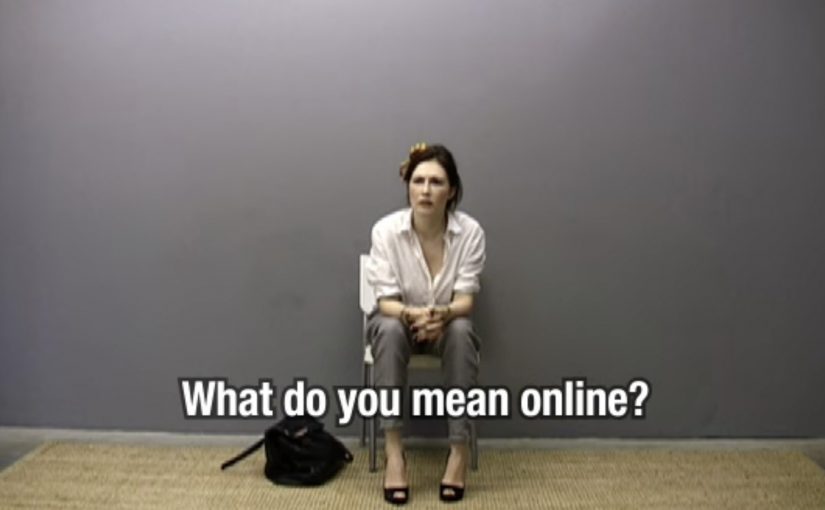
A trailer disguised as something you should not be watching
This video is presented as a “casting tape”. A raw, behind-the-scenes style clip featuring Carice van Houten that plays like a leak rather than a polished promo. The format does the heavy lifting, because it invites curiosity first and “what is this for” second.
How the mechanism pulls attention
Instead of explaining the festival with a standard trailer structure, the campaign uses a familiar industry artifact: the audition tape. It pushes it far enough into performance that viewers keep watching to see where it goes. Subtitles widen shareability across audiences who do not speak the original language, and the “found footage” tone lowers the viewer’s ad resistance.
In digital film and festival promotion, simulated behind-the-scenes footage can convert passive viewing into social forwarding because it feels like insider access.
Why it lands
It lands because it borrows the emotional contract of gossip. You are not “watching an ad”. You are watching something you might forward to someone else with a short message like “watch this”. That is the distribution advantage. The entertainment value sits in the format, not in a list of festival benefits. The real question is how to make a broad cultural offer feel like a must-watch artifact instead of a calendar listing. For a festival, this is a stronger opening move than a standard highlights reel because it sells intrigue before information.
Extractable takeaway: If your content offer is broad (a catalogue, a festival, a platform), lead with one irresistible artifact that feels like insider access. One artifact can outperform a perfectly edited overview.
What festival marketers can lift from this
- Choose a format with built-in curiosity. Auditions, rehearsals, tests, and “first takes” invite completion.
- Make it feel native to the category. A film festival using casting language is instantly credible.
- Design for forwardability. A single clip people can share without explanation beats a multi-part explainer.
- Use subtitles as reach infrastructure. They improve completion and sharing across borders.
A few fast answers before you act
What is this video promoting?
It is positioned as a promo asset for the Nederlands Online Film Festival, using a “casting tape” format to attract attention.
Why use a casting tape instead of a normal trailer?
Because casting tapes carry an “insider” feel. That makes people watch longer and share more readily than they would with an overt trailer.
What role do subtitles play here?
They make the clip understandable outside its native language and increase the odds that viewers will finish and forward it.
What makes this approach risky?
If the “leaked” framing feels deceptive rather than playful, the audience can reject it as manipulation.
How could a smaller festival apply the same idea?
Create one standout “artifact” clip (audition, rehearsal, jury-room moment) that feels like privileged access, then let it act as the entry point to your broader programme.