
Dungville: Klara the Cow Betting Game

Dungville: Klara the Cow Betting Game

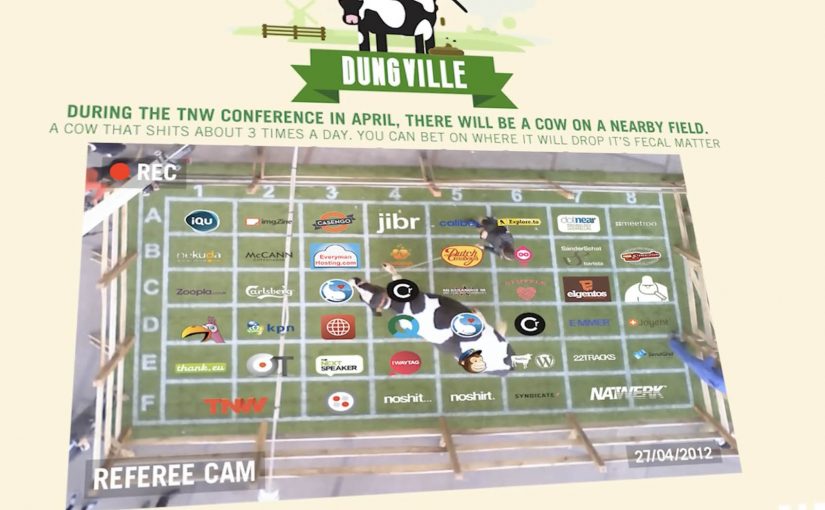
Natwerk was asked to create something playful for the online-minded visitors of The Next Web Conference 2012. So they built an analogue prediction game featuring a real cow, then layered it with an online extension.

Klara, a grid, and a one-day “village”

The installation was framed as a tiny pop-up “village” at the conference venue. One real farmer. One real cow named Klara. A field laid out as a grid. Visitors could place bets on where she would drop her dung.

Mechanism: a physical event drives a digital game

As shown in the case film, Klara was expected to do her business several times a day, and the audience wagered on where it would happen. The web layer turns that unpredictability into a simple loop. Pick squares. Wait. Validate. Win or lose.

That mechanism works because one visible but unresolved physical outcome gives everyone the same reason to watch, talk, and check back.

In event marketing, the strongest activations turn a shared physical moment into a lightweight digital ritual people can join and talk about instantly.

Why it lands

The idea is memorable because it is absurdly literal. A real-world randomizer. A clear grid. A clear outcome. It also fits the conference crowd. People who live online love mechanics that are easy to explain, easy to screenshot, and easy to debate in real time.

Extractable takeaway: If you can attach your digital interaction to an offline moment that nobody can fully predict, you get tension for free, and tension is what keeps people checking back.

What this kind of activation is good for

The real question is whether the game gives people a simple reason to keep returning to the shared moment.

This is not about deep persuasion. It is about creating a shared story at the venue and giving the event a “small legend” people repeat after they leave. It works best when your goal is attention, conversation, and community participation rather than detailed product education.

Steal the event-game pattern

  • Use a single, visible game board. A grid makes rules self-explanatory and outcomes easy to verify.
  • Keep the loop simple. Pick. Wait. Result. Repeat. Complexity kills participation at events.
  • Make the offline moment the engine. When the physical world provides the variability, the digital layer can stay minimal.
  • Design for group talk. The best event games create debate and banter, not solo play.
  • Be deliberate about tone. Toilet-humour mechanics are polarising. If you use them, commit fully and keep it light rather than crude.

A few fast answers before you act

What is Dungville in one sentence?

It is a conference activation where a real cow on a gridded field powers a web game, letting visitors predict where she will drop dung.

Why does a real-world “random” trigger work so well?

Because it creates genuine uncertainty. People keep watching and checking because nobody can fully control the outcome.

What makes this an “online extension” rather than just a stunt?

The web layer turns the physical moment into a repeatable interaction loop, giving people a way to participate, compare picks, and track results.

What is the biggest execution risk?

Drop-off due to waiting. If results take too long, interest fades. The format needs clear timing and frequent enough outcomes to sustain attention.

What should you measure for a similar event game?

Participation rate, repeat participation, time-on-experience, social mentions during the event window, and whether attendees recall the activation as part of the event story.
Waternet Queen’s Day Challenge: Pee Race

Waternet Queen’s Day Challenge: Pee Race

Turning a messy problem into a canal-side race

Queen’s Day in Amsterdam brings huge crowds and heavy celebrations. It also brings a very practical problem for Waternet, the city’s water supplier: too many people treat the canals like a public toilet.

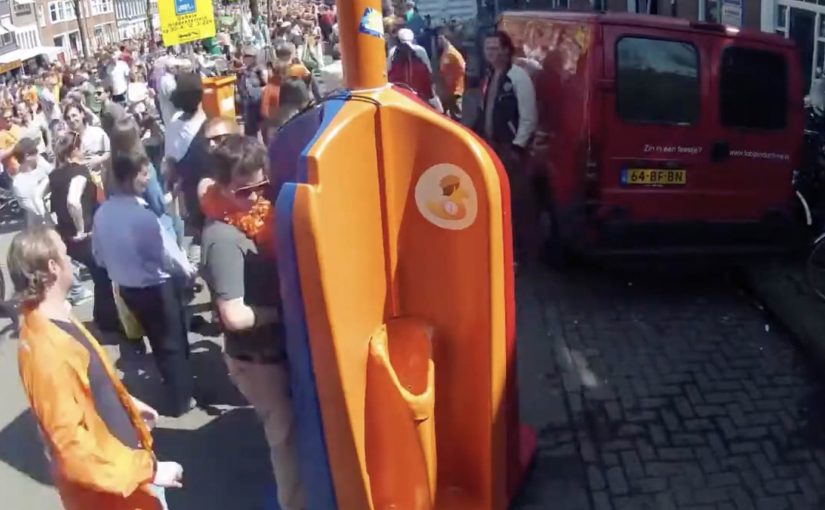
Instead of posting warnings, Waternet worked with Achtung! and installed several brightly colored urinals at different points along the canal. Each unit had four stalls and connected to a digital screen that turned peeing into a live race, with a simple incentive that makes people want to participate.

The mechanics that make it work

This is a strong example of ambient behavior-change design. Here “ambient” means the intervention lives in the environment, right where the decision happens, not in a banner ad or a TV spot.

Extractable takeaway: When the right behavior is a public, low-friction default with instant feedback, you can change behavior without asking people to absorb a lecture.

It works because the feedback is immediate, the experience is social by default, and the “right” behavior feels more fun than the “wrong” behavior. That combination reduces friction and replaces shame with competition. This is the kind of public-space activation brands should copy when the goal is behavior change, not sentiment.

In crowded city-center celebrations, playful public interactivity often changes behavior faster than moralizing signage.

Steal the ambient interactivity pattern

The real question is how to make the right behavior feel like the obvious choice in public, without needing anyone to read a sign.

  • Move the message to the moment. Put the interaction where the behavior happens, not weeks earlier in a campaign feed.
  • Make the desired action the easiest action. People choose the path that feels obvious and frictionless in public.
  • Use visible progress. A shared screen and a simple scoreboard create instant social proof.
  • Reward participation, not perfection. Even a small, symbolic payoff can tip the choice at scale.

A few fast answers before you act

What is the Waternet Queen’s Day Challenge?

It is a Queen’s Day activation in Amsterdam where Waternet installs canal-side urinals and turns their use into a multiplayer race on a connected screen, discouraging people from urinating into the canals.

How does the “pee race” work?

Four stalls connect to a shared screen. Participants use the urinal and the screen visualizes a race, making the act feel like a public, competitive mini-game rather than a private necessity.

Why does this kind of gamification change public behavior?

It replaces a negative instruction (“don’t do this”) with a positive, easy alternative that gives immediate feedback and a social payoff, which is especially effective in crowded, high-energy settings.

What makes an ambient activation succeed in public space?

Clear purpose, low friction, instant comprehension, and feedback people can see without explanation. If it needs a guide, it usually fails on the street.

How can brands use this pattern without relying on shock value?

Keep the mechanism. Swap the provocation. Put the interaction at the point of decision, make progress visible, and attach a small reward to the behavior you want to encourage.

KLM: Surprise

KLM: Surprise

KLM launched a social media customer engagement idea that starts with a simple observation: waiting to board is boring, and “price messages” do not help anyone in that moment. So the brand looks for passengers who check in on Foursquare for flights or tweet about waiting to board a KLM service, then surprises a few of them to see how happiness spreads.

From check-in signal to gate-side surprise

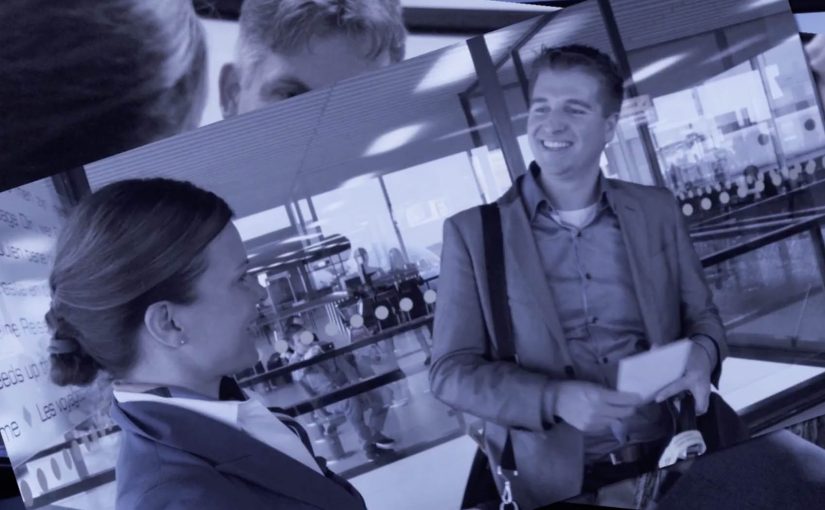
The mechanic is straightforward. Someone publicly signals they are flying KLM or waiting at the gate. The team selects a passenger, scans what that person has publicly shared across social profiles, and chooses a small, relevant gift. Then they hand-deliver it at the airport gates.

In airline customer experience, social signals can be converted into small, high-salience service moments that strengthen loyalty without changing the core product.

Why this beats generic “engagement”

Many brands greet customers after a check-in, and that is already a best practice on location platforms. KLM Surprise goes further because it moves from acknowledgement to action. Because the team delivers the surprise at the gate while the passenger is waiting, the gesture lands as relief, not advertising. The passenger gets something real, in real time, in the same physical context where frustration often accumulates.

Extractable takeaway: When you can act on an intent signal in the same moment and place it was expressed, the interaction reads as service and earns talk value without needing a big reward.

The real question is whether public intent signals can trigger timely, human service moments that customers will retell.

Brands should treat public social signals as service triggers, not engagement bait.

The personal touch is the product

The gift is intentionally small. The point is that it is specific. That specificity tells the passenger the brand paid attention, not that the brand spent money. It also turns the interaction into a shareable story because it feels improbable. Someone noticed me. Someone acted on it. Someone found me.

What the brand is really testing

Beyond the feel-good moment, this functions as a live experiment in social CRM: can public signals help identify passengers worth surprising, and can a human-scale intervention create disproportionate talk value? Here, “social CRM” means using public social signals to choose and personalize service actions for known customers. The campaign also quietly reframes “social media” as a service channel, not only a marketing channel.

Stealable moves from KLM Surprise

  • Trigger on clear intent signals. Check-ins and “waiting to board” posts are unambiguous moments where help or delight is welcome.
  • Keep the benefit small but specific. Relevance beats value. A perfect small gift travels further than a generic large one.
  • Deliver in the same context as the pain. Airport gates are where waiting is felt. That is why the gesture matters.
  • Make it operationally repeatable. A lightweight process and a small budget lets the idea run more than once without becoming theatre.

A few fast answers before you act

What is KLM Surprise in one line?

A real-time airport activation where KLM monitors public check-ins and tweets, selects passengers, then delivers small personalized gifts at the gate.

Why does it work better than simply replying on social?

Because it converts acknowledgement into action in the physical world, creating a stronger memory and a more shareable story.

Is the gift the main value?

No. The main value is the signal of attention and timing: “you were noticed” and “it happened right now when waiting felt longest”.

What is the transferable lesson for other brands?

Use public intent signals to trigger small, context-relevant service moments that are easy to repeat and easy for customers to retell.

What needs to be true to run this more than once?

A lightweight workflow for monitoring signals, selecting passengers, choosing small relevant gifts, and delivering them at the gate, plus a modest budget and clear staffing ownership.