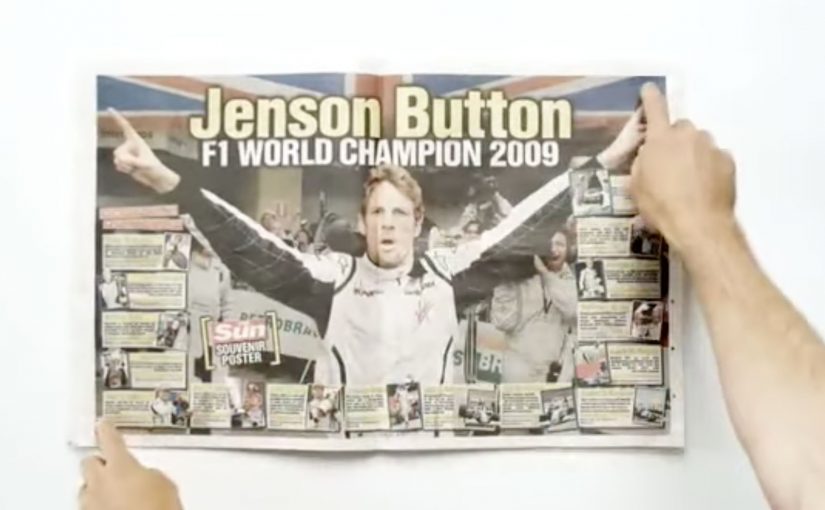
It looks like an Apple iPhone ad at first. Then the tone flips. Glue London plays on the fascination with digital technology and the iPhone. It lands as a cheeky spoof for The Sun.
The punchline. “v 4.0, since 1969”
The film finishes with the words “v 4.0, since 1969”. It is a nod to The Sun’s 40th birthday anniversary this year, delivered in the visual language of tech versioning.
The real question is whether your audience already knows the borrowed format well enough that you can spend your seconds on the twist.
Borrowing a trusted format is a smart shortcut, as long as the punchline is unmistakably yours.
Why this works. Borrow a format people already trust
The execution borrows the look and rhythm of a category-defining ad format and uses it as a shortcut. Here, “format” means the pacing, typography, and product-shot grammar viewers associate with Apple’s iPhone ads. By borrowing that grammar, the film earns instant comprehension, which makes the flip to The Sun feel sharper and the end line hit harder.
Extractable takeaway: When you borrow a dominant format, the audience does the decoding for you. That lets your creative spend its energy on the twist, not on explaining the frame.
In mass-market media brands, borrowing big-tech visual codes can be a fast way to signal modernity because audiences already carry the reference.
How to reuse this spoof move
Match the “real” format first. If the opening does not feel authentic, the parody reads as a try-hard imitation.
Keep the twist to one line. A single, version-number style punchline gives people something quotable to repeat.
Make the last card do the branding. Let the borrowed grammar set expectations, then let your end line pay it off for your brand.
A few fast answers before you act
What is this ad?
A spoof of Apple’s iPhone advertising style for The Sun, created by Glue London.
What does “v 4.0, since 1969” refer to?
A reference to The Sun’s 40th birthday anniversary, expressed like a software version update.
What is the core creative tactic?
Use a familiar tech-ad format as a recognizable frame, then subvert it with a brand-specific punchline.
Why does it travel as a viral?
It is short, culturally legible, and built on a format people immediately recognize.
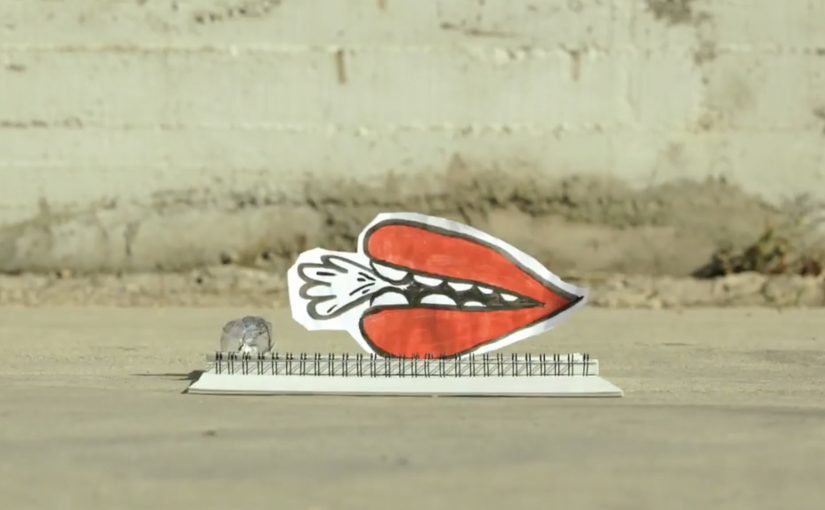
Orbit and its agency Evolution Bureau (EVB) launch an experimental video that leans hard into craft. A stop-motion film built from original drawings, animated into a world where mouths literally clean up what is dirty.
The story is designed to carry Orbit’s “clean” brand essence while nudging a broader idea about keeping the world cleaner too. It is not a product-demo spot. It is a mood piece, delivered through hand-made texture.
How the stop-motion idea is constructed
The mechanism is stop-motion animation created from original artwork by Goons, then assembled into a sequence of “cleaning” actions across a rundown environment. Campaign coverage describes the film as being built from hundreds of drawings, shot into motion over a short production window.
In global FMCG brand communications, craft-forward films like this work best when the technique is not decoration, but the proof that the brand promise is being taken seriously. Here, craft-forward means the production method is doing part of the persuasion, not just adding surface style.
Why this lands as an Orbit idea
“Clean” is usually communicated with polish. This flips it by starting in mess and showing transformation. The stop-motion texture makes the cleaning feel earned, not airbrushed, and the repeated mouth motif keeps it anchored to gum without needing a literal chewing scene.
Extractable takeaway: If your brand essence is a feeling, pick a production method that physically embodies that feeling. Then make the story a sequence of transformations, so the viewer can see the promise happening rather than being told about it.
What the film is really trying to achieve
The real question is how to make Orbit’s clean promise feel distinctive again without defaulting to a standard freshness demo.
The business intent is to refresh Orbit’s “good clean feeling” territory with something unexpected and art-led. Experimental craft signals modernity and confidence, and it gives the brand a shareable artifact that can travel beyond conventional media placements.
What to steal for your own brand storytelling
Let craft do the persuasion. When the technique is distinctive, it becomes the reason people watch.
Show transformation, not claims. “Before and after” storytelling carries benefit without needing product exposition.
Keep one repeating brand cue. Here, the mouth motif keeps the film on-brand even when the story goes abstract.
Make the film rewatchable. Dense detail rewards a second view, which is a practical lever for shareability.
A few fast answers before you act
What is the core idea of Clean It Up?
A stop-motion film where illustrated mouths clean up a dirty environment, translating Orbit’s “clean” promise into a literal transformation story.
Why use stop-motion and drawings instead of a normal shoot?
Because the handmade texture signals care and originality. It also makes “cleaning” feel physical and constructed, not just edited.
What does this communicate about the brand?
That Orbit is confident enough to express its benefit through art and transformation, not only through product usage shots or functional demos.
When does a craft-led approach like this work best?
It works best when the production technique is itself evidence of the brand promise. If the method only adds style, the film may be memorable without building the brand.
What is the main pitfall if you copy this approach?
If the craft is high but the brand cue is weak, the film becomes “a nice animation” that could belong to anyone. You need one unmistakable anchor inside the artistry.
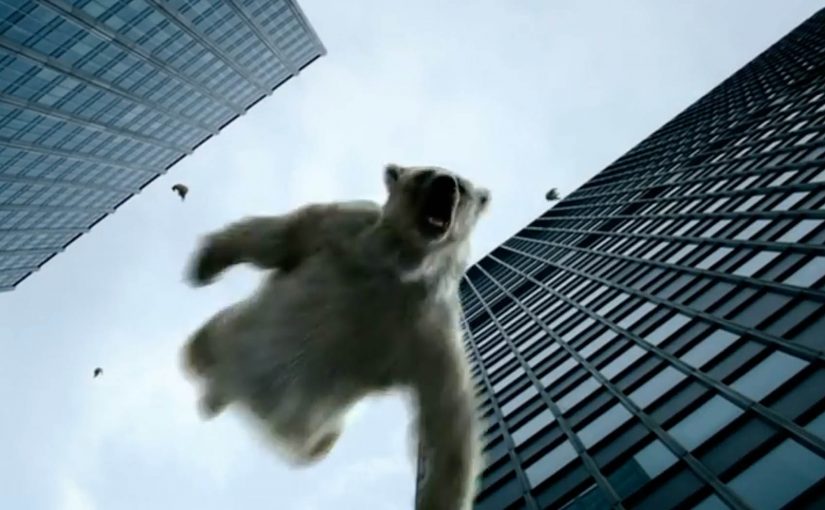
A shocking ad with a brutal message: every short haul flight you take emits four hundred kilogrammes of carbon dioxide. The equivalent weight of an adult polar bear.
This is the promotional film from anti-aviation expansion campaigners Plane Stupid.
It is a hard-hitting piece of communication because it skips the abstract science and goes straight for a physical, imaginable consequence. You cannot “feel” four hundred kilograms of CO₂. But you can picture a polar bear’s mass, and you can picture it falling. The metaphor is deliberately uncomfortable.
A metaphor designed to make emissions feel heavy
The mechanism is simple: translate an invisible output into a visible burden. By mapping a single flight to a single, concrete weight, the campaign turns “carbon” into something that feels measurable and personal. The viewer is pushed to connect a routine choice with an outsized consequence. This works because a weight-based image is easier to remember and retell than an abstract emissions number.
In European organisations where sustainability goals collide with travel habits, this kind of metaphor is used to make the trade-off feel immediate.
In behavior-change communication, metaphors work best when they translate an invisible impact into a concrete, repeatable image people can easily retell.
Why this kind of brutality gets attention
Shock tactics work when they force a moment of interruption. They create a jolt that breaks autopilot. In this case, the jolt is not gore or fear for its own sake. It is moral discomfort. The message implies complicity. It suggests that “small” flights are not small at all when you translate them into a consequence you can carry in your head. Used sparingly and paired with a believable alternative, shock can be a legitimate behaviour-change lever; used without one, it is counterproductive.
Extractable takeaway: If you need to shift norms, convert impact into one vivid unit people can repeat from memory, then make the next step feel doable.
But there is a trade-off. If the audience feels judged or helpless, they can disengage. The campaign therefore depends on whether the viewer sees a plausible alternative, like rail, coach, fewer trips, or simply resisting the idea that every short hop is “normal”. Here, an off-ramp means a clear, doable alternative the viewer can choose instead of flying. Without an off-ramp, shock can become noise.
The real intent: change what feels acceptable
The business intent here is public pressure. Plane Stupid campaigns against aviation expansion. To do that, it needs cultural permission to tighten constraints: fewer runway projects, fewer short-haul routes, and a stronger argument that alternatives should win. The film is a lever to make policy positions feel socially justified.
The real question is whether you can make “short haul” feel unacceptable without making the audience tune out.
What to borrow from this shock metaphor
Make the invisible visible. Translate abstract impact into a physical metaphor that is easy to repeat.
Anchor to a single action. “One short-haul flight” is specific. It removes debate about averages and totals.
Choose a symbol that carries meaning. The polar bear arrives pre-loaded with climate context, for better or worse.
Plan the off-ramp. If you want behaviour shift, pair the shock with credible alternatives people can act on.
Measure backlash, not just reach. Shock optimizes attention. Track whether it also produces avoidance.
A few fast answers before you act
What is “Raining Polar Bears” trying to say?
It argues that short-haul flights have a disproportionately high carbon cost. It makes that cost feel tangible by equating one flight’s emissions to the weight of an adult polar bear.
Why use a polar bear in a climate campaign?
Because it is an instantly recognized symbol of climate impact. It compresses a complex topic into a single image people remember and retell.
Do shock tactics actually change behaviour?
Sometimes. They can disrupt complacency and create attention. They can also trigger defensiveness if people feel accused or see no realistic alternatives.
How do you make a shock campaign more effective?
Pair the emotional jolt with a clear path to action, and ensure the audience believes the alternative is doable. Without that, the message can be dismissed as moralizing.
What is the practical takeaway for marketers and communicators?
If you want to shift norms, translate impact into something concrete, memorable, and repeatable. Then make the next step obvious so attention converts into action.