SEO is becoming AEO. From clicks to citations
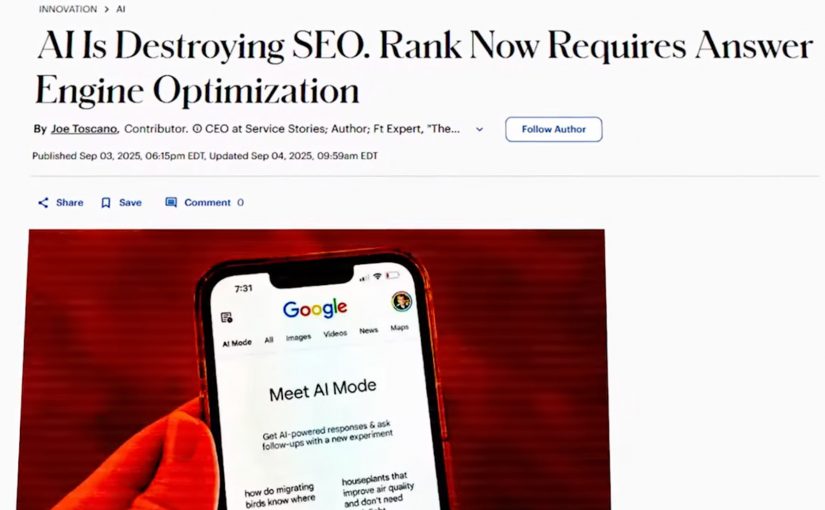
Answer Engine Optimization (AEO) is the practice of structuring content so AI-powered search experiences can extract, summarize, and cite it as the best answer to a user’s question. Traditional SEO optimizes for blue-link rankings and click-through. AEO optimizes for inclusion and citation inside the answer itself.
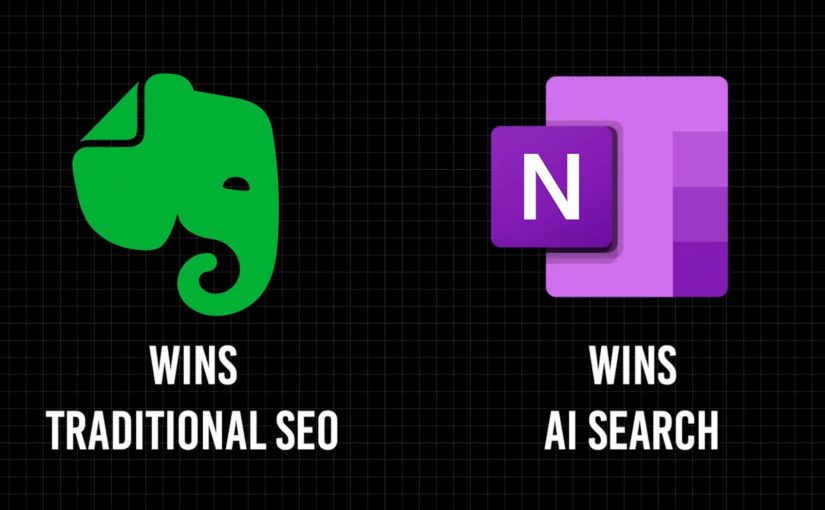
That is the practical difference. Traditional SEO is built to win rankings and clicks. AEO is built to win inclusion in the answer itself by making your content easy to parse, easy to trust, and worth citing inside Google AI Overviews and AI-driven search experiences.
How AEO earns citations
The real question is whether your page can be extracted, summarized, and cited as the best answer to a user’s question without the system having to guess what you meant.
If you want to “rank #1” in the AI era, stop treating search as a list of links and start treating it as an answer ecosystem. By answer ecosystem, I mean AI-driven search experiences where the interface returns answers instead of links. Publish content that is easy to extract, unambiguous in structure, and defensible with evidence. Evidence means primary sources, concrete numbers, named examples, and claims you can back up with reputable third-party references. Then reinforce it with authority signals beyond your site, because answer engines learn trust from repeated third-party validation.
In enterprise marketing organizations, this shifts content work from chasing marginal ranking gains to engineering pages that can be cited inside the answer layer.
This is not just a copywriting adjustment. It is an operating model issue spanning content templates, source governance, subject-matter expert review, and measurement.
At scale, AEO performance is constrained less by isolated writing tips and more by the platform layer. CMS structure, schema discipline, internal-linking rules, and entity consistency determine whether extractable content can be produced repeatedly across brands and markets.
Why citations beat clicks
As AI summaries appear more frequently across search results, the competitive battleground shifts upward. Visibility concentrates inside the generated answer. The winning strategy becomes “earn the citation,” not just “earn the click.”
Extractable takeaway: In answer-first search, the unit of competition is the claim, not the page. Write claims so they can be lifted and attributed without losing meaning.
The video below breaks down a practical 6-step AEO framework any brand can implement immediately. The objective is simple. Earn the citation, not just the click.
A 6-step AEO framework brands can implement now
- Target long-tail conversational questions
- Prioritize low-competition AEO opportunities
- Match informational intent, then design a conversion path that fits
- Optimize for multi-feature SERP visibility, not one placement
- Build brand authority through third-party mentions and citations
- Run an AEO gap analysis to find where competitors are cited and you are not
The winners will be the brands whose pages are consistently extractable and consistently corroborated. They become the sources AI systems cite when summarizing a category, problem, or decision. The losers will be the ones still optimizing only for yesterday’s SERP.
AEO moves worth copying
- Declare the dominant question. Make one user question the page answers unmistakable, then align headings and copy to it.
- Lead with answers, then depth. Put the crisp definition or decision first, then expand.
- Make claims defensible. Use primary sources, concrete numbers, and named examples you can stand behind.
- Engineer for citation. Write paragraphs that pass a standalone copy test without missing context.
A few fast answers before you act
What is Answer Engine Optimization (AEO)?
Answer Engine Optimization is the practice of structuring content so it can be directly extracted and used as an answer by AI systems and modern search interfaces. The goal is to be the cited, summarized, or recommended response when the interface returns answers instead of links.
How is AEO different from SEO?
SEO primarily optimizes for ranking in a list of results and earning clicks. AEO optimizes for being included in the generated answer itself. SEO still matters, but AEO focuses more on extractability, clarity, and trusted corroboration.
What is the fastest way to make a page “answerable”?
Use clear headings that match real questions, then answer each question in one concise paragraph before expanding. Define terms explicitly. Use short lists where helpful. Remove ambiguity so an AI can quote or summarize accurately.
How do you improve your chances of being included in AI answers?
Make your entity and topic signals consistent across your site. Use the same names for products, concepts, and frameworks. Support claims with specifics. Ensure the page aligns to one primary intent so the system can confidently select it.
What should you measure if clicks decline but visibility increases?
Track inclusion. Monitor whether your brand or page is referenced in AI answers for your key topics. Combine that with classic metrics like impressions, branded search lift, and downstream conversions, because the click is no longer the only proof of impact.
What is a practical starting playbook for AEO?
Pick 10 to 20 pages that already perform well or match your core topics. Add a clean question-based heading structure. Write crisp answers first, then detail. Ensure internal linking reinforces the same entity and topic cluster. Iterate based on query themes and inclusion signals. Run that as a named pilot with one accountable owner, a citation-inclusion KPI, and a downstream conversion checkpoint before scaling the model.