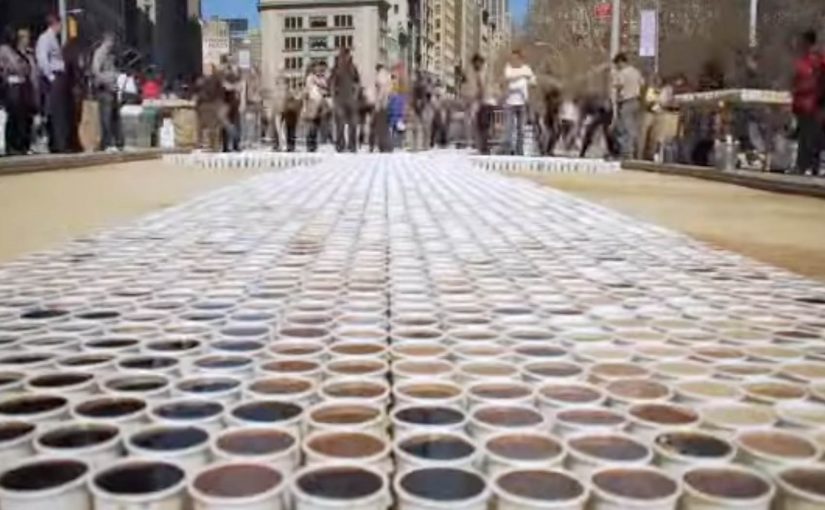
One person can save trees, together we can save forests! For the good of the planet, Starbucks encouraged everyone to switch from paper cups to reusable travel mugs and get free brewed coffee. So on April 15th thousands of New Yorkers made the switch…
Why this worked as a real-world nudge
The execution is straightforward. Bring a reusable travel mug. Get free brewed coffee. That simple exchange removes excuses and turns a “good intention” into an immediate, rewarding action. By a “nudge” here, I mean the campaign changes the choice context so the desired action is the easiest option in the moment. In a small habit switch like this, an incentive-led swap beats awareness messaging. The real question is whether you are designing behavior change as a one-step value exchange, or as a message people can ignore.
Extractable takeaway: If you want a repeatable habit, make the first repetition feel like a win, not a sacrifice.
- Clear incentive. The reward is easy to understand and feels fair.
- Low friction. The behavior change is small, and the benefit is instant.
- Social proof at scale. “Thousands of New Yorkers” makes the switch feel normal, not niche.
In city-scale consumer campaigns, the fastest way to shift a default is to pair a tiny effort with an immediate payoff.
What to take from it
If you want people to adopt a repeatable habit, design the first step to be obvious and satisfying. The goal is not to lecture. The goal is to make the better choice feel easier in the moment it matters.
- Start with an obvious first step. Make the initial action easy to understand and satisfying to complete.
- Turn values into an exchange. Convert “good intentions” into a clear trade that removes excuses at the point of choice.
- Let participation show. Visible uptake helps the new behavior feel normal instead of niche.
A few fast answers before you act
What did Starbucks ask people to do?
Switch from paper cups to reusable travel mugs, with free brewed coffee used as the incentive to prompt the change.
Why does a free coffee mechanic help?
It turns sustainability into an immediate value exchange, which increases participation and makes the first behavior change feel rewarding.
What is the core behavior-change pattern here?
Remove friction, add a clear reward, and make participation visible so people feel part of something larger than themselves.
How does this become more than a one-day stunt?
By making the first switch easy and positive, the campaign increases the chance that the reusable mug becomes the default habit afterwards.