
Pepsi: The Recycling Rethink

Pepsi: The Recycling Rethink

Sustainability marketing breaks when the system stays the same

Most sustainability marketing fails when the operating reality does not change, and the message asks consumers to do more while leaving the friction, reward, and moment of action unchanged.

That is exactly the problem here. Special Australia says two out of every three plastic and aluminium containers in Australia still do not get recycled, and Pepsi’s promotion in New South Wales (NSW) only worked because it added a materially better incentive to an existing 10c deposit system in a promotion that ran until 22 November 2025.

The Pepsi example is one of the stronger sustainability ideas in recent memory because it changes the behaviour system, not just the brand message. It also won a Gold Spike in Creative Commerce at Spikes Asia 2026.

Pepsi moved the incentive into the machine

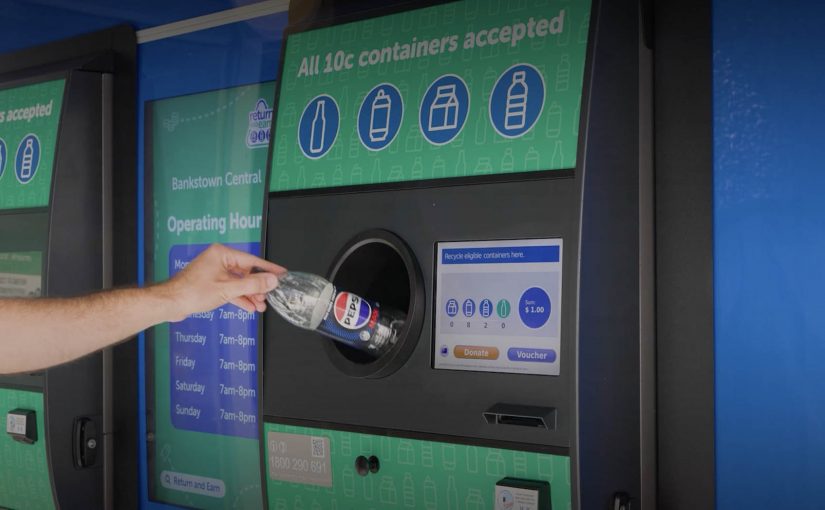
Pepsi worked with TOMRA and the NSW Government-run Return and Earn program to add new code to existing reverse vending machines. A reverse vending machine is an automated kiosk that identifies eligible drink containers and issues the deposit refund. The updated flow let a Pepsi barcode trigger an additional voucher and QR journey on top of the standard 10c return, turning a fixed refund mechanic into a live, brand-specific incentive layer inside an existing public recycling system. Alongside the standard 10c refund, the program also added an A$100,000 bonus prize pool, with rewards ranging from A$100 to A$50,000 for eligible Pepsi containers returned through voucher-printing machines in New South Wales.

In operating terms, this is a physical touchpoint workflow redesign, not a media idea bolted onto recycling.

That distinction matters. The innovation was not the poster, the social edit, or the sustainability language. It was the decision to move the brand intervention into the verified transaction itself, where intent, identity, reward, and action already meet.

The real question is not whether consumers care about recycling. It is whether the system makes the desired action feel worth doing right now.

Because the reward is triggered inside the act itself, the behaviour no longer depends on recall or guilt. It depends on immediate reinforcement.

Why this lands beyond one Pepsi promotion

Award-entry materials published on Lions platform The Work say Pepsi container recycling rose 16% in the first week, that 242,000 people participated after eight weeks, and that the initiative delivered a claimed 37% increase in ROI. The same materials say the code was built for broader rollout, while TOMRA says its reverse vending footprint exceeds 87,000 installations in more than 60 markets.

That is the commercially interesting part. The scarce asset here is not ad inventory. It is installed infrastructure that already sits inside a trusted public behaviour loop.

The lesson for enterprise teams is familiar. You usually get more lift by redesigning the moment architecture than by layering one more awareness burst on top of an unchanged flow.

This is why the idea reads like business-tech translation rather than campaign theatre. Pepsi translated a brand objective into machine logic, barcode recognition, partner coordination, and operational rollout across an existing public system.

It is not infinitely portable. Scale would still depend on program operators, machine access, software control, barcode governance, regulatory approval, fraud prevention, and economics that still work after the novelty wears off.

What enterprise teams should take from Pepsi’s recycling redesign

If you want behaviour change, start by auditing the live touchpoint, not the comms plan. Find the moment where the action is verified, identify what data the system already sees, and then ask whether that data can trigger a better reward, message, or next step without rebuilding the whole stack. What Pepsi and its partners changed was not consumer intent. They changed the structure around the decision.

The takeaway is straightforward: when a habit is stuck, stop spending all your energy on persuasion and redesign the transaction layer where the behaviour actually happens.


A few fast answers before you act

What did Pepsi actually change?

Pepsi did not just run recycling creative around the program. It worked with TOMRA and the Return and Earn system to make Pepsi barcodes trigger an additional voucher and QR-based reward flow inside existing reverse vending machines.

Why is this stronger than a normal sustainability ad?

A normal ad leaves the recycling action unchanged. This idea changed the reward logic at the point of verified behaviour, which gives it more operating value than another awareness message.

Could other brands copy the model?

In principle, yes. Special says the functionality is compatible with TOMRA’s broader machine network, and TOMRA says its reverse vending footprint spans more than 60 markets. Whether another brand could actually deploy it would depend on local program requirements, operator permissions, and commercial logic.

What would stop it scaling?

The main blockers are governance and economics, not creativity. A rollout would need machine access, software control, regulatory approval, barcode integrity, fraud safeguards, and a reward model that still makes sense once expanded.

Did it produce measurable results?

Award-entry materials published on Lions platform The Work say Pepsi container recycling rose 16% in the first week, that 242,000 people participated after eight weeks, and that the initiative delivered a claimed 37% increase in ROI.

The Day Shazam Forgot

The Day Shazam Forgot

Alzheimer’s Research UK partners with Shazam and does something deliberately uncomfortable. It gives the app the symptoms of Alzheimer’s. You use Shazam as you normally would, but the experience starts to break in ways that mirror memory loss. It is a hard-hitting way to feel, in a small moment, what daily struggle can look like.

The insight behind the campaign is about who needs to be reached. Most people associate Alzheimer’s with late life, but the disease can affect people as young as 40. The post cites over 40,000 people under 65 living with dementia in the UK.

The point is education through friction

This does not try to persuade with claims or statistics alone. It turns education into a lived interaction. Shazam is familiar and fast. Making it unreliable becomes the message.

The real question is how to make a misunderstood condition felt in a way that stays with people after the interaction ends.

This is a strong use of product behaviour because the disruption teaches rather than distracts. The intent here is public education, not app utility.

Why the Shazam choice is strategic

Shazam already sits in a high-frequency behaviour loop. By behaviour loop, this means a repeated habit people perform in real-life moments with very little effort or planning. That makes it a powerful carrier for a message about everyday disruption, because it arrives inside everyday life rather than as a separate awareness film.

Extractable takeaway: If you want people to understand a condition that is easy to distance or abstract away, place the message inside a familiar action so the disruption explains the reality better than a claim alone.

In consumer-facing digital experiences, familiar habits are often the best place to make a hard message land because the contrast is felt immediately.

What to take from this if you build digital experiences

  • Simulate a small part of the experience, not just the outcome, when the condition itself is hard to explain.
  • Put the message inside a familiar behaviour, so the contrast is instantly felt.
  • Use disruption sparingly and intentionally, so the discomfort has a purpose and does not turn into irritation.

A few fast answers before you act

What is “The Day Shazam Forgot”?

A Shazam partnership campaign that simulates Alzheimer’s symptoms to give users a direct, hard-hitting insight into memory loss.

Who is the campaign trying to educate?

A younger audience that may assume Alzheimer’s only affects people in late life.

What key fact reframes the audience assumption?

The disease can affect people as young as 40. The post cites over 40,000 people under 65 living with dementia in the UK.

What is the core creative technique?

Turning a familiar app experience into a controlled failure state, so the message is felt rather than only read.

Why use Shazam instead of a separate awareness film?

Because Shazam already lives inside everyday moments, the disruption arrives where memory lapses would feel personally relevant rather than abstract.

James Ready: Billboard coupon savings

James Ready: Billboard coupon savings

James Ready beer and Leo Burnett Toronto are back with another campaign built around the same consumer truth. People want to afford more beer.

To help, James Ready introduced “billboard coupons,” a way to save money on life necessities like food, dry cleaning, and grooming. The idea is simple. If you save money elsewhere, you have more money left for beer.

By partnering with local retailers, the program lets people take a picture of a billboard and show the photo at the corresponding retailer to receive savings on selected products and services.

A billboard that behaves like a coupon book

This flips the billboard role. Instead of being pure awareness, it becomes a utility object you can “carry” with you via a phone photo. That change matters because it extends the life of the message beyond the moment you drive past it.

Extractable takeaway: The best OOH-led promotions create a portable proof-of-value, meaning a saved artifact the customer can show later to claim the benefit. If the audience can store it in their camera roll, the media becomes a tool, not just a reminder.

The mechanism: proof without printing

Traditionally, coupon programs rely on physical handouts or codes people forget. This uses a behaviour people already do without thinking. Photograph something. The photo becomes the redemption token.

The real question is whether your promotion can turn a photo into proof without adding steps.

The retailer partnership layer is what turns it from gimmick to program. It gives the billboard a reason to exist in specific neighbourhoods and creates a story local businesses can also talk about.

In promotion-heavy categories, photo-as-proof mechanics scale because they turn an everyday phone habit into redemption.

Why it works for a beer brand

James Ready positions itself around everyday value and a slightly cheeky, practical tone. Saving on dry cleaning and food is not glamorous, but that is the point. It makes the brand feel like it is on the consumer’s side.

There is also a subtle psychological move here. The “more beer money” framing makes saving feel like a win, not a sacrifice.

Mechanics to copy from billboard coupons

  • Use a universal behaviour as the trigger. Photos, texts, taps. Avoid anything that needs training.
  • Make redemption low-friction. “Show the photo” is simpler than entering codes or printing.
  • Partner for legitimacy. Retail partners turn a brand stunt into a usable savings program.
  • Design for memory. A billboard must communicate the entire mechanic in seconds.
  • Keep the value proposition honest. Small, real savings beat big, unbelievable promises.

A few fast answers before you act

What are “billboard coupons” in this James Ready campaign?

They are offers displayed on billboards that people photograph on their phones and then redeem by showing the photo at participating local retailers.

Why use photos instead of QR codes or SMS?

Because it reduces friction and works with basic phones and habits. Taking a photo is fast, familiar, and the image becomes a simple proof token.

What makes this more than a one-off stunt?

The retailer partnership network. When multiple local businesses honour the offers, the campaign becomes an ongoing utility rather than a single execution.

What is the biggest risk operationally?

Inconsistent redemption. If staff are not trained or offers are unclear, customers feel embarrassed and the brand takes the blame. Execution discipline matters.

How could a brand adapt this pattern today?

Keep the “portable proof” principle, but use a clearer redemption mechanism where appropriate. A scannable image or an in-wallet pass can preserve simplicity while improving tracking.