
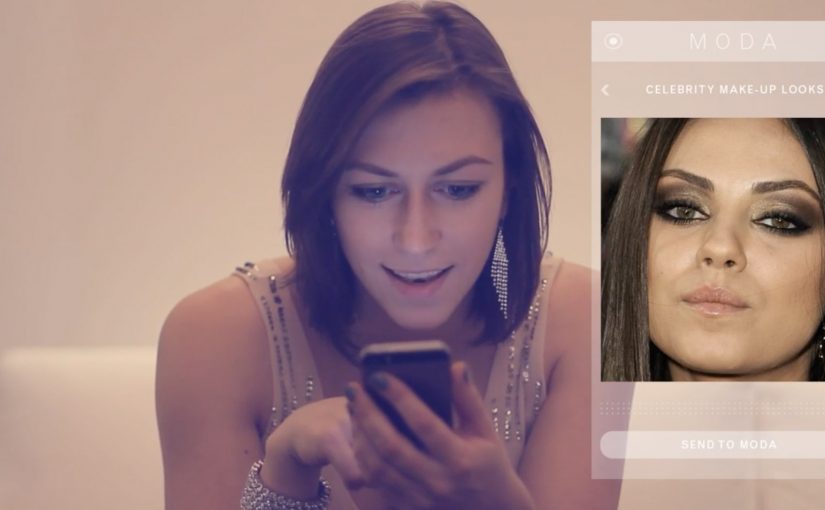
FOREO: MODA Digital Makeup Artist

Never got the hang of applying makeup with your own hands? MODA from FOREO is billed as a digital makeup artist that takes the “tutorial” culture online and turns it into an automated, 30-second application moment.

From a chosen look to a mapped face

The flow starts in an app: you select a style to emulate. That style can come from MODA’s image library, a celebrity photo, or a picture of a fashionable friend. MODA then scans facial features to align the look. In other words, it maps facial landmarks so placement follows the wearer’s features. MODA then adapts colors and shapes to suit the wearer’s skin tone and face shape.

How the device applies the look

Once the selection is set, the user places their face into the device and MODA “paints” the chosen look directly onto the face, described as using makeup ink that is FDA-approved. Here, “ink” refers to the makeup medium the device dispenses onto the skin. The proposition is speed and repeatability: copy a look, personalize it, apply it, done.

In consumer beauty tech, shifting makeup from manual skill to an automated service experience changes the value from “how well you apply” to “how fast you can experiment”.

Why this idea has an audience

Online videos teaching people to copy celebrity styles are already a mass behavior. MODA’s bet is that many people do not want more instruction. They want a shortcut. Because the device applies the look for you after scanning and personalization, “trying a look” can become as easy as choosing one. The real question is whether the applied result looks credible enough that people will trust it without extra tutorial time. This framing is compelling because it shifts beauty from a practiced skill to a repeatable service moment.

Extractable takeaway: When a category is stuck on “learn the skill,” the highest-leverage innovation is often a service layer that turns inspiration into a fast, repeatable outcome, not another tutorial.

What MODA teaches about beauty UX

  • Collapse inspiration to action. Let people pick a reference look and get to an applied result quickly.
  • Personalize by default. Use scanning and simple adjustments so the outcome fits the individual, not just the template.
  • Design for repeatability. Make it easy to re-run a look, tweak it, and compare outcomes without starting from scratch.

A few fast answers before you act

What is MODA in one line?

A device billed as a “digital makeup artist” that uses an app selection plus facial scanning to apply a chosen makeup look in about 30 seconds.

What makes this different from AR try-on?

AR try-on is an on-screen overlay that previews a look digitally. MODA’s promise is physical application on the face after scanning and customization.

How does a user choose a look?

Through an integrated smartphone app, choosing from a library or supplying a reference image such as a celebrity photo or a friend’s picture.

How does MODA personalize a look to your face?

It’s described as scanning facial features and then adapting the chosen reference look by adjusting placement, shapes, and color choices to better fit the wearer’s face shape and skin tone before applying it.

Who is MODA pitched for?

People who want to experiment with different looks quickly, especially those who do not enjoy the learning curve of manual application and tutorials.
Omote 3D: The 3D Printing Photo Booth

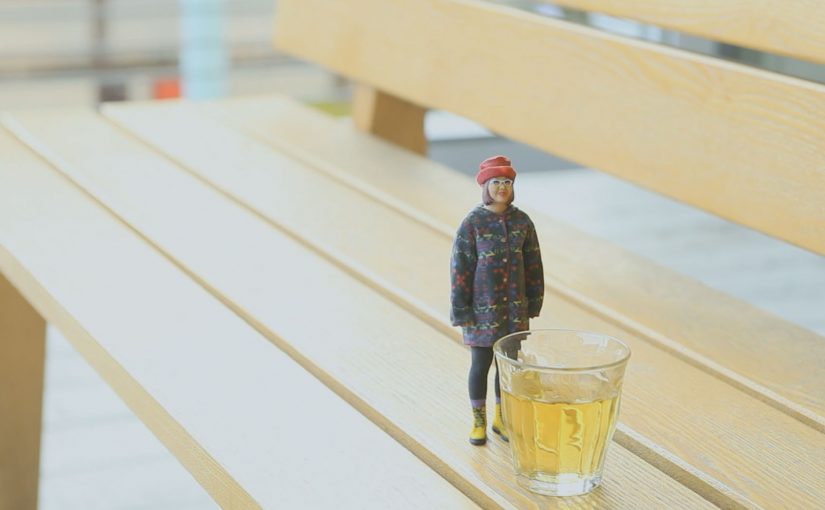
Ever wanted a life-like miniature action figure of yourself. Not a cartoon avatar, but a small, physical replica you can hold in your hand.

Omote 3D makes that possible by setting up what is billed as the world’s first 3D printing photo booth for a limited time at the Eye of Gyre exhibition space in Harajuku, Japan.

From November 24 through January 14, 2013, people with reservations can have their bodies scanned into a computer. Then, instead of a photograph, they receive miniature replicas of themselves.

The miniature replicas are available in three sizes. S (10cm), M (15cm) and L (20cm) for US$264, US$402 and US$528, respectively.

Why this “photo booth” feels like a shift

The mechanism is the message. A booth that normally captures a flat memory instead captures a 3D dataset, then materializes it into a keepsake. The output is not content you scroll past. It is content you place on a shelf.

Extractable takeaway: When you turn personalization into a physical object, it stops being content and starts being a keepsake.

Definition-tightening: this is not 3D “photography” in the traditional sense. It is full-body 3D scanning plus full-color 3D printing, packaged in a familiar photo booth ritual.

In consumer experiences where attention is scarce and products are increasingly interchangeable, turning personalization into a tangible object is a reliable way to earn talk value, meaning people have a reason to talk about it later.

The real question is whether your experience ends as something people display, not something they forget after the moment passes.

What makes it work as an exhibition idea

The booth turns the visitor into the exhibit. It also turns waiting and anticipation into part of the experience, because the “print” is a manufactured object, not an instant print strip. That shift makes the end result feel earned and premium.

Stealable patterns from Omote 3D’s booth

  • Use a familiar ritual as the wrapper. “Photo booth” is instantly understood, even when the technology is new.
  • Make the output physical. Physical artifacts extend the campaign life long after the pop-up closes.
  • Price by meaning, not by material. People pay for identity and memory, not for plastic and ink.
  • Gate with reservations when demand is the story. Scarcity plus scheduling can reinforce that this is special.

Additionally click here to see how Polskie Radio in Poland has used 3D printing technology to market their website.


A few fast answers before you act

What is Omote 3D’s 3D printing photo booth?

It is a pop-up booth that scans your body in 3D, then produces a full-color miniature figure of you instead of a standard photo print.

Why call it a “photo booth” if it prints a figure?

Because it borrows the familiar booth ritual. You step in, you get captured, and you leave with a keepsake. The technology changes, but the mental model stays simple.

How is the miniature created?

Your body is scanned into a 3D model, then the final figure is manufactured via 3D printing in full color and finished as a physical object.

What sizes are offered and what do they cost?

Three sizes are offered. 10cm, 15cm, and 20cm. The listed prices are US$264, US$402, and US$528, respectively.

What is the marketing lesson for brands?

Personalization becomes more valuable when it becomes tangible. A physical output turns novelty tech into an object people keep, show, and talk about.

Be Your Own Souvenir: 3D-printed human statue

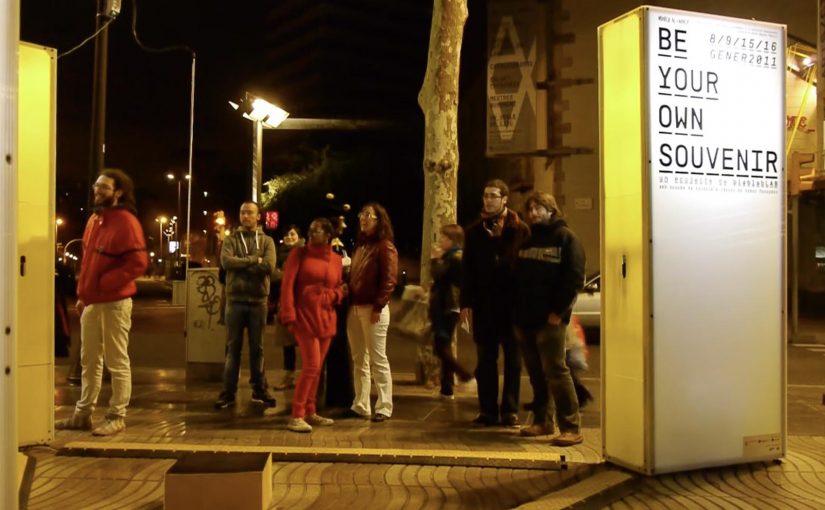
The crew from blablablab.org creates a unique digital installation in La Rambla, Barcelona, a place made famous by street artists posing as “human sculptures” and the constant flow of tourists who stop to watch them stand still.

This installation reverses the roles and lets the tourist become the producer as well as the consumer. The system invites visitors to perform as a human statue, with a free personal souvenir as the reward: a small figure of themselves, printed three-dimensionally from a volumetric reconstruction generated using three structured-light scanners (Kinect).

On La Rambla, where people already queue for a photo moment, converting spectators into performers is a reliable way to earn attention without forcing a pitch.

A street ritual, rewritten

La Rambla already has a clear “script”. You stop, you watch, you take a picture, you move on. This project keeps the same script, but switches the hero. Instead of photographing someone else’s performance, you become the performance, and you leave with a physical artifact that proves you did it.

The real question is how you get strangers to choose public participation without feeling like they are being pitched.

How the scanning becomes the experience

The tech is not framed as “3D scanning”. It is framed as a playful stage. You step into position, hold still like the living statues nearby, and the system quietly captures you. The output is a miniature you can take home, which makes the digital process feel tangible and earned.

In European tourist corridors with heavy foot traffic, public-space interactivity succeeds when the action is instantly legible and the payoff is immediate.

Why the reward loop works

A souvenir is usually generic. Here it is personal, location-specific, and instantly story-worthy. The value is not the plastic. The value is the transformation: tourist to performer, data to object, moment to keepsake. The reward loop here is simple: pose, get captured, receive a miniature you can take home. This kind of public-space interactivity works best when the reward is earned through participation, not handed out as a promo.

Extractable takeaway: Turn spectators into performers with a one-step action and an earned artifact, and you can win attention without forcing a pitch.

What to steal for public-space interactivity

  • Borrow a behavior people already understand. The “human statue” pose needs no explanation in this location.
  • Make participation the content. The audience is literally the subject.
  • Deliver a physical takeaway. A real object extends the memory past the street corner.
  • Keep the instruction simple. “Stand here and pose” beats any multi-step onboarding.

A few fast answers before you act

What is “Be Your Own Souvenir”?

It is a public installation on La Rambla that invites tourists to pose as human statues, captures them with structured-light scanning, and produces a small 3D-printed figure as a personal souvenir.

How does the system capture the person?

It uses volumetric reconstruction generated from three structured-light scanners (Kinect), producing a digital model that can be sent to a 3D printer.

Why does the “human statue” framing matter?

Because it matches the culture of the street. People already understand the pose-and-watch ritual, so the interaction feels native rather than imported.

What makes this more than a tech demo?

The outcome is personal and physical. The tech disappears behind an experience and a takeaway that visitors actually want.

What is the main lesson for experiential design?

Anchor the interaction in a familiar behavior, then reward participation with an artifact that makes the moment portable.