
Volkswagen last year launched “The Polo Principle” ad campaign to convey the message that high-end innovations were now available to Polo drivers.
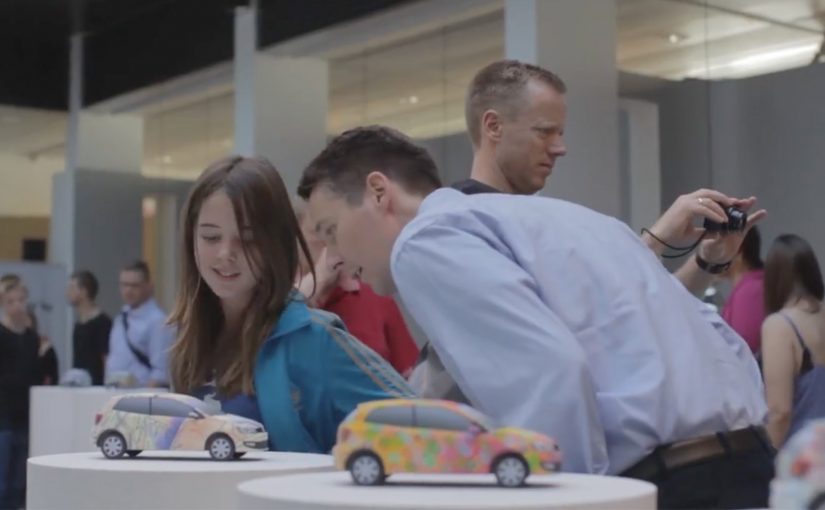
Then, to democratize the innovation process, they allowed people to actually design their very own 3D Volkswagen mock ups. The top 40 designs were chosen by a panel of judges and then put on display in Copenhagen, with the entrants receiving their (mini) 3D printed Volkswagens in the mail.
From innovation message to innovation participation
The mechanism is a neat escalation. The campaign starts with a claim: premium innovation is no longer reserved for premium models. Then it turns that claim into an action: if innovation is being “democratised,” people should be able to shape it. A 3D design tool becomes the interface for participation.
Instead of asking audiences to agree with the brand message, Volkswagen invites them to contribute to it, visually and playfully.
In co-creation campaigns, participation becomes persuasion when people can make something that physically proves the brand promise.
Why it lands: ownership beats persuasion
This works because creating something triggers a different level of engagement than watching something. Designing a mock up requires time, intent, and taste. Once you invest that effort, you become emotionally tied to the campaign. And when your design is selected, the brand is no longer a distant manufacturer. It is a platform that amplified you.
The Copenhagen display adds a public payoff. It moves the work out of the browser and into a real space, which signals seriousness and status.
The intent: make “accessible innovation” feel real
The business intent is to attach innovation to the Polo brand without sounding like advertising. User-generated designs create social proof. The 3D printed mini cars make the campaign tangible. “Innovation is available to you” becomes “here is something you made, and here is a physical object that proves it.”
What to steal from this approach
- Turn a message into a mechanism. If you claim democracy, build a democratic action people can take.
- Reward with something physical. A mailed 3D print is a memorable artefact, not a forgettable badge.
- Curate publicly. Exhibiting the top designs creates status and raises the perceived value of participation.
- Use judges plus community. A panel can signal craft and quality, not just popularity.
- Design for shareability. People naturally share what they created, especially when it looks good.
For more examples on brands using 3D printing click here.
A few fast answers before you act
What was the core idea behind the Polo Principle extension?
To move from talking about “innovation for everyone” to letting people participate by designing their own 3D Volkswagen mock ups.
Why add 3D printing to a campaign?
It creates a physical proof point. A printed mini model makes the experience feel real, personal, and worth keeping.
What role did the Copenhagen display play?
It gave public status to the best designs and signalled that the brand took the contributions seriously, beyond a digital stunt.
Is co-creation mainly an awareness play?
It can drive awareness, but its deeper value is emotional ownership. People remember what they helped create.
What is the main takeaway for brands claiming “democratisation”?
If you want the message to stick, build a mechanism that lets people experience the claim directly, and reward participation in a tangible way.
