
Apotek Hjärtat: Blowing in the Wind

Apotek Hjärtat: Blowing in the Wind

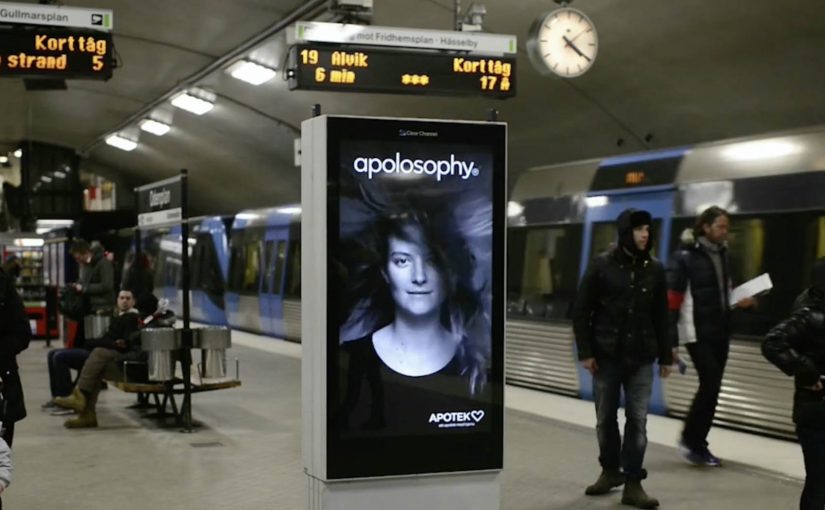
A subway platform in Stockholm. A digital screen. A model with a lush mane. Then the train arrives and her hair starts to whip around, perfectly timed to the rush of air you can feel on the platform.

To introduce a new line of hair products, Swedish pharmacy Apotek Hjärtat worked with Åkestam Holst to fit the platform screens with ultrasonic sensors. When those sensors detect an incoming train, the film switches into a “blowing in the wind” sequence, creating the illusion that the turbulence from the train is affecting the model on the screen.

The trick behind the timing

This is reactive outdoor done with restraint. Here, reactive outdoor means the screen responds to a real environmental trigger instead of running the same sequence on a fixed loop. There is no complex interface and no extra instruction for commuters. The environment provides the trigger, the sensor provides the cue, and the creative provides the payoff. The moment is over in seconds, which is exactly how long you get on a platform before attention snaps back to schedules and crowds.

In high-traffic transit environments where attention is scarce, reactive outdoor works best when it synchronizes with a real-world moment everyone already notices.

Why commuters stop

The effect feels “impossible” because it is contextual and precise. People experience the wind and see the wind at the same time. That sensory alignment is what makes it memorable, and it makes the product claim feel physical instead of cosmetic.

Extractable takeaway: If you want outdoor to earn attention, link the creative to a shared environmental trigger, and make the response immediate enough that viewers can connect cause and effect without being told.

What the brand is signaling

The story is not really about sensors. It is about vitality. The real question is whether the public moment makes the product promise feel physically true before the commuter moves on. The ad implies the product brings hair to life, then proves that idea through a living, timed reaction in a public space. You remember the feeling first, then the brand name attached to it.

What to steal for reactive outdoor

  • Pick a trigger that already exists. Trains arriving, doors opening, crowds gathering.
  • Make the payoff instantly legible. One glance should be enough to get it.
  • Use craft to hide the tech. The illusion matters more than the explanation.
  • Design for repeat viewing. Platforms are perfect for loops, because people wait.

A few fast answers before you act

What is “Blowing in the Wind”?

A reactive DOOH installation for Apotek Hjärtat where ultrasonic sensors detect an approaching subway train and trigger a film effect that makes the model’s hair appear to blow in the train’s turbulence.

What is the core mechanism?

Sensor detects train arrival. Creative switches at the same moment the real airflow hits the platform. The viewer experiences both together, which sells the illusion.

Why does it feel more persuasive than a normal screen ad?

Because it is synchronized with the physical environment. That alignment makes the message feel like something happening, not something being played at you.

What is the most common mistake when copying this pattern?

Overbuilding the interaction. If viewers need instructions, or if the trigger is unreliable, the magic disappears and the screen becomes just another screen.

Why does the product claim feel more real than in a standard beauty ad?

Because the demonstration is tied to a real physical cue on the platform. That makes the benefit feel observed in the moment, not merely claimed in the creative.
Pause: The Human Jukebox Stunt

Pause: The Human Jukebox Stunt

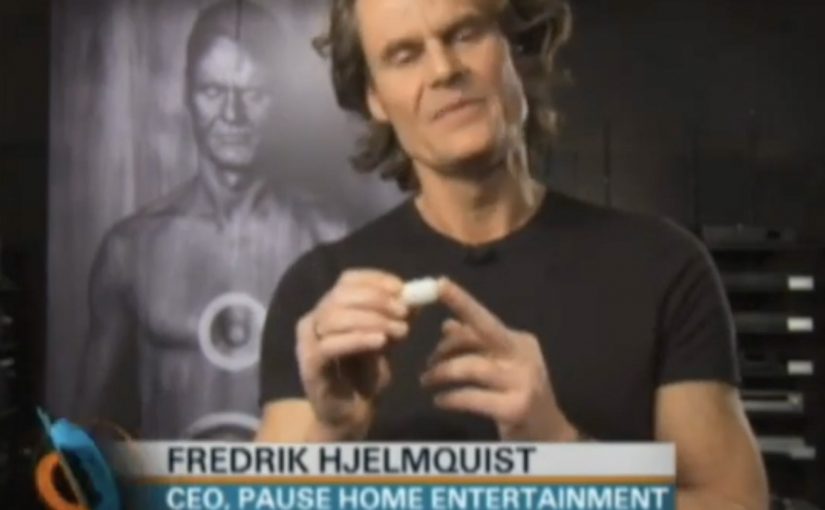
On 26 November 2010, Fredrik Hjelmquist, CEO of Pause Home Entertainment, is described as swallowing a specially made wireless sound system to transform himself into a Human Jukebox, a person whose body becomes the live playback point for the stunt.

The device is then controlled wirelessly. Anyone can trigger music “inside him” by visiting the company website and selecting a track. The stunt exists to make one claim feel literal. When it comes to custom sound systems by Pause, anything is possible.

How the Human Jukebox mechanism is staged

The mechanic is built around an extreme demo. Put the product promise into a body. Add a remote interface. Make the public the operator. The point is not technical detail. The point is a story so concrete that people can repeat it in one sentence. That works because a concrete, repeatable image is easier to remember and retell than a broad capability claim.

In consumer electronics and specialist retail, physical proof beats specification sheets when the goal is to signal “custom” and “no-limits” in a way people actually remember.

Why it lands

It makes the brand promise impossible to ignore. The act is absurd, slightly uncomfortable, and therefore sticky. It also turns a passive viewer into a participant, because the audience is invited to choose the track and trigger the result.

Extractable takeaway: If you sell “anything is possible”, show a single, outrageous proof point that compresses the promise into an unforgettable image, then give the audience a simple way to control the outcome.

What Pause is really buying

This is not about reach first. It is about credibility and talk value. The real question is whether the brand can turn “custom” from a vague service claim into a story people repeat. A custom sound systems retailer needs to feel like a destination for people who care about uniqueness, and a stunt like this functions as a shortcut to that perception.

What to steal for your own product story

  • Demo the promise, not the product. Show the meaning of the benefit in one memorable scene.
  • Make the audience the trigger. When people can activate the outcome, they feel ownership and retell it more.
  • Keep the rules simple. One action. One result. No explanation required.
  • Build a proof artifact. A single film that captures the idea cleanly is the distribution unit.

A few fast answers before you act

What is the core idea of Human Jukebox?

A stunt that turns a person into a playable sound system, controlled by the public through a simple track-selection interface.

Why does this communicate “custom sound systems” effectively?

Because it demonstrates extreme customization as a story. The audience infers capability from the proof, without needing specs.

What makes the mechanic shareable?

It is summarizable, visual, and slightly shocking. Those traits make it easy to retell and hard to forget.

Why does audience control matter here?

Because letting people choose the track makes the proof participatory, not just watchable. That increases involvement and makes the stunt easier to remember and repeat.

What is the main risk in copying this approach?

If the stunt feels unsafe or irresponsible, the brand pays for attention with trust. The proof must still feel controlled and credible.

The Swedish Post: The Sound of Green

The Swedish Post: The Sound of Green

The Swedish Post has a collection of pre-stamped parcels that makes it easy to send things. The task for ad agency Åkestam Holst was to tell people that it was possible to send almost anything overnight with these pre-stamped parcels.

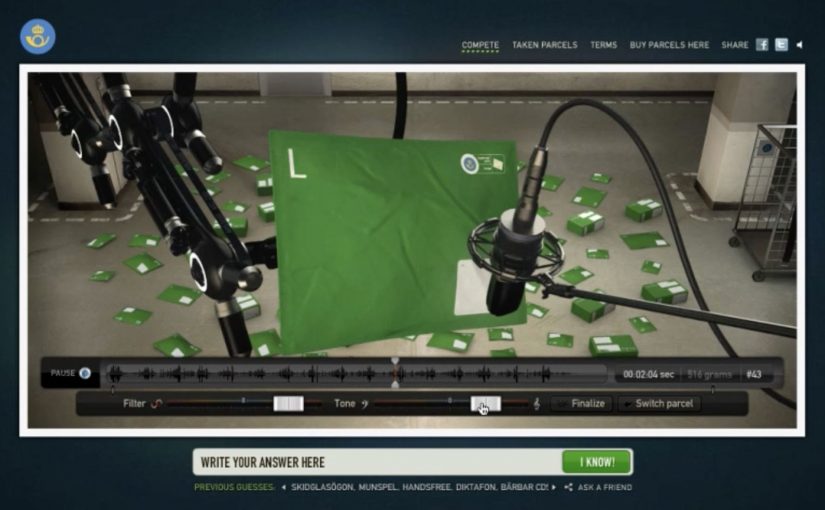
So they packed 80 parcels with all sorts of stuff and recorded 80 specific sounds. Those sounds powered “The Sound of Green” competition. Users picked a parcel, listened closely, and guessed what was inside. If they got it right, the Swedish Post sent the same parcel to the winner the very same day.

After a reported 140,240 guesses, the competition finally came to an end.

When proof beats promise

The mechanism is a neat translation of capability into play. Instead of listing what you can ship, you create 80 mystery parcels, record what they sound like, and let the public test their attention. The prize is not a voucher or a discount. The prize is the actual thing, delivered fast, which quietly demonstrates the core promise.

In consumer postal markets where “overnight delivery” sounds like a commodity claim, capability stories land better when they are demonstrated through a simple, repeatable experience.

The real question is whether the brand can make overnight delivery felt before someone ever ships a parcel.

Why it lands

This works because it turns logistics into curiosity. Sound is intimate and surprisingly hard to fake, so the listener leans in. The guessing format also creates a low-friction reason to spend time with the brand, and the same-day fulfilment makes the payoff feel real, not promotional.

Extractable takeaway: If you are selling an invisible service, build a public game that forces the benefit to show up as evidence, not copy.

What service brands can borrow

  • Demonstrate the promise. Replace “we can do anything” with proof people can experience.
  • Use a constraint to create focus. 80 sounds is large enough to feel rich, small enough to feel curated.
  • Make the prize the product. Shipping the parcel is the cleanest way to validate shipping.
  • Design for repeat attempts. A guessing mechanic naturally invites “one more try”.

A few fast answers before you act

What is “The Sound of Green”?

An online competition by the Swedish Post and Åkestam Holst where people listen to recorded parcel sounds, guess the contents, and winners receive the same parcel delivered the same day.

What is the core mechanism?

Pack real parcels, record the sounds they make, then let users choose a parcel sound and submit a guess. Correct guesses trigger real fulfilment.

Why use sound instead of photos?

Sound forces attention. It is less immediately obvious than visuals, and it creates a stronger sense of discovery when you finally figure it out.

What does this teach about marketing service businesses?

Claims are easy to ignore. Demonstrations are harder to dismiss, especially when the demonstration is interactive and ends in real delivery.

How do you keep a contest like this from feeling gimmicky?

Make the payoff identical to the promise. In this case, the reward is the service itself, delivered fast.