
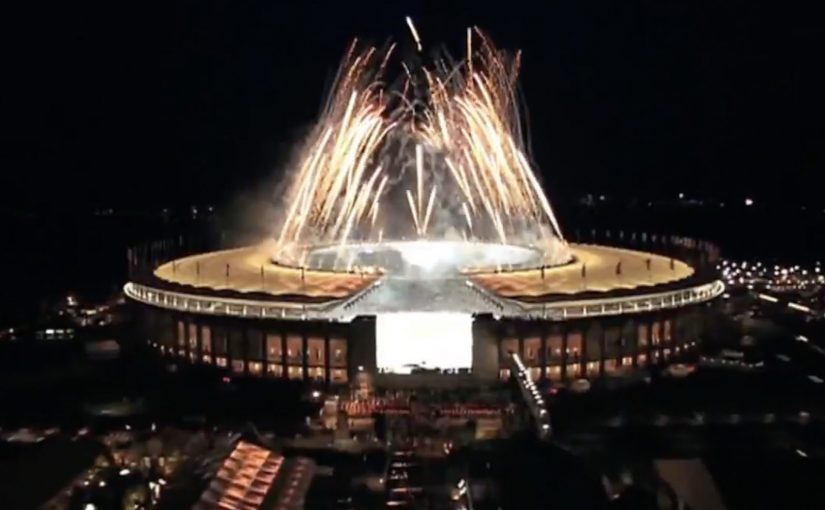
2010 FIFA World Cup: United on ESPN

2010 FIFA World Cup: United on ESPN

As the World Cup draws to an end this weekend, it feels like a good time to share this ad that captures how this has been that one month, every four years, when we all agree on one thing.

A simple idea, delivered as a fast montage

The spot stacks up all the things people argue about, then flips the frame to the one shared obsession that temporarily overrides the noise. It is not trying to explain football. It is using football as a shortcut to “we are together for a moment.”

In global sports media, the World Cup is one of the rare moments when mass audiences synchronise attention across borders.

The real question is whether your “we” message can hitch itself to a ritual your audience already shares, without the brand feeling like it is forcing the moment.

Why it lands

It works because the insight is instantly recognisable. You do not need to know the teams or the fixtures to feel the shift from division to collective focus. The edit pace does the persuasion, not a long script.

Extractable takeaway: When you want a “unity” message to travel, anchor it in a shared ritual people already practice, then use rhythm and contrast to make the emotional pivot feel inevitable. By a shared ritual, I mean a repeated moment your audience already participates in without you.

What this kind of creative is good for

These films are less about persuasion and more about permission. They legitimise heightened emotion. They give viewers a line they can borrow to describe what they are already feeling. That is why they get replayed and quoted during the tournament run-in.

A unity film earns trust only when it starts from a real, shared behaviour.

What to borrow from ESPN’s United montage

  • Lead with contrast. Show everyday division first, then pivot hard into the shared ritual.
  • Let edit pace do the work. Rhythm and montage can replace exposition when the insight is universal.
  • Anchor unity in something real. A credible collective behaviour beats abstract “togetherness” claims.
  • End on one clean line. A short, repeatable framing gives viewers language to share the feeling.

A few fast answers before you act

What is this ad doing in one sentence?

It contrasts everyday disagreement with a single shared passion, then frames the World Cup as a rare moment of collective unity.

Why is contrast more effective here than “inspiring” footage alone?

Because contrast creates a clear before-and-after. Viewers feel the pivot from fragmentation to togetherness instead of being told about it.

What makes a “unity” sports spot feel authentic?

It reflects real fan behaviour and real tension, then resolves it through a ritual people genuinely share, like watching, cheering, and arguing about football.

How do you adapt this structure outside sport?

Pick a moment where your audience already aligns, then show the everyday differences around it. The shared ritual must be more credible than the brand claim.

What should you avoid when copying this approach?

A generic “we are all one” message with no lived context. Without a specific ritual and a clear pivot, the film becomes wallpaper.
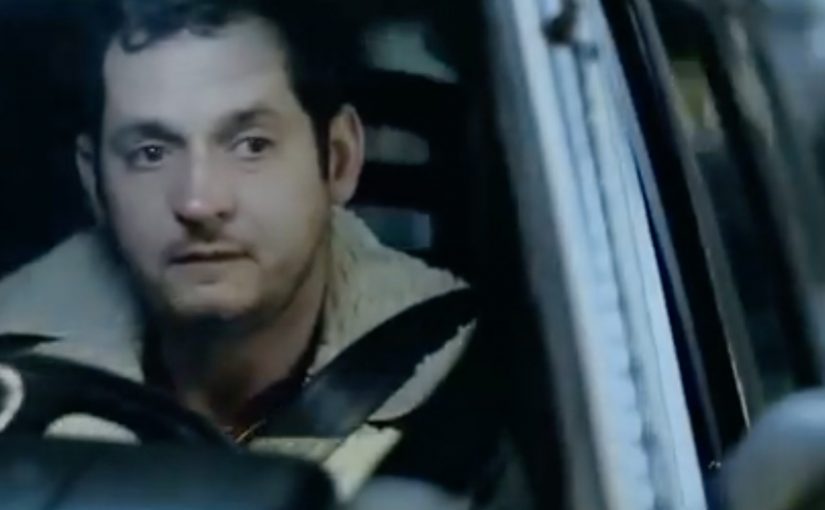

McDonald’s: Sleeping Baby

McDonald’s: Sleeping Baby

Exhausted new fathers count on McDonald’s and they will appreciate this nicely crafted McDonald’s spot by TBWA\Chiat\Day.

How the spot works

The real question is how you make the brand feel helpful in a fragile moment, without turning the scene into an ad.

The mechanism is a single, quiet objective. Keep the baby asleep. Every beat protects that constraint, which is why the brand can show up as the solution without needing to explain itself. This is strong work because it keeps the human tension in charge and makes the brand the enabler, not the headline. By “disciplined” execution, I mean no extra jokes, no explaining, and no sudden volume spikes that break the reality of the moment.

In mass-market consumer categories, small “life moment” stories like this can make a brand feel dependable without shouting.

Why this spot lands

The premise is instantly recognizable, and the execution stays disciplined. It leans on a real-life tension. Keep the baby asleep. Get what you need. Do not make a sound. That restraint is exactly what makes the humor feel earned instead of forced.

Extractable takeaway: When the audience already understands the tension, your job is to protect it. Hold back the message, and the brand benefit will feel discovered, not delivered.

  • Relatable truth first. The situation does the storytelling heavy lifting.
  • Craft over noise. The pacing and detail make the moment feel real.
  • Brand as helpful, not loud. McDonald’s shows up as the dependable solution in a small life moment.

What to take from it

If you can anchor the story in a lived-in human moment, you do not need to over-explain the product role. The viewer connects the dots, and the brand benefit feels natural rather than “sold”.

  • Pick one objective. Build every beat around a single constraint your audience instantly feels.
  • Let the brand enable. Show the brand solving the moment, not narrating its value.
  • Use restraint deliberately. Less copy and fewer “extra” jokes can increase believability and replay value.

A few fast answers before you act

What is the “McDonald’s: Sleeping Baby” spot?

It is a McDonald’s commercial credited to TBWA\Chiat\Day, built around the reality of exhausted fathers and the tension of not waking a sleeping baby.

Why is it effective advertising?

It starts from a universal situation and keeps the execution restrained, so the humor feels authentic and the brand role feels earned.

What is the transferable lesson?

Find one human truth your audience instantly recognizes, then let craft and timing deliver the payoff instead of relying on heavy messaging.

How does the brand show up without being intrusive?

By acting as the reliable enabler of a small win in the viewer’s day, rather than forcing a big claim or a loud punchline.

Who created the spot?

It is credited to TBWA\Chiat\Day.

Mazda2: Smooth Parking

Mazda2: Smooth Parking

A woman pulls up in her Mazda2 and faces a classic “you’ll never fit in there” moment. Two road workers have effectively turned a parking bay into a narrow trap, and the smirk on their faces says the punchline is supposed to be on her.

Then the ad flips the frame. Instead of forcing the expected struggle, she reverses, lines up, and uses the planks like ramps, smoothly climbing over the obstacle and landing the car where it needs to be. The joke is still there, but the target changes.

How the trick is staged

The execution is built as a micro-story with one clear constraint. A “too-small” space, onlookers who provide the social pressure, and a single move that resolves the tension in an unexpected way. The product benefit is not explained. It is demonstrated.

In consumer marketing for everyday mobility products, the fastest way to prove a benefit is to stage it in an instantly understood micro-situation.

The real question is whether your benefit can be proven in a single, instantly legible move.

Why it lands

It borrows a familiar stereotype as bait, then cashes out with a clean reversal. The audience is guided to predict failure, so the successful outcome feels sharper, funnier, and more shareable than a standard capability demo.

Extractable takeaway: If your category is full of “feature talk”, build a single-scene proof that forces a prediction, then overturn it with one unmistakable visual action. When the viewer can explain the benefit in one sentence without pausing the video, you have a story that travels.

What Mazda is really selling here

This is not a parking tutorial. It is a personality claim delivered through performance. “Small car agility” becomes a social moment. The driver keeps composure under judgement, and the car becomes the quiet accomplice that makes the comeback possible.

Steal the one-scene proof technique

  • Engineer a single constraint. Make the situation legible in two seconds, so the viewer immediately forms a prediction.
  • Let the crowd voice the tension. Onlookers, comments, or disbelief create stakes without exposition.
  • Resolve with one clear move. One action that visually “proves” the benefit beats a stack of claims.
  • Make the twist retellable. If someone can summarise it in a line, it is easier to forward.

A few fast answers before you act

What is “Smooth Parking” in this context?

It is a short Mazda2 film that sets up an apparently impossible parking space and then resolves it with a surprising manoeuvre that makes the car’s agility feel real rather than advertised.

Why use a stereotype at all?

Because it accelerates comprehension. The risk is obvious. You need the payoff to clearly reverse the target, otherwise you reinforce the stereotype instead of undermining it.

What makes this “viral-ready”?

A tight setup, a fast twist, and a visual finish that does not require language or brand knowledge to understand. People share it as a punchline, and the product benefit comes along for free.

How do you apply this outside automotive?

Choose one everyday friction point your audience recognises instantly. Add a single constraint that feels unfair. Then show your product resolving it with one unmistakable action, not a list of features.

How do you avoid the twist feeling like a gimmick?

Make the setup and constraint honest, then let the resolution be a single action that cleanly proves the benefit, not extra explanation.