
Air Canada: Gift of Home for the Holidays

It’s that time of the year again. This is my last and very Christmassy post for the year.

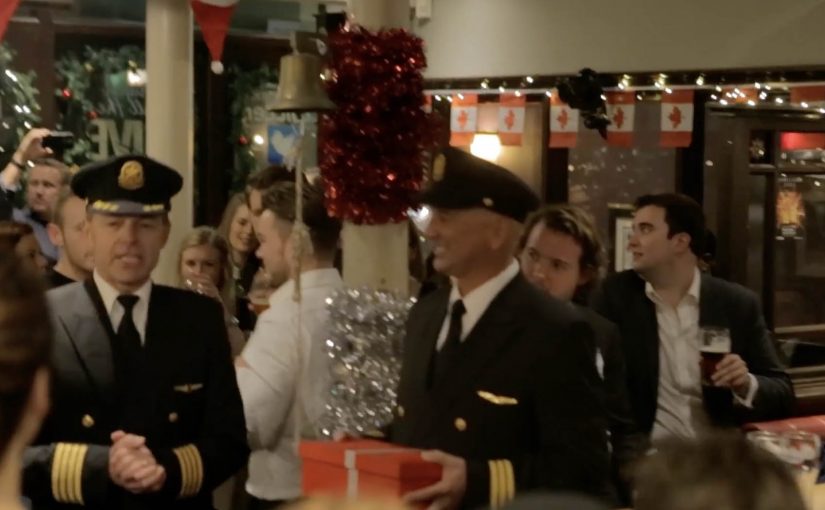
Since Christmas is the season of giving, Air Canada decided to spread a little love to unsuspecting Canadians at a local bar in London. Two Air Canada pilots talked to several Canadians about how they would not make it home this holiday season, and then announced they would be giving everyone in the bar a very special gift.

What happened next will make you wish you were there for this moment.

How the surprise is staged

The setup is intentionally low-key. Start with a real conversation in a normal place, then pivot to an unexpected announcement that turns empathy into action. The bar setting does the work of making it feel unproduced, and the pilots do the work of making it feel credible. That combination matters because low production cues reduce skepticism and make the reveal feel earned rather than engineered.

In travel brands, “getting home for the holidays” is one of the few emotional promises that translates across cultures without explanation.

Why this lands

This works because the tension is familiar and the payoff is immediate. You can feel the disappointment of not getting home, and you can feel the release when the gift arrives. The brand is not explaining values. It is demonstrating them through a human moment that people recognise as real. The real question is whether the emotion feels earned by the brand’s actual role. It does, because helping people get home is the airline promise in its most human form.

Extractable takeaway: If you want an emotional story to travel, start with a universally understood problem, keep the setup believable, and make the brand’s role an enabling action rather than a slogan.

What travel brands can borrow

  • Use a natural setting. Familiar environments lower skepticism fast.
  • Make the “turn” simple. Conversation, reveal, gift. No complicated mechanics.
  • Let real people carry the scene. Authentic reactions beat scripted lines.
  • Anchor to a seasonal truth. Holidays come with shared emotional stakes that do not need heavy copy.

Until 2015. Ramble over and out.


A few fast answers before you act

What is the core idea of this Air Canada holiday activation?

A surprise moment in a London bar where Air Canada pilots speak with Canadians about not making it home for the holidays, then reveal a special gift.

Why does the bar setting matter?

It makes the interaction feel everyday and believable, which strengthens the emotional payoff when the surprise lands.

What is the campaign really selling?

More than routes or fares, it sells reassurance. The feeling that the airline helps you get to the people that matter.

What is the transferable pattern for other brands?

Build a simple, credible setup around a universal tension, then resolve it with a concrete act that only your brand can enable.

What’s the biggest risk with “surprise and delight” campaigns?

If the setup feels staged or the brand role feels performative, the emotion collapses. Believability is the asset.
Molson Canadian: The Beer Fridge

First various brands created campaigns with red buttons, then came one with a pink phone, and now Molson, a Canadian beer brand, revolves a whole campaign around bright red refrigerators.

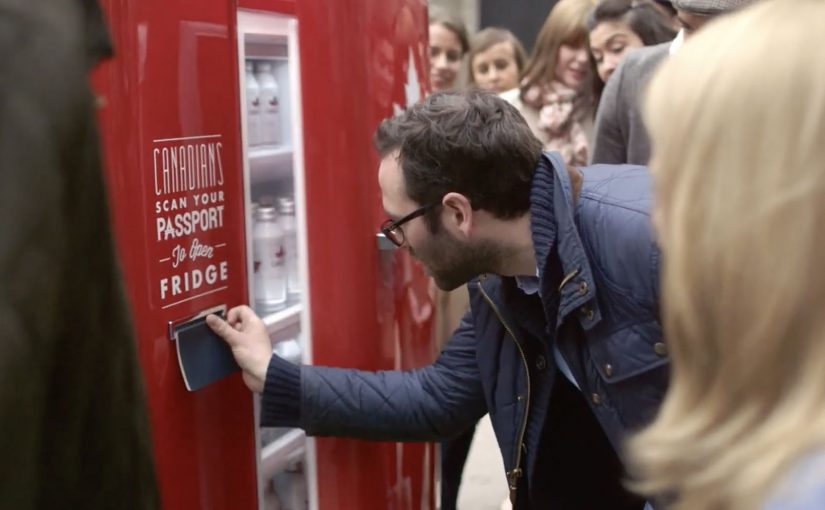
These eye-catching fridges were filled with Molson Canadian beer and strategically placed across a variety of European locations to attract crowds. The catch is simple. The fridge can be opened only by scanning a Canadian passport.

The campaign was created by Rethink Canada to bring back the classic tagline, “I Am Canadian.” The footage collected from the different locations was then cut into a longer online film and a shorter TV ad, described as running during the Stanley Cup Finals.

A gate that turns identity into a moment

The mechanism is a physical “access rule” everyone understands. Here, the access rule is simple: only a scanned Canadian passport opens the fridge. A fridge full of free beer is a magnet. The passport scan turns that magnet into a social filter, because the only way anyone drinks is if a Canadian is present and willing to open it. In one move, the crowd goes from spectators to collaborators.

In multinational brand building, national identity can easily become abstract. This makes it concrete in public, in seconds, with a prop people instinctively gather around.

Why it lands

It works because the restriction creates a mini-drama with a friendly payoff. People try. People fail. Then the “right” person arrives, the door opens, and the whole crowd benefits. The brand gets an emotional signature without needing to over-explain heritage, or wave flags on screen.

Extractable takeaway: If you want a brand idea to travel, design a simple rule that forces strangers to interact. Make the rule easy to understand, visibly enforced, and rewarding for everyone, not only the “qualified” participant.

What Molson is really reviving

The fridge is the stunt, but the strategic job is memory refresh. “I Am Canadian” is not a new line. The activation re-earns the right to say it by staging a situation where being Canadian is the key that unlocks a shared experience.

The real question is whether a legacy national tagline can earn fresh relevance without sounding like a rerun. Molson gets this right because the stunt turns identity from a slogan into a shared public reward.

What brand teams can take from it

  • Use a physical object as a social trigger. Fridges, doors, vending machines, and switches pull people in because they promise an outcome.
  • Let the rule do the storytelling. One constraint can communicate positioning faster than a paragraph of copy.
  • Make the payoff collective. If only one person wins, the crowd turns cynical. If everyone wins, the crowd turns into distribution.
  • Film what the rule creates. The best “campaign video” is documentation of real behavior the mechanic generates.

A few fast answers before you act

What is Molson Canadian’s “Beer Fridge” campaign?

It is an activation built around bright red fridges placed in public locations. The fridge opens only when a Canadian passport is scanned, turning identity into the key that unlocks free beer.

Why require a Canadian passport?

The passport requirement creates instant tension and a clear story. It forces a social moment where Canadians become the enablers, and everyone around them shares the reward.

What does this have to do with “I Am Canadian”?

The mechanic makes “Canadian-ness” functional rather than symbolic. The tagline lands as a conclusion the crowd just witnessed, not a claim the ad simply states.

Why place the fridges in Europe?

Because it creates contrast and visibility. A Canadian-only key in a non-Canadian setting produces curiosity, crowds, and a stronger “identity unlocks access” narrative.

How can another brand apply this pattern?

Choose one brand truth, translate it into an access rule, and attach a collective payoff. Then design the experience so the resulting human interactions are worth filming.