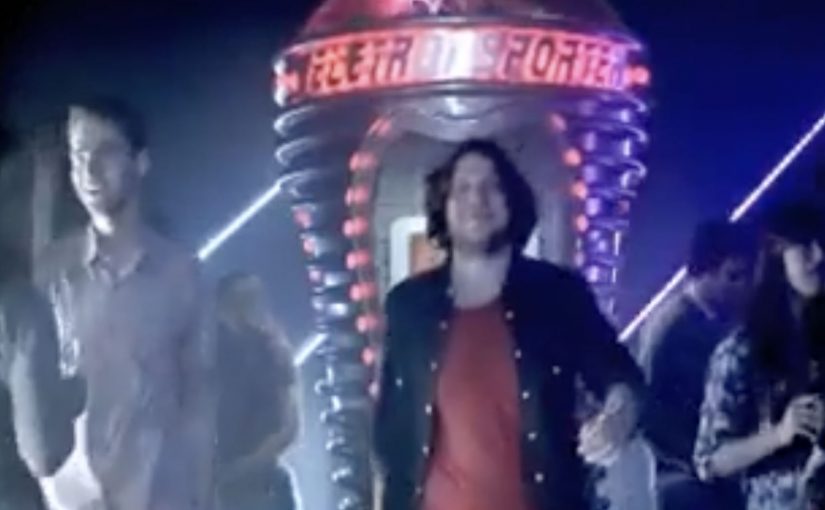
Following the success of the Andes Teletransporter in 2009, and its reported Grand Prix win at the 2010 Cannes Lions festival, Andes, the No. 1 beer from Argentina’s Andean region, is back with another invention designed to keep friends together for longer.
Andes Friend Recovery (AFR) is a telepresence robot with human features, installed in key bars in Mendoza. The pitch is deliberately simple. You can be “present” at the bar with your friends while still being physically somewhere else, taking care of whatever obligations pulled you away.
A bar table that comes with a remote seat
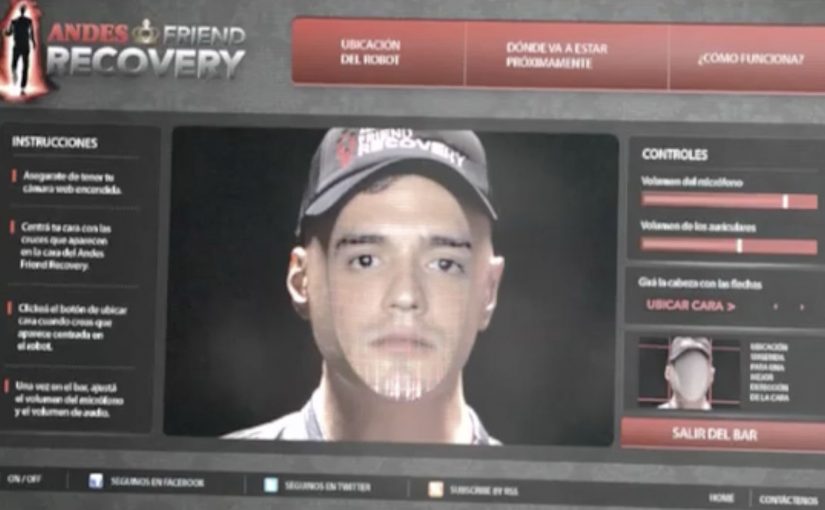
The mechanism is a dedicated AFR table in a bar, plus a robot that becomes your stand-in. Your friends start the session at the table. You authenticate remotely, map your face via webcam, and your live presence appears at the bar through the robot.
This is a physical version of “status update.” Instead of telling friends you will join later, you join now, with viewer control over a real viewpoint and a real conversation happening in real time.
In social, venue-led categories, the easiest growth lever is reducing the friction that ends the occasion early.
The real question is whether you can make “I can’t make it” feel like a solvable problem at the table, not a polite apology in a text thread.
Why the trick works
The appeal is not robotics. It is social continuity. AFR treats friendship as an appointment you should not have to cancel just because you are temporarily stuck elsewhere, and it makes the solution tangible enough to demo in one minute. Because the mechanism turns absence into a visible, physical stand-in, the group gets a concrete reason to keep the occasion going instead of wrapping it up.
Extractable takeaway: When your brand benefit is “more time together,” do not talk about it in slogans. Build a mechanism that removes the one blocker that ends the moment, then make that mechanism visible and easy to explain so people spread it for you.
How it works
- Your friends go to a bar and sit at the Andes Friend Recovery table.
- They ask for a password which is sent to you via an SMS, while you fulfil your boyfriend duties.
- Wherever you are you log in to the AFR page and use the webcam to map your face.
- Then you appear at the bar via the Andes Friend Recovery robot.
The numbers the case story leans on
AFR is described as being installed across major bars in Mendoza during October and November 2010. In that period, the campaign is reported to have driven over 2 million website visits, with around 5,000 “recovered” friends.
Friend Recovery moves worth borrowing
- Remove the exit friction. Target the one blocker that ends the occasion early, then design the experience to neutralize it.
- Make the mechanism instantly demoable. If the benefit is “more time together,” a visible, one-minute explanation travels further than a slogan.
- Keep the framing playful. Anchor the joke in friendship and social continuity, not in teaching deception, so the stunt does not backfire.
A few fast answers before you act
What is Andes Friend Recovery?
It is a bar activation using a telepresence robot so a person can appear at a bar table remotely via webcam while being physically somewhere else.
What is the core mechanic that makes it feel “real”?
Two-way presence. Your face and voice show up at the table, and your friends interact with a physical avatar in the bar, not just a chat window.
Why does this count as experiential marketing, not just a film idea?
Because the primary value is delivered by a real installation in real bars. The video is the distribution layer, but the product is the experience.
What makes a stunt like this risky for the brand?
Tone and social framing. If it feels like a “how to lie” tutorial, it can backfire. It works best when it stays in playful exaggeration and focuses on friendship, not deception.
What should you measure if you try a “remote seat” activation?
Track whether the mechanism extends time together (session length and repeat use) and whether the demo travels (views, shares, and visits), then compare results to normal nights without the installation.