
Air Canada: Gift of Home for the Holidays

Air Canada: Gift of Home for the Holidays

It’s that time of the year again. This is my last and very Christmassy post for the year.

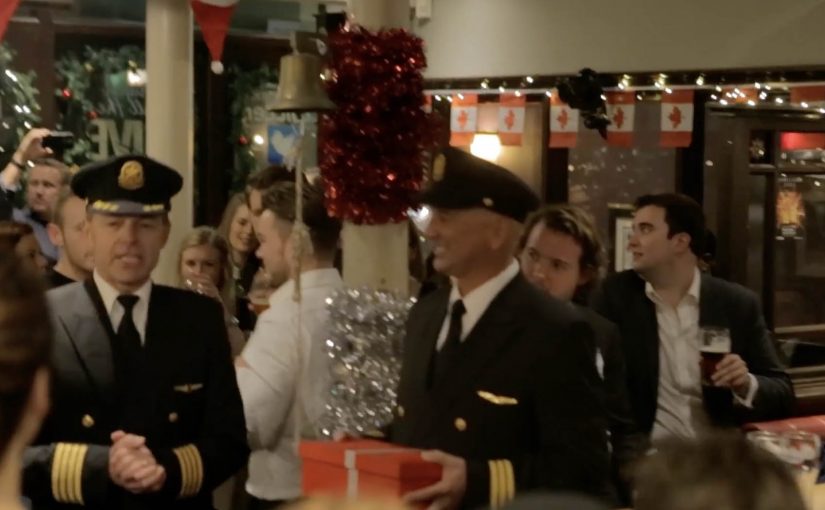
Since Christmas is the season of giving, Air Canada decided to spread a little love to unsuspecting Canadians at a local bar in London. Two Air Canada pilots talked to several Canadians about how they would not make it home this holiday season, and then announced they would be giving everyone in the bar a very special gift.

What happened next will make you wish you were there for this moment.

How the surprise is staged

The setup is intentionally low-key. Start with a real conversation in a normal place, then pivot to an unexpected announcement that turns empathy into action. The bar setting does the work of making it feel unproduced, and the pilots do the work of making it feel credible. That combination matters because low production cues reduce skepticism and make the reveal feel earned rather than engineered.

In travel brands, “getting home for the holidays” is one of the few emotional promises that translates across cultures without explanation.

Why this lands

This works because the tension is familiar and the payoff is immediate. You can feel the disappointment of not getting home, and you can feel the release when the gift arrives. The brand is not explaining values. It is demonstrating them through a human moment that people recognise as real. The real question is whether the emotion feels earned by the brand’s actual role. It does, because helping people get home is the airline promise in its most human form.

Extractable takeaway: If you want an emotional story to travel, start with a universally understood problem, keep the setup believable, and make the brand’s role an enabling action rather than a slogan.

What travel brands can borrow

  • Use a natural setting. Familiar environments lower skepticism fast.
  • Make the “turn” simple. Conversation, reveal, gift. No complicated mechanics.
  • Let real people carry the scene. Authentic reactions beat scripted lines.
  • Anchor to a seasonal truth. Holidays come with shared emotional stakes that do not need heavy copy.

Until 2015. Ramble over and out.


A few fast answers before you act

What is the core idea of this Air Canada holiday activation?

A surprise moment in a London bar where Air Canada pilots speak with Canadians about not making it home for the holidays, then reveal a special gift.

Why does the bar setting matter?

It makes the interaction feel everyday and believable, which strengthens the emotional payoff when the surprise lands.

What is the campaign really selling?

More than routes or fares, it sells reassurance. The feeling that the airline helps you get to the people that matter.

What is the transferable pattern for other brands?

Build a simple, credible setup around a universal tension, then resolve it with a concrete act that only your brand can enable.

What’s the biggest risk with “surprise and delight” campaigns?

If the setup feels staged or the brand role feels performative, the emotion collapses. Believability is the asset.
Strongbow Gold: StartCap Bottle Top

Strongbow Gold: StartCap Bottle Top

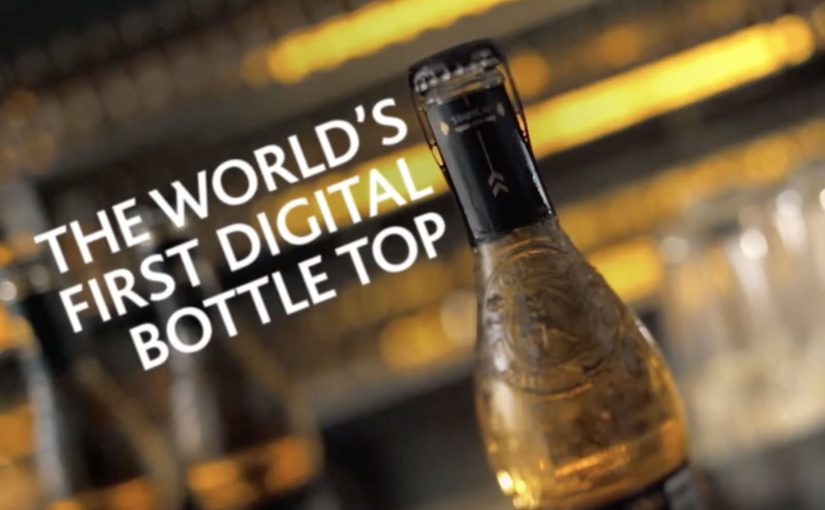
Strongbow Gold is testing what is being billed as the world’s first digitally enabled bottle top. Trigger it, and the bottle top activates a surprise designed to make the night feel more refreshing, more unexpected and more exciting.

For its first public appearance, the Strongbow Gold team rigged an entire bar in central Budapest with RFID readers, antennas and wires. Then during the night, StartCap triggered a string of memorable activations.

A bottle that behaves like a remote control

The core mechanism is packaging as a trigger. An RFID element in the cap signals nearby readers when the bottle is opened, and that signal kicks off a pre-set sequence in the environment, lights, music, props, anything the system is wired to control.

In European FMCG brand launches, connected packaging is a direct way to turn a product claim into a lived experience because the consumer action, opening the bottle, becomes the start button for the story.

Why this lands in a bar context

Bars already run on anticipation. People are there for the next moment. StartCap simply makes that “next moment” programmable, and ties it to the brand in a way that feels earned rather than announced. Because the trigger is the same action guests already perform, the surprise reads as part of the night, not a branded interruption.

Extractable takeaway: In any shared venue, tie a visible “room moment” to a natural product action and the crowd will supply the reaction and conversation without extra prompts.

What the brand is really proving

This is less about a new cap and more about a new role for the brand. Strongbow Gold positions itself as the catalyst for a better night out, not just a drink choice. Connected packaging is only worth doing when the payoff is unmistakable in the room. The technology is the proof device that makes that positioning tangible.

The real question is whether you can choreograph a repeatable “room moment” without making the tech the headline.

Connected-packaging stealables for your next idea

Connected packaging here means the package contains an identifier or sensor that can trigger a response in a nearby system, turning a normal use action into an experience cue.

  • Make the trigger unavoidable. Opening, pouring, unwrapping. The action must be natural.
  • Design for surprise, not complexity. One clean signal, one clear payoff, then scale the choreography.
  • Use the environment as media. If the space reacts, you earn attention without buying more screens.
  • Keep it safe and reliable. In live venues, failure is public. Redundancy matters.

A few fast answers before you act

What is StartCap in one sentence?

A digitally connected bottle top that uses RFID to trigger events in the surrounding environment when the bottle is opened.

Why is packaging-triggered tech so effective?

Because it links the brand to a physical action the consumer already performs. The experience starts at the product, not at an ad.

What is the biggest risk with “connected bar” activations?

Operational fragility. If sensors misread, activations lag, or the venue is too noisy to notice outcomes, the magic disappears.

Does this need a smartphone app to work?

Not necessarily. This model can be environment-driven. The venue infrastructure can detect the trigger and run the experience without asking the guest to install anything.

What should be measured to judge success?

Participation rate, repeat triggers per guest, dwell and sentiment in the venue, plus any post-event lift in brand consideration and trial.

Salta Beer: The Rugbeer Machine

Salta Beer: The Rugbeer Machine

A vending machine that rewards you for tackling

Argentina is often described as football-obsessed. But up in the northern Salta province, described by some as the “New Zealand of Argentina”, rugby culture runs deep. Salta Beer set out to give those rugby fans a live experience built for what they do best.

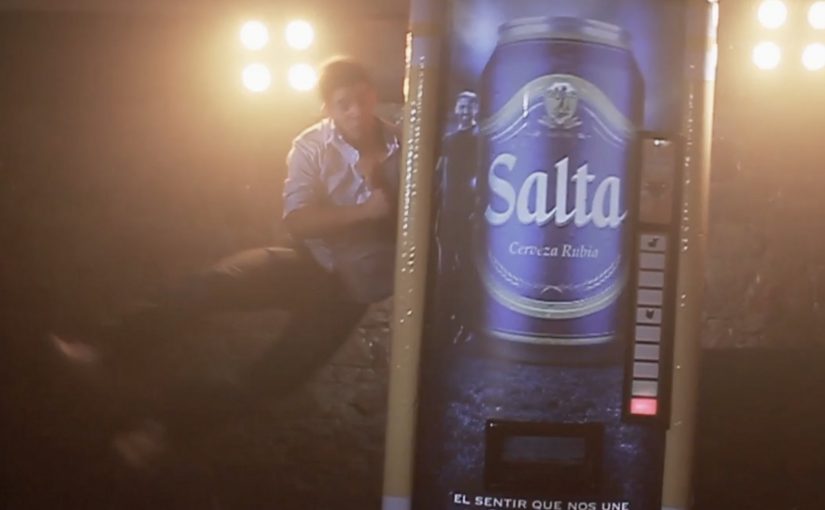
Working with Ogilvy Argentina, the brand created the Rugbeer Machine, a tackle-activated vending machine concept described as first of its kind. It dispenses exactly what rugby players want most after doing what they do best. One cold Salta Beer per tackle.

The mechanic that makes the idea instantly legible

The machine turns a familiar ritual into a simple rule. You do a proper tackle. The machine validates the hit. You get a can. That is it. No explanation needed, no copy deck required, no “brand purpose” lecture.

Because the rule is binary and the reward is immediate, people understand the exchange instantly and decide on the spot whether to join. In global beer marketing, the fastest way to earn attention in a bar is to convert consumption into a participatory challenge that proves the product in the moment.

Why it lands

It respects the audience’s identity. Rugby is physical, social, and performance-driven, so the “payment method” matches the culture. It also creates a crowd dynamic. One person tackles, everyone watches, the machine responds, and the moment becomes a repeatable mini-event that people want to try and film.

Extractable takeaway: If your brand can credibly borrow an audience ritual, turn that ritual into the input, then make the brand reward the output immediately and publicly.

What the brand is really buying

This is a product trial engine disguised as entertainment. The real question is whether the brand can turn rugby identity into a public participation loop that sells the beer without feeling like an ad. The reward is immediate. The proof is physical. And the format creates social permission to engage because it feels like play, not promotion.

What experiential teams should steal

  • Match the mechanic to the tribe. The interaction should feel native to the audience, not imported from a marketing playbook.
  • Make the rule binary. Do the thing. Get the reward. Complexity kills participation in public spaces.
  • Design for a crowd. The best activations create spectators and participants at the same time.
  • Reward immediately. Instant payoff turns curiosity into action, and action into repeat attempts.

A few fast answers before you act

What is the Rugbeer Machine?

It is a rugby-themed vending machine activation for Salta Beer that dispenses a cold beer after a participant completes a tackle on the machine.

Why does “one beer per tackle” work as a mechanic?

Because it is culturally aligned, instantly understandable, and produces a public moment that is fun to watch and easy to repeat.

What makes this more effective than a typical sampling campaign?

Sampling is usually passive. This turns sampling into earned reward, which increases attention, memorability, and social sharing.

What is the transferable principle for other brands?

Turn a core audience behavior into the input. Then deliver an immediate, visible reward that proves the product in context.

What is the most common failure mode if you copy this format?

Forcing an interaction that does not fit the audience culture, or adding friction that makes people hesitate in public.