
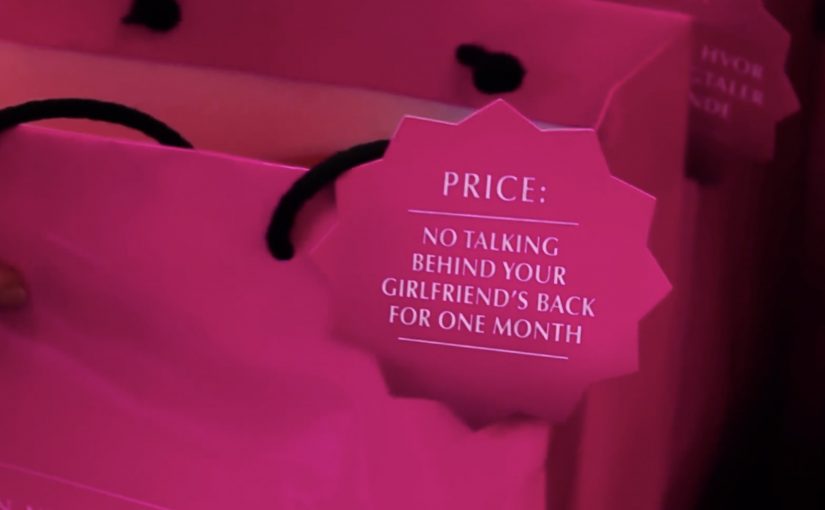
Generosity is one of the basic elements in human happiness. The campaign cites research suggesting that only 1 in 10 people experience generosity from others. To help change that trend, Danish chocolate maker Anthon Berg opens “The Generous Store”.
For one day only, the pop-up is described as the first chocolate shop where people cannot pay with cash or card. Instead, the store provides iPads where people log in to Facebook and post a promise of a generous deed to a friend or loved one.
When generosity becomes the price tag
The twist is simple. Chocolate is not discounted. It is “priced” in actions. Your payment is a public commitment, not a transaction, and that changes how the brand message travels.
How the mechanic works
Here, the mechanic is the rule set that turns each chocolate into a reward for a promised deed. Each product comes with a defined generous deed. At checkout you choose the deed, sign in on an in-store iPad, and publish the promise to the person you are doing it for. The store does not accept money. It accepts a visible commitment that a real person can later hold you to.
In FMCG and gifting brands, turning a private intention into a light public commitment often spreads faster than any discount ever could.
Why it lands
This works because it removes the usual friction of “sharing”. People do not share an ad. They share a promise addressed to someone they care about. That makes the post feel personal, not promotional, and it gives the brand a role as the trigger for a positive moment. The one-day constraint also adds urgency. If you want in, you have to show up and do the thing.
Extractable takeaway: If you can make the customer’s “payment” a social commitment with a clear recipient, the message travels as a relationship act, not as brand content.
What the brand is really buying
The real question is whether your brand can make the act of purchase double as a socially visible promise people want to complete.
The store trades short-term revenue for reach and association. The earned effect is not just “people talked about a pop-up”. It is that the brand gets attached to a stream of personal posts that already have attention and emotional context. That is a much stronger distribution layer than asking people to like a page or share a video.
What FMCG and gifting brands can steal
- Use a non-monetary currency that matches your brand. Here the currency is generosity, not points.
- Make the action specific. Vague kindness does not travel. Concrete deeds do.
- Design for a real recipient. A named person increases follow-through and keeps it human.
- Keep the steps brutally simple. Choice, login, post. No extra hoops.
- Limit the window. Scarcity turns a nice idea into an appointment.
A few fast answers before you act
What makes this “social commerce” rather than a normal pop-up?
The checkout is a social action. The “payment” is a posted commitment to another person, which creates distribution inside an existing network.
Why is the Facebook post essential to the idea?
It turns intent into accountability. The promise is visible to the recipient and friends, which increases the chance of follow-through and gives the campaign its reach.
What is the main risk with a “good deeds as currency” mechanic?
If it feels forced or performative, people will reject it. The deeds must feel genuinely generous and culturally natural for the audience.
How would you adapt this if you cannot use Facebook or logins?
Keep the structure and change the channel. The key is a lightweight commitment addressed to a real person, made in a way that is easy to share and later remember.
What should you measure beyond views?
Track footfall during the activation, earned mentions, the volume of public pledges, and any lift in brand association with generosity in post-campaign tracking.