
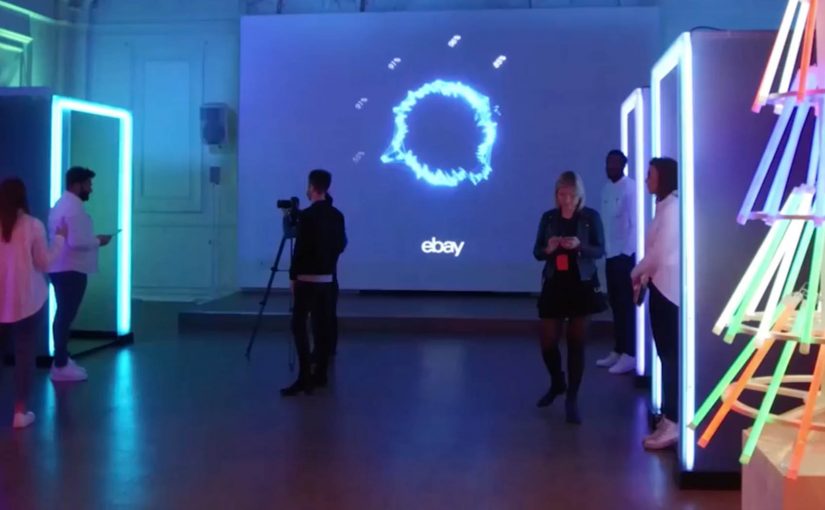
The world’s first emotionally powered store

You step into a pop-up store in central London because Christmas shopping feels like a chore. You sit down, look at product ideas on a screen, and the system watches your face as you react. Not in a creepy sci-fi way, but in a deliberately framed “let’s reconnect with the emotional spirit of giving” way. Your expressions become signals. The store turns those signals into a personal report, then suggests the gift that triggers the strongest “this feels right” response.

That is the idea behind eBay’s “emotionally powered store,” created with American technology firm Lightwave. Using intelligent bio-analytic technology and facial coding, eBay records which products provoke the strongest feelings of giving. Here, “facial coding” means software that classifies facial expressions into emotion signals. Then, through personalised emotion reports, it suggests the gift that stirs the most feeling.

What eBay is actually testing here

This is not only a seasonal stunt. It is a test of whether emotion can be treated as data in a retail environment, and whether that data can be turned into a better decision loop.

Treating emotion as data is compelling when it reduces stress and strengthens intent, not when it becomes a gimmick.

The store reframes the problem:

  • the problem is not “too little choice”
  • the problem is decision fatigue, stress, and loss of motivation
  • the solution is not more filters, it is faster emotional clarity

The mechanics. Simple, but provocative

At the core is a clean input-output system:

  • Input. A sequence of gift ideas shown in a tight flow.
  • Measurement. Facial coding and bio-analytic signals that infer which moments create the strongest emotional engagement.
  • Output. A personalised emotion report that recommends the gift that creates the strongest “giving” response.

The tech is almost secondary. The real innovation is the framing. A store that does not just sell products. It guides you toward the gift that feels most meaningful.

Because the flow turns in-the-moment reaction into a clear recommendation, it aims to cut decision fatigue and restore motivation.

In consumer retail and gifting contexts, the win is turning anxious browsing into a confident choice.

Why this matters for next-generation shopping environments

A lot of “next-gen retail” bets on bigger screens, more sensors, and more automation. This one bets on something more human.

Extractable takeaway: When people feel stuck choosing, experience design should optimize for emotional clarity and confidence, not just more options.

It treats the emotional state of the shopper as a first-class design constraint:

  • reduce stress
  • re-anchor the experience in intent and empathy
  • make the decision feel more satisfying, not just more efficient

That is a powerful signal for any brand that sells gifts, experiences, or anything identity-driven. The product is rarely the only thing being purchased. The feeling of choosing it matters.

The leadership question sitting underneath the pop-up

The real question is whether you want your retail experience to optimize for emotional confidence, or pure conversion efficiency.

If you can capture emotional response at the moment of choice, you can start redesigning:

  • the sequence in which products are presented
  • the language and imagery that drives confidence
  • the point at which a recommendation should trigger
  • the moment where a shopper’s motivation drops, and how to recover it

That is where this moves from a pop-up into a capability.

What to copy from this pop-up

  • Design for intent first. Frame the experience around the feeling the shopper wants to deliver, not the catalog size.
  • Shorten the path to “this feels right”. Use tight sequencing and clear prompts that reduce choice overload.
  • Make feedback immediate. Turn reactions into a simple, understandable next step, not another dashboard.
  • Measure to support, not to impress. Keep the technology secondary to the human framing that builds confidence.

A few fast answers before you act

What is an “emotionally powered store”?

An “emotionally powered store” is a retail concept that uses facial coding and bio-analytic signals to infer emotional reactions, then recommends products based on the strongest response.

What is eBay trying to solve with this experience?

The experience targets Christmas gift-buying stress and decision fatigue. It is designed to reconnect shoppers with the emotional spirit of giving.

What role does Lightwave play?

Lightwave provides the technology support for the bio-analytic and facial coding layer used in the pop-up.

What is the output for the shopper?

The output is a personalised emotion report and a gift recommendation based on the products that provoke the strongest feelings of giving.

What is the broader takeaway for retail innovation?

The broader takeaway is that emotion becomes a measurable input for experience design, not just a brand aspiration.
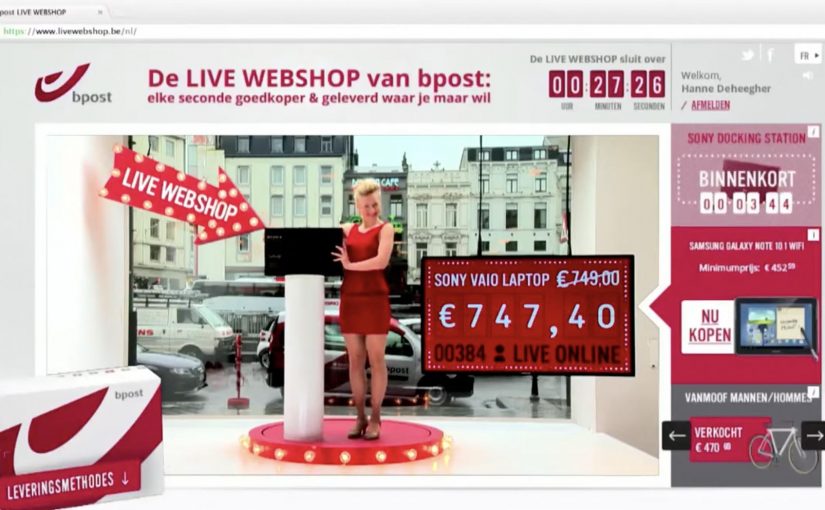
bpost Live Webshop: Every second cheaper

bpost is Belgium’s postal operator. To prove their ability to deliver, and to fend off new contenders in the delivery market, they open a pop-up store right in central Brussels that you can watch like a shop window.

A range of must-have items is put on display, from smartphones to designer coffee makers. The twist is that the only way to buy them is through a special online auction where the price of every product drops every second.

People have to act fast to catch an item before someone else does. Once sold, the item is picked up by a postman right in front of the webcam and delivered to the winning bidder, so everyone watching can see how quick and reliable the service is.

In European parcel and delivery markets, the hardest promise to prove is speed and reliability, so public demonstrations often land harder than product claims.

The real question is how you make a service promise visible enough that people trust it without having to take your word for it.

As a result, awareness of bpack, the delivery service being promoted, is reported as rising to 65%. In 6 days, 260,000 unique visitors are reported. For every hour the shop is online, bpost is reported as selling 8 products on average.

A webshop you can watch, not just click

The pop-up window makes the online mechanic tangible. People see the products in real life, then experience the purchase as a live moment, with delivery turning into the proof point rather than a line in the footer.

Why the “dropping price” mechanic creates urgency

A price that decreases every second builds a clear trade-off: wait for a better deal, or buy now before someone else does. Because the price is visibly falling, hesitation becomes a risk you can feel. That tension is the game. It keeps attention locked and makes the checkout decision feel like winning, not spending.

Extractable takeaway: Use a visible, fast-moving trade-off so waiting feels costly and acting feels like progress, not purchase.

What bpost is really selling with bpack

The service story is simple: “wherever you are, we deliver.” The activation turns that into something visible, with a postman dispatching the parcel immediately after purchase. The product is delivery confidence. Proof beats claims when reliability is the benefit.

Service-proof moves worth reusing

  • Make the benefit observable. If your promise is speed, show speed in public.
  • Use a mechanic that explains itself. A visible countdown beats a paragraph of copy.
  • Build in a live “receipt”. The moment of dispatch is the proof people remember.
  • Design for spectators. If watching is entertaining, the audience becomes the distribution layer.

A few fast answers before you act

What is the bpost Live Webshop?

It is a pop-up retail window in Brussels where products can only be bought via a live webshop auction, with prices dropping every second and delivery shown on camera to prove service speed.

How does the “price drops every second” auction work?

Each product starts at a set price and continuously decreases over time. The first person to click and buy wins the item at that moment’s price.

Why show a postman picking up the parcel live?

Because it turns a delivery claim into visible proof. The dispatch moment demonstrates reliability and speed better than messaging can.

What is bpack in this campaign?

bpack is positioned as the delivery service being promoted. The activation is designed to raise awareness and trust in that specific service.

What is the main lesson for brands selling services?

When trust is the barrier, do not just explain the promise. Stage it so people can watch the promise being kept.

Kellogg’s Tweet Shop: Pay with a tweet

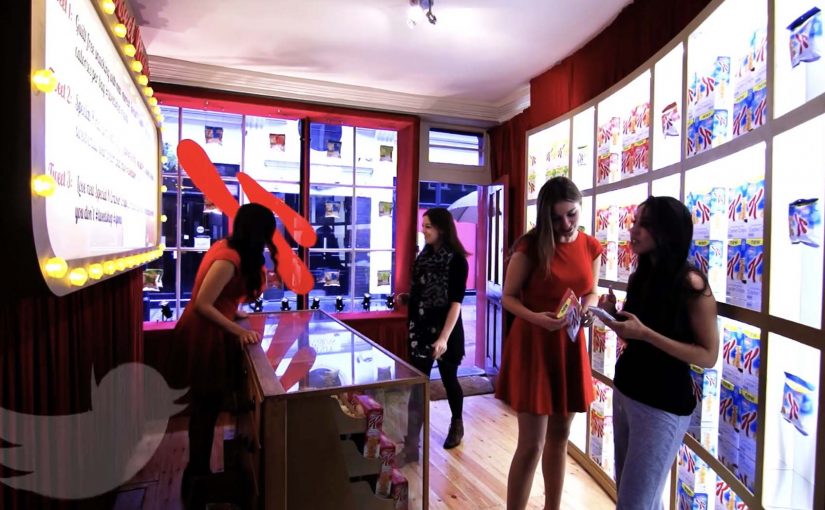
Last month in London, Kelloggs setup a pop up store where passers-by who walked in could try the low calorie snacks and then post a review on Twitter. “Special K girls” in red dresses who manned the store, checked each customer’s tweet before handing over a packet of Special K Cracker crisps.

How the Tweet Shop turns sampling into distribution

The mechanic is deliberately lightweight. Walk in, try the product, then publish a short reaction on Twitter before you leave. Staff verify the tweet on the spot, then you get a pack to take away.

A “pay with a tweet” activation is a pop-up retail format where the transaction is a public social post rather than money, converting product sampling into earned reach and searchable social proof.

In global FMCG marketing, this kind of social-to-sample loop, where a public post unlocks a take-away sample, works when the “payment” is fast, public, and directly tied to a tangible reward.

Why it lands: the tweet is both receipt and recommendation

Most sampling disappears into a bag with no trace. Here, the brand creates a visible record of trial. Each tweet acts like a receipt that confirms participation, and a micro-endorsement that other people can stumble on later.

Extractable takeaway: When you turn trial into a public trace and close the reward immediately, posting feels like participation, not payment.

The real question is whether the post feels like a fair exchange for the product, not a forced endorsement.

The red-dress staffing is not just costume. It makes the interaction unmistakably “Special K” in photos, which helps the moment travel beyond the store.

This is a smart trade only when you can keep the ask lightweight and the reward immediate.

What Kellogg’s is buying with “social currency”

  • Frictionless trial. People try a new product with zero financial risk.
  • Instant word of mouth. Reactions publish in real time, while the experience is still fresh.
  • Searchable proof. A hashtag-based trail can cluster impressions and sentiment in one place.
  • High street theatre. A pop-up adds “I was there” energy that a standard promo rarely achieves.

Design rules for your next “pay with a post” idea

  • Make the ask specific. Tell people exactly what to post and keep it short enough to do without thinking.
  • Verify fast. The handover moment should feel immediate, or it stops being fun.
  • Reward honesty. If you only want praise, people feel manipulated. If you invite real reactions, the format feels fair.
  • Design the store for photos. If the space is not camera-ready, you waste the free distribution you just created.

A few fast answers before you act

What is the “Tweet Shop” concept in simple terms?

It is a pop-up shop where people receive a product after posting a tweet about their experience, with staff checking the post before the handover.

Why would a brand accept tweets instead of money?

Because a public post can create awareness and credibility at scale, while the product cost stays predictable and controlled.

What makes this different from a normal free sample?

The sample creates a visible social trace. Each person who tries it leaves behind a shareable review that others can discover.

What is the biggest risk with “pay with a tweet” activations?

If the ask feels forced or takes too long, people opt out. If the experience is not worth sharing, the format collapses into awkward bribery.

How do you judge whether this worked?

Track trial volume, unique posts, sentiment, and whether conversation continues after the pop-up closes, not just during the event.