
Flashback Book Facebook App

Flashback Book Facebook App

You scroll through years of Facebook updates, realise how quickly your best moments disappear into the feed, then hit a button to turn them into something you can actually keep. Flashback Book takes your statuses and photos and produces a printed Facebook book you can hold.

The brief. Launch a Facebook platform without the usual gimmicks

Bouygues Télécom asks ad agency DDB Paris to come up with an idea to launch their Facebook platform. The goal is to go beyond using profile pictures in a funny way, or pranking friends with small jokes.

The insight. We post every day, then forget what we shared

DDB looks at the way we use Facebook and finds a simple truth. Even though we use the social networking site every day, we forget our favourite moments we share online. So they create an app that changes that, and keeps Facebook, in a book.

How the Flashback Book is created

Facebook ads engage people to participate in the creation of their books and receive a printed copy of their statuses and photos. You can also choose up to 10 friends to add into your book, as well as the desired timeframe, whether it is your birthday, your wedding, or from the very beginning of your profile.

That works because a few simple choices turn passive scrolling into light curation, which makes the printed outcome feel personal without making the experience feel like work.

Why turning the feed into a book lands

The real question is how you make a social platform feel valuable when most social content is designed to disappear into the next post. The answer here is to turn forgotten updates into a keepsake. This is a smarter launch move than another lightweight Facebook stunt because it gives people something worth finishing.

Extractable takeaway: When people feel their digital history is worth preserving, participation stops feeling like promotion and starts feeling like recovery.

In social platforms built on endless feeds, one durable way to create value is to convert personal traces into something people can keep, gift, or revisit.

After only two days they receive 15000 fans, and the limited edition of 1000 books are gone in only an hour.

What to steal from turning social memories into products

  • Turn the feed into a tangible artefact. A physical output makes “I should do this later” become “I want this now”.
  • Let users curate with a few meaningful choices. Timeframe and included friends are enough control to feel personal without slowing the flow.
  • Use life events as the organising logic. Birthdays and weddings are natural prompts for reflection and gifting.
  • Make the reward feel scarce and real. A limited edition run pushes completion and makes the outcome feel worth the effort.

A few fast answers before you act

What is Flashback Book in one sentence?

It is a Facebook app concept that turns your statuses and photos into a printed book, so your favourite moments live outside the feed.

What choices does the user control?

You choose the timeframe and can include up to 10 friends, which makes the book feel personal and event-based rather than generic.

Why does a physical book work as a social idea?

Because it flips ephemera into permanence. It turns “endless scrolling” into a curated artefact you can keep, gift, and revisit.

What is the key execution lesson here?

Make participation lightweight and the output tangible. When the reward is a real object, the motivation to complete the flow increases.

What makes the experience feel personal without becoming slow?

The user only chooses a timeframe and up to 10 friends. That gives enough control to feel personal without turning the flow into a long editing task.
McDonald’s: Everyone Saves for Something

McDonald’s: Everyone Saves for Something

When a low price becomes a citywide signal

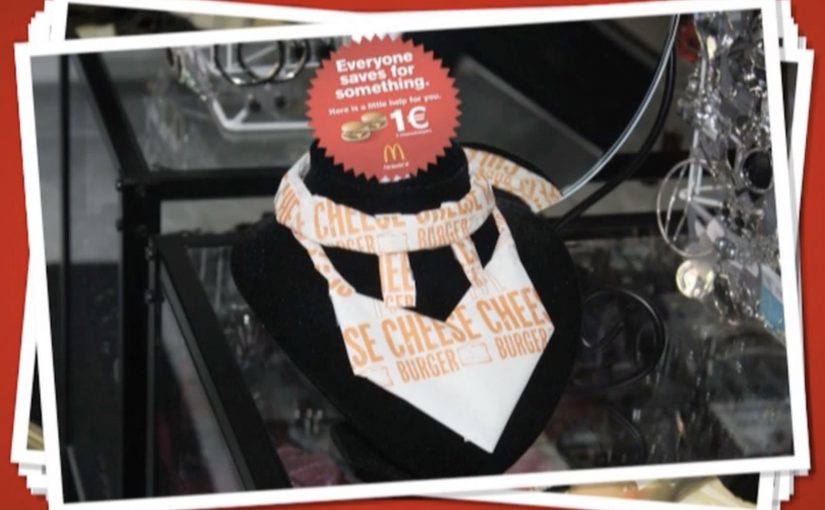
McDonald’s and ad agency DDB Budapest launched a campaign to promote an offer of two cheeseburgers for one Euro. The positioning is simple. A price so low it gives the target audience room to save for things they want.

The twist: turn wrapping paper into media

The challenge is standing out from the usual low-price playbook. Instead of shouting numbers louder, the campaign uses the most recognizable asset McDonald’s already owns. Its iconic cheeseburger wrapping paper.

They wrap “cool stuff” in the same paper, partner with different shops around the city, and turn those places into unusual touchpoints that visually encode the offer without needing to repeat the offer everywhere.

In European QSR value campaigns, price messaging sticks better when it is turned into a tangible object people encounter in everyday places.

The real question is how you make a low-price offer feel noticeable without turning it into just another louder discount ad.

Why it lands

This works because it makes value feel physical. The stronger move is to let a distinctive brand asset carry the value message instead of repeating the price claim more aggressively. People are trained to ignore price claims, but they notice an object that looks out of place. The wrapping paper acts like a visual shortcut. If you recognize it, you decode the brand instantly. If you do not, you still feel the oddness and look closer. The partner locations add credibility because the idea appears to have “escaped” the ad slot and entered the city.

Extractable takeaway: If your message is “cheap,” avoid saying “cheap” more often. Use a distinctive brand asset as a portable visual language, then place it where people already shop, browse, and compare.

What to steal from this value stunt

  • Make one brand asset do the heavy lifting. A recognizable wrapper can outperform another headline about price.
  • Build distributed touchpoints. Partner locations create repeated exposures that do not feel like repeated ads.
  • Let the audience complete the message. Recognition is satisfying. It increases memorability with less copy.
  • Keep the offer legible, but not loud. The stunt earns attention. The offer converts it.

A few fast answers before you act

What is “Everyone Saves for Something” for McDonald’s?

It is a value campaign that promotes an ultra-low cheeseburger deal by wrapping everyday objects in McDonald’s iconic cheeseburger paper and placing them across partner shops as unusual city touchpoints.

What is the core mechanic?

Use distinctive packaging as a portable visual language, then deploy it outside the restaurant to make the offer feel present across the city.

Why does wrapping objects work better than another price poster?

Because it turns a price message into a curiosity trigger. People notice the anomaly first, then decode the brand and offer.

What’s the transferable principle for other brands?

If your message is functional and easy to ignore, embed it inside a recognizable asset and place it where people already make choices.

What is the main risk with this approach?

If the asset is not instantly recognizable, or the placements feel random, the idea becomes decoration instead of a decodable message.

LavOnline: Tomato Splat

LavOnline: Tomato Splat

A direct mail piece that dares you to make a mess

In Italy, awareness and penetration of online laundry services is described as low. LavOnline asked DDB Milan to build awareness and engagement by stressing two core benefits. Speed and simplicity.

The target was narrowed to young managers and professionals. People who work long hours and struggle to find an open shop after leaving the office. The solution was a playful direct mail pack sent to 1,000 time-strapped recipients that turns “laundry” into an action you can do in seconds.

The mechanic: splat a tomato, watch it spring back

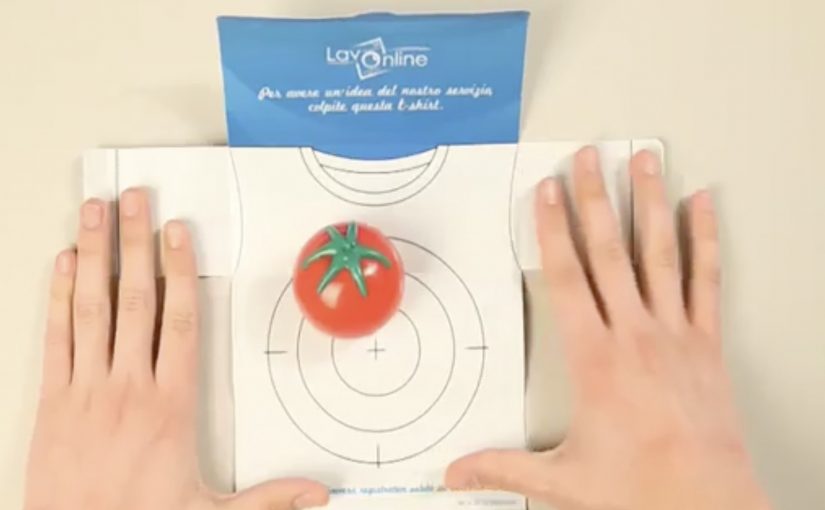
The mailer opens into a white t-shirt shape with a target at the center. Inside is a squishy tomato toy that recipients are encouraged to splat. The toy “splat” moment creates a satisfying mess, then reforms back into a neat tomato, mirroring the promise of a fast, simple service that handles stains without fuss.

Recipients are then pushed to act. If they enjoyed the experience, they are prompted to register on www.lavonline.it, try the service, and tell friends.

In consumer services marketing, interactive direct mail can outperform broad awareness when the physical action demonstrates the product promise faster than a paragraph of copy can.

Why it lands

The idea is built around a smart contradiction. To sell “no hassle laundry,” you briefly invite the audience to create hassle on purpose. That tension makes the piece memorable, and the reset behavior turns the metaphor into proof. It is also office-friendly. It sits on a desk, attracts curiosity, and naturally recruits secondary viewers who want to try the splat for themselves.

Extractable takeaway: If your promise is “simple and fast,” build a physical interaction that creates a tiny problem, then resolves it instantly. The resolution is the message people remember.

What the numbers are trying to prove

Results are reported as unusually strong for a targeted mailer. Within four weeks, 32% of recipients registered, 8% tried the service, and overall site traffic increased by 15%. The bigger point is not the percentages. It is that a single tactile mechanic turned a low-awareness category into a story people wanted to repeat. The real question is how to make an invisible service feel tangible before asking for sign-up. This is a stronger awareness play than a conventional mailer because the interaction makes the service promise feel real.

What to borrow from Tomato Splat

  • Make the benefit physical. Do not describe speed and simplicity. Demonstrate them with an action that resolves fast.
  • Target by daily friction. “No time after work” is a sharper trigger than broad demographics.
  • Design for desk spread. If the object invites a second person to try it, your reach multiplies inside the office.
  • Keep the CTA immediate. One link, one next step, no extra explanation required.

A few fast answers before you act

What is LavOnline’s “Tomato Splat” campaign?

It is an interactive direct mail activation where a mailed pack invites recipients to “splat” a tomato toy on a t-shirt target, then uses that quick reset metaphor to promote a fast, simple online laundry service.

Why use a physical mailer for an online service?

Because the physical interaction creates attention and memory in a category people ignore, then funnels that attention to a single online registration step.

What is the core creative mechanic in one line?

Create a small mess, then instantly restore order. A tactile metaphor for stain removal and convenience.

Why does this work for busy professionals?

The interaction is fast, playful, and office-compatible, and it speaks directly to the “no time after work” friction that blocks traditional laundry trips.

What is the main transferable principle?

When your value proposition is experiential, make the audience perform a micro-version of the experience, then connect it to a frictionless next step.