
Obermutten: A Little Village Goes Global

Obermutten: A Little Village Goes Global

Obermutten is a little mountain village in the Canton of Graubünden, Switzerland. It has around seventy eight residents and is known to virtually no one except a few hikers passing through now and then.

Now, millions of people around the world have reportedly either read about or heard of Obermutten, after Jung von Matt/Limmat created a simple Facebook campaign for Graubünden Tourism that put this small village on the world map. Media reports have reportedly appeared across many countries, including mentions on mainstream TV news in South Korea.

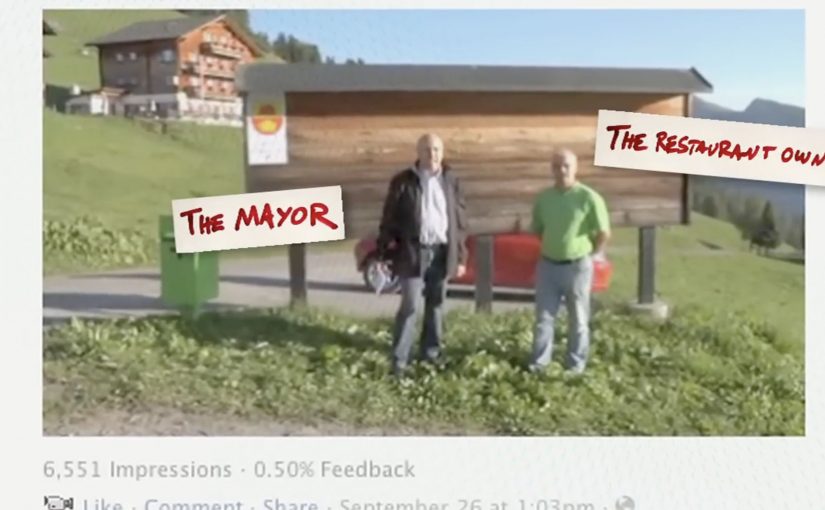
How? It began with a newly created village Facebook page where the local mayor made a remarkable promise via video: click “Like,” and your profile picture will be posted on the commune’s official notice board. In no time, the board was completely covered with fans. To deal with the flood of likes, they reportedly started hanging profile pictures on barn walls in the village. The community has reportedly grown to over 14,000 fans.

A promise that turns a “Like” into a physical souvenir

The mechanism is a simple exchange with a visible payoff. A tiny action online triggers a tangible reward offline. Your profile picture is printed and displayed publicly, which makes the relationship feel real, not symbolic. Each new photo also becomes proof for the next person considering whether to join.

In destination marketing for small places, visible social proof, meaning a growing wall of real faces that proves the promise is being kept, and low-friction participation can outperform paid reach when the reward is concrete and inherently shareable.

The real question is how a tiny place turns a one-click action into public belonging people want to share.

Why it lands

This works because it replaces abstract engagement with a human gesture. You are not “following a page.” You are being welcomed by a real village and given a public spot on a real wall. That emotional upgrade is what converts a novelty into a story, and a story into press and sharing. This is a smarter tourism idea than a bigger media buy because the participation itself becomes the attraction.

Extractable takeaway: When you turn a digital action into a physical, publicly visible reward, participation becomes contagious. People join to see themselves included, and the growing display becomes the marketing.

What destination marketers should steal from Obermutten

  • Make the reward tangible: if the payoff can be photographed, it spreads without asking.
  • Keep the promise binary: one action, one guaranteed outcome, no fine print in the core idea.
  • Design for accumulation: the “wall filling up” is the compounding asset that makes the story stronger over time.
  • Use a human voice: a mayor speaking is more believable than a brand slogan.
  • Let the proof do the persuasion: the growing number of displayed faces sells the idea better than any ad copy.

A few fast answers before you act

What did Obermutten do on Facebook?

They invited people to like the village Facebook page, with the promise that each fan’s profile picture would be printed and posted on the village’s official notice board, and later on barn walls as the number grew.

Why did this become global news?

The idea is easy to explain and easy to visualize. A tiny village publicly “welcoming” thousands of strangers creates an inherently newsworthy contrast, and it produces strong images for media coverage.

What is the core mechanic marketers can reuse?

Convert a low-friction digital action into a tangible, visible reward that accumulates over time. The accumulation becomes both proof and content.

Is this a tourism campaign or a social media campaign?

Both. It uses a social platform to generate participation, then translates that participation into offline visibility that functions like a tourism invitation and a PR engine.

What is the biggest risk with this approach?

If the reward is not genuinely delivered, the story collapses. The format depends on the promise being kept consistently, and on the physical display being maintained with care.
IKEA Manland

IKEA Manland

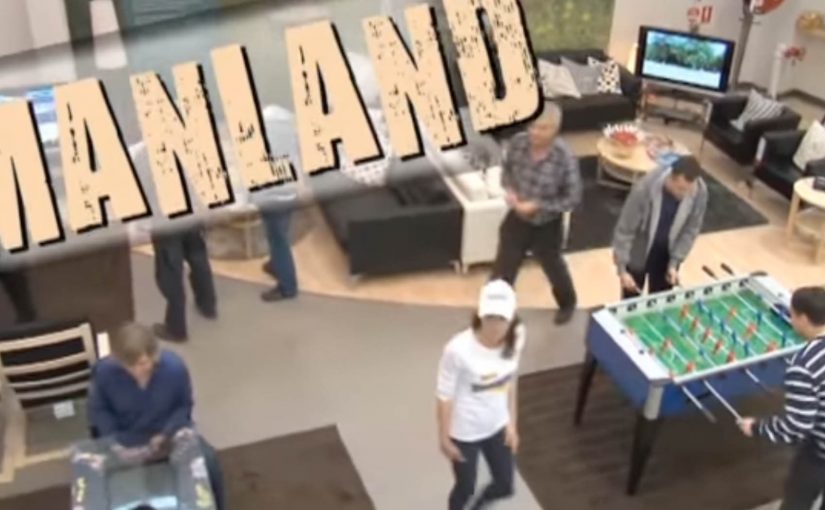
Last month IKEA in Sydney, Australia ran a four-day trial of Manland. They created a dedicated area in the store which men with short retail attention spans could use to escape the pains of weekend shopping at IKEA. In simple words, it was day-care for husbands and boyfriends who wanted to take a break from the shopping.

The store offered free hot dogs, Xbox consoles, pinball machines and nonstop sports action on TV. IKEA even handed out buzzers so women would get reminded to come back and pick up their men after a short session.

Turning “waiting time” into a branded service

Manland works because it is not pretending men suddenly love shopping. It acknowledges the reality. Some people will be there for the relationship, not the retail. So IKEA reframes the pain point as a service, the same way Småland turns “kids are restless” into a solved problem.

The mechanism is deliberately low-effort. You do not need an app, a QR code, or an explanation. You just drop in, decompress, and rejoin the trip with less friction and fewer arguments.

In big-box retail, weekend shopping is often a couple activity, and boredom is a conversion killer for the accompanying partner.

Why this becomes press, not just a gimmick

It is instantly legible. A “day-care for men” is a headline. The imagery does the distribution work. Consoles, sports, hot dogs, and a buzzer are all recognisable symbols, so the concept travels across cultures even if you have never been to an IKEA.

Extractable takeaway: If you want earned media from an in-store experience, design one idea that reads in a single photo and a single sentence.

It is also slightly provocative, which helps. People argue about whether it is funny, patronising, or brilliant. That debate is oxygen for earned media.

The business intent: protect dwell time and reduce walk-outs

The practical goal is simple. Keep groups in-store longer, reduce the urge for someone to storm out, and make the trip feel easier, especially on peak weekend traffic. The PR upside is a bonus. But the operational benefit is the real value.

The real question is whether you can remove that boredom without turning the idea into a stereotype.

If your store relies on group shopping, design for the bored companion as deliberately as you design for the primary buyer.

Steal the companion-lounge playbook

  • Solve a real friction. If it does not remove pain, it will not spread.
  • Make the rules obvious. The best retail ideas need zero onboarding.
  • Build a “photo truth”. If the experience photographs well, it earns its own distribution.
  • Use time limits to keep it fair. A short session keeps it accessible and stops it becoming a hangout that blocks capacity.

A few fast answers before you act

What was IKEA Manland?

Manland was a short trial inside an IKEA store in Sydney. It offered a staffed, game-and-sports lounge where men could take a break while their partners shopped.

Why did the buzzer matter?

The buzzer turned “come back later” into a simple timing system. It made pickup predictable and helped manage capacity without complicated queueing.

Is this primarily an ad idea or an operations idea?

Both. It is an operations idea that creates PR. The experience removes friction inside the store, then the simplicity of the concept turns it into a shareable story.

What makes this kind of activation risky?

Stereotypes. If the tone feels insulting or dated, the press flips from amused to critical. The safest version is to frame it as optional decompression, not a judgment.

What should you measure if you do something similar?

Dwell time, drop-off rates, and satisfaction in exit feedback. For comms, track earned pickup and social sharing, but only after the in-store metrics look healthy.

REHAU: Money Rain

REHAU: Money Rain

Someone opens a window in winter and starts throwing banknotes into the street. Not a metaphor. Actual money, drifting down like confetti.

That is the demonstration Voskhod builds for REHAU windows. Utility bills keep climbing, and poorly sealed windows turn heat into waste. So the campaign makes the waste visible by “throwing money out of the window”, literally, from low-quality windows. It is a street-level proof that translates heat loss into something anyone can recognize instantly.

Making heat loss look like cash loss

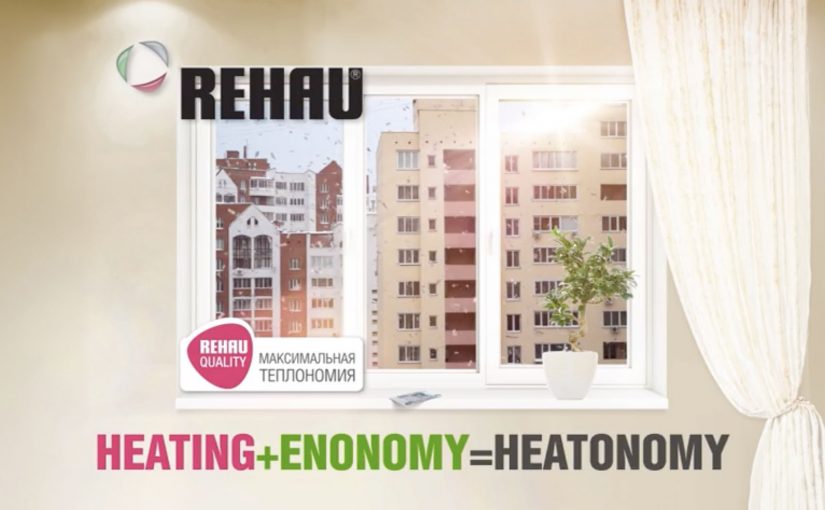
The mechanic is blunt by design. If heat is leaking through your window, your heating budget is leaking too. The stunt turns an invisible inefficiency into a visible spectacle, then ties the solution to REHAU windows and the campaign line “Heatonomy”, a label for treating heat-saving as household economics rather than technical performance.

In cold-climate home improvement markets, the most persuasive product stories convert invisible energy inefficiency into a simple, observable loss that people can picture in their own home.

The real question is how do you make invisible energy waste feel immediate enough that people stop treating better windows as a technical upgrade and start seeing them as basic household economics?

Why it lands as public theatre

The idea works because it skips technical education and goes straight to lived consequence. People do not need U-values or thermal imagery to understand money falling onto the pavement. The spectacle also makes the press angle easy. A strange, concrete act in a familiar setting, with a clear explanation attached. The legacy write-up describes extensive earned coverage and a nationwide reach figure, framed as the campaign’s outcome.

Extractable takeaway: When your product fixes an invisible problem, create a one-scene demonstration that makes the cost of “doing nothing” undeniable, then anchor the solution in a single line that people can repeat.

What REHAU is actually selling

It is not just windows. It is control over household economics in winter. The campaign positions better windows as a direct hedge against rising heating costs, and it gives people a language hook, “Heatonomy”, to describe the benefit without getting technical.

What home-efficiency brands should steal

  • Turn abstraction into a physical proxy. Heat loss becomes cash loss, instantly understood.
  • Build a stunt the media can summarize in one sentence. If it cannot be repeated cleanly, it will not travel.
  • Keep the solution adjacent to the spectacle. The product has to be the obvious answer, not an afterthought.
  • Give the audience a compact label. A coined term can help people remember and share the benefit.

A few fast answers before you act

What is the “Money Rain” idea?

A public stunt that demonstrates heat loss by throwing real money out of low-quality windows, framing wasted heat as wasted cash, then linking the fix to REHAU windows.

What does “Heatonomy” mean in this context?

It is presented as a shorthand for heating economy. A way to express savings from reduced heat loss without technical explanations.

Why does a stunt work better than a technical comparison here?

Because the problem is normally invisible. A visceral proxy creates instant understanding and makes the message repeatable by viewers and press.

What results did the campaign claim?

The legacy description reports broad media pickup, a total of 240,000 rubles thrown, and reach “over 40 million Russians”. Treat these as campaign-reported figures unless you have primary reporting you want to cite.

When should brands use a “visible loss” demonstration?

When the benefit is preventative or efficiency-based, and the audience undervalues it because they cannot see the problem day to day.