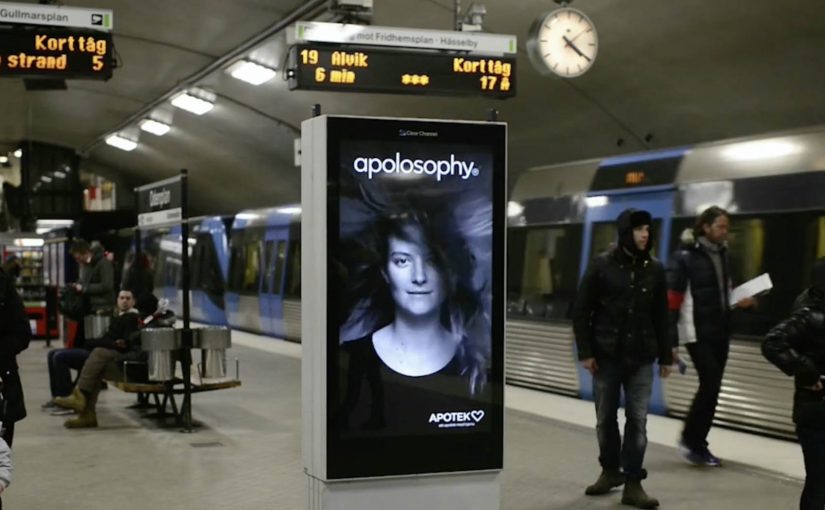
A subway platform in Stockholm. A digital screen. A model with a lush mane. Then the train arrives and her hair starts to whip around, perfectly timed to the rush of air you can feel on the platform.
To introduce a new line of hair products, Swedish pharmacy Apotek Hjärtat worked with Åkestam Holst to fit the platform screens with ultrasonic sensors. When those sensors detect an incoming train, the film switches into a “blowing in the wind” sequence, creating the illusion that the turbulence from the train is affecting the model on the screen.
The trick behind the timing
This is reactive outdoor done with restraint. Here, reactive outdoor means the screen responds to a real environmental trigger instead of running the same sequence on a fixed loop. There is no complex interface and no extra instruction for commuters. The environment provides the trigger, the sensor provides the cue, and the creative provides the payoff. The moment is over in seconds, which is exactly how long you get on a platform before attention snaps back to schedules and crowds.
In high-traffic transit environments where attention is scarce, reactive outdoor works best when it synchronizes with a real-world moment everyone already notices.
Why commuters stop
The effect feels “impossible” because it is contextual and precise. People experience the wind and see the wind at the same time. That sensory alignment is what makes it memorable, and it makes the product claim feel physical instead of cosmetic.
Extractable takeaway: If you want outdoor to earn attention, link the creative to a shared environmental trigger, and make the response immediate enough that viewers can connect cause and effect without being told.
What the brand is signaling
The story is not really about sensors. It is about vitality. The real question is whether the public moment makes the product promise feel physically true before the commuter moves on. The ad implies the product brings hair to life, then proves that idea through a living, timed reaction in a public space. You remember the feeling first, then the brand name attached to it.
What to steal for reactive outdoor
- Pick a trigger that already exists. Trains arriving, doors opening, crowds gathering.
- Make the payoff instantly legible. One glance should be enough to get it.
- Use craft to hide the tech. The illusion matters more than the explanation.
- Design for repeat viewing. Platforms are perfect for loops, because people wait.
A few fast answers before you act
What is “Blowing in the Wind”?
A reactive DOOH installation for Apotek Hjärtat where ultrasonic sensors detect an approaching subway train and trigger a film effect that makes the model’s hair appear to blow in the train’s turbulence.
What is the core mechanism?
Sensor detects train arrival. Creative switches at the same moment the real airflow hits the platform. The viewer experiences both together, which sells the illusion.
Why does it feel more persuasive than a normal screen ad?
Because it is synchronized with the physical environment. That alignment makes the message feel like something happening, not something being played at you.
What is the most common mistake when copying this pattern?
Overbuilding the interaction. If viewers need instructions, or if the trigger is unreliable, the magic disappears and the screen becomes just another screen.
Why does the product claim feel more real than in a standard beauty ad?
Because the demonstration is tied to a real physical cue on the platform. That makes the benefit feel observed in the moment, not merely claimed in the creative.