
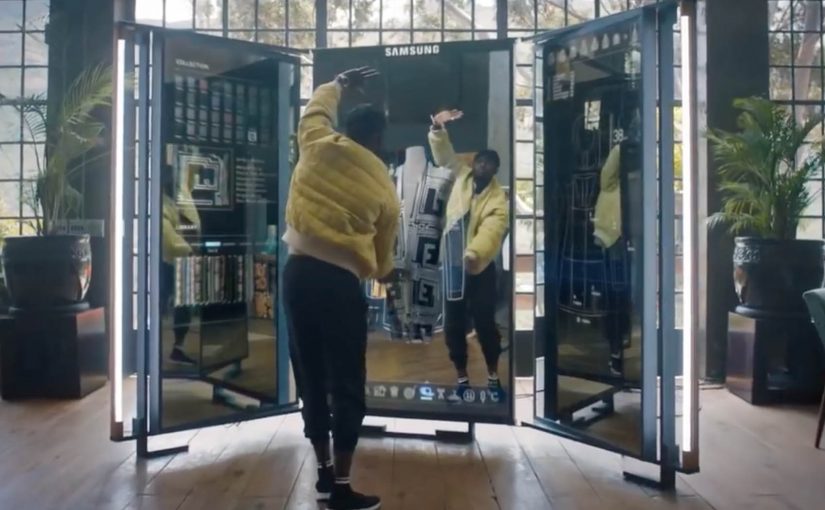
Samsung Future Vision

With Samsung set to unveil its first foldable smartphone on February 20th, a leaked vision video from Samsung Vietnam shows what consumers can look forward to in the years to come. A “vision video” here is a concept film, not a product demo.

What the vision video signals

Instead of focusing on a single device, the video frames “the future” as a stack of interaction surfaces and form factors. Foldable hardware. Edge-to-edge screens. Embedded displays. AR mirrors. Even a tattoo robot concept.

In global consumer electronics markets, concept films like this often shape expectations months or years before specific devices arrive.

Why these concept videos matter

Vision films are not product announcements. They are expectation-setting. They help a brand define the problem space it wants to own, long before specs and release dates take over the conversation. By packaging multiple surfaces into one coherent story, they can make an R&D direction feel inevitable, which is why they influence perception long before product details are concrete.

Extractable takeaway: Treat a concept video as narrative intent. Use it to understand what experience territory the brand wants to claim, then ignore the props and timelines.

What to take from it

The real question is whether the film signals a coherent interaction direction, or just a collage of “future tech” moments.

Concept videos are worth watching as signals of narrative intent, not as a product roadmap.

  • Form factor is strategy. Foldable and bezel-less ideas point to how attention, portability, and screen utility evolve.
  • Displays escape the phone. Embedded displays and mirrors suggest ambient surfaces become part of the experience.
  • Brand narrative stays consistent. The “Do What You Can’t” framing positions experimentation as identity, not a one-off stunt.

A few fast answers before you act

What is “Samsung Future Vision” here?

“Samsung Future Vision” refers to a leaked Samsung Vietnam concept video released ahead of Samsung’s foldable smartphone unveiling on February 20th.

Is this a product announcement?

No. A vision video is a concept film that frames a direction and a problem space. It is not a specification sheet, launch plan, or confirmed product lineup.

What themes does the video tease?

Foldable devices, edge-to-edge screens, embedded displays, AR mirrors, and a tattoo robot concept.

What should you ignore when watching concept films like this?

Ignore implied timelines and literal props. Focus on the recurring interaction surfaces, the form factors, and what the film suggests the brand wants to normalize.

What is the main takeaway?

The future story is bigger than one phone. It is about how screens, surfaces, and interactions expand into daily life.
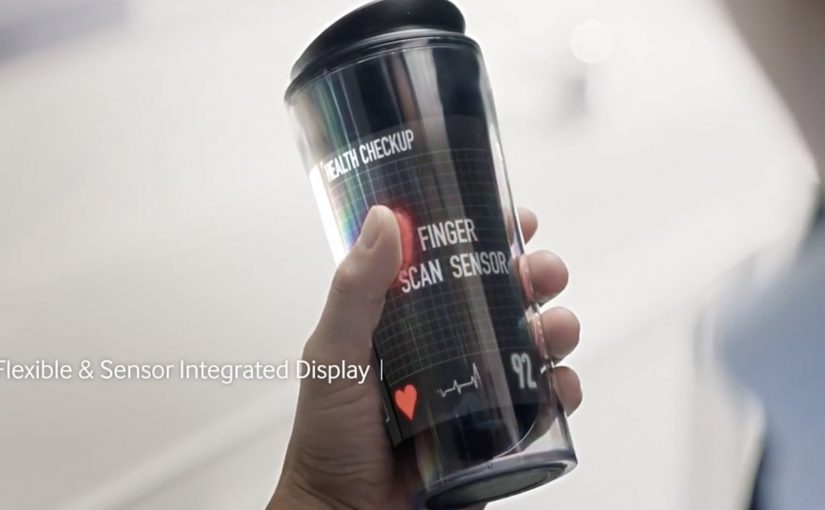
Samsung Display: Display Centric World

A near-future that blends text and screens

Text, video, audio and several other interaction types become a common part of media. Everything blends between the visual and the textual and back again. We are surrounded with multi-touch media that uses highly engineered displays and companion technologies.

Samsung Display created the video below to share its vision of the future and to show how its panels could be implemented across consumer and enterprise markets.

What the film is really selling

The premise is not “better screens.” The premise is “more surfaces become screens.” Here, a display-centric world means a world where screens become the default surface for access, guidance, and collaboration across daily tasks. The film repeatedly puts interactive display surfaces into everyday moments. Cafés, classrooms, retail, commuting, and healthcare all become scenarios where information appears in place, on demand, and in the exact format that fits the situation.

Samsung Display originally presented this concept film as part of its Analyst Day 2013 narrative. The message is clear. When displays get thinner, lighter, and more flexible, the interface stops being a device and starts being the environment.

In consumer electronics and enterprise IT, display surfaces are becoming the default interface between data, services, and people.

Why it lands

Vision films work when they turn a technology roadmap into felt moments. Here, the “wow” is not a single gadget. It is the continuity of interaction. You move between surfaces without re-learning the interface, and information follows you in a way that feels natural rather than like a series of app launches. It works because repeated interaction across familiar settings makes the future feel less like a prototype and more like a habit.

Extractable takeaway: The fastest way to make an emerging technology believable is to show the same interaction pattern repeated across multiple contexts, until it reads like an everyday habit.

The hidden dependencies behind a display-centric world

A world full of screens implies a stack of enabling layers that the film only hints at. Sensors to understand context. Identity and handoff to move work between surfaces. Content designed for glance, touch, and collaborative viewing. And a trust model that makes people comfortable when “the room” is also an interface.

The real question is what workflows get simpler when the display is no longer tied to a single endpoint. If you watch it as an enterprise leader, that is where the real productivity story starts.

What to borrow from Samsung’s interface vision

  • Prototype interactions, not products. A single interaction pattern shown in five contexts communicates strategy better than five unrelated gadgets.
  • Make “handoff” the hero. The magic is continuity. Show how content moves between surfaces and people without friction.
  • Design for groups, not just individuals. Many enterprise use cases are collaborative. Surfaces that support shared viewing and shared input are the point.
  • Pressure-test trust. If your interface becomes ambient, you need explicit cues for privacy, control, and intent.

A few fast answers before you act

What is “Display Centric World” by Samsung Display?

It is a concept film that imagines a near-future where interactive displays are embedded into many everyday surfaces, making screens a pervasive interface rather than a single device.

What is the core idea the film communicates?

That as display tech becomes thinner, lighter, and more flexible, the interface shifts from dedicated hardware to the surrounding environment, with consistent multi-touch interaction across contexts.

Why do these “future vision” videos matter for brands and enterprises?

They translate a technology roadmap into concrete usage scenarios, which helps teams align on what to build, what to partner for, and what behaviors they are trying to create.

What are the key dependencies a display-centric world requires?

Context sensing, identity and handoff, content designed for multiple viewing distances and collaboration, and a trust model that makes ambient interfaces feel safe and controllable.

What is the most transferable lesson for product teams?

Build and communicate around repeatable interaction patterns and seamless handoffs. Products change quickly, but interaction habits scale across devices and surfaces.

Corning: A Day Made of Glass 2

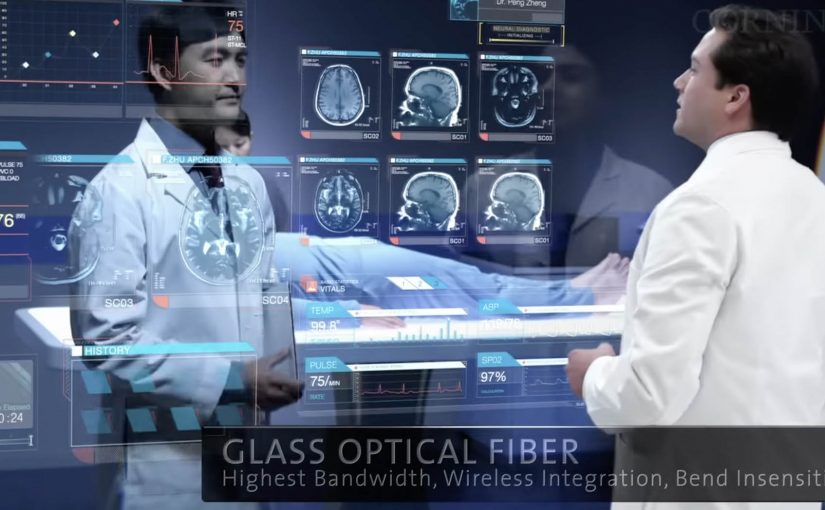
Corning is best known as a high-tech glass manufacturer. Their Gorilla Glass is used across a huge number of smartphones. In March last year they released “A day made of glass”. A futuristic look at glass technology.

Now they are back with an expanded vision for the future of glass technologies. This video continues the story of how highly engineered glass, with companion technologies, will help shape our world.

What’s new in the expanded vision

The core mechanic stays the same. Glass is no longer a cover. It becomes the interface. The expansion is about reach and density. More environments. More surfaces. More moments where information appears “in place” and responds directly to touch.

In consumer electronics, automotive interiors, and collaborative workplaces, the real shift is treating surfaces as shared touch-first interfaces rather than single-purpose screens.

The interaction pattern underneath the glass

Strip away the material science and you can see a product blueprint. Persistent identity across contexts. Content that follows the user. Direct manipulation as the default. And big surfaces that invite more than one person to participate at the same time.

In global enterprise and consumer-tech product teams, smart-surface visions only pay off when the interaction rules stay coherent across devices and contexts.

Why this vision sticks

It sells immediacy. You touch the thing you mean. You get feedback where your eyes already are. There is less “device ceremony”, meaning fewer unlocks, app switches, and mode changes, and more task flow. Because the interaction is direct and feedback stays in place, the experience feels faster and more trustworthy, which is why these concept films can persuade even before the enabling tech is fully mainstream. These concept films are worth using, but only if you translate them into interaction rules you can actually prototype. The real question is whether you can keep those rules coherent across surfaces once the demo glow fades.

Extractable takeaway: When you are designing a future-facing experience, define the interaction grammar first, meaning the repeatable set of gestures, feedback cues, and handoffs that make the experience feel consistent. If the same gestures, feedback, and handoffs work across two form factors, your concept has legs. If they don’t, the material is just a costume.

Steals from the smart-surface UX model

  • Prototype the handoffs early. Moving from phone to wall to table is where visions usually collapse. Test that seam before you polish anything else.
  • Design for two people, not one. Large surfaces create collaboration by default. Add rules for turn-taking, ownership, and conflict resolution.
  • Keep data anchored to the decision. The strongest moments are when information shows up exactly where action happens, not in a separate dashboard.
  • Make “glanceable” a first-class mode. If the surface is always there, the experience must work in 2-second looks, not only long sessions.

A few fast answers before you act

What is “A Day Made of Glass 2” actually demonstrating?

It demonstrates an interface direction. Glass surfaces behave like interactive displays, so information can appear in place and be manipulated directly by touch.

Is the value here the glass technology or the UX model?

The transferable value is the UX model. Direct manipulation, seamless handoffs, and multi-user surfaces. The materials enable it, but the interaction design makes it believable.

What is the biggest risk in “smart surfaces everywhere” thinking?

Interface overload. If every surface can talk, the environment becomes noisy. The discipline is deciding when to stay quiet and when to surface the one next action.

How do you scope a first prototype so it stays realistic?

Pick one job-to-be-done, two surfaces, and a single handoff. Then enforce a small set of interaction rules so you can observe friction before you add polish.

What is one practical next step after watching the video?

Write down the 6 to 10 interaction rules you believe the film is using. Then build a rough prototype that applies those rules in two contexts, such as phone plus kiosk, or tablet plus meeting room display.