Adshels with Difference: IKEA LEDshel and ANAR

Here are two adshel innovations currently doing rounds online. An adshel is a street shelter advertising unit, typically at a bus stop. Both use the media surface itself as the message, not just a place to hang a poster.

Ikea LEDshel

IKEA swapped the regular neon tubes found in adshels around Vienna with its LED range. The product becomes the medium, and the demonstration happens at full scale in the street. Credited to DDB Tribal Vienna, the move turns “better light” into something you can experience, not just read about.

Only for children

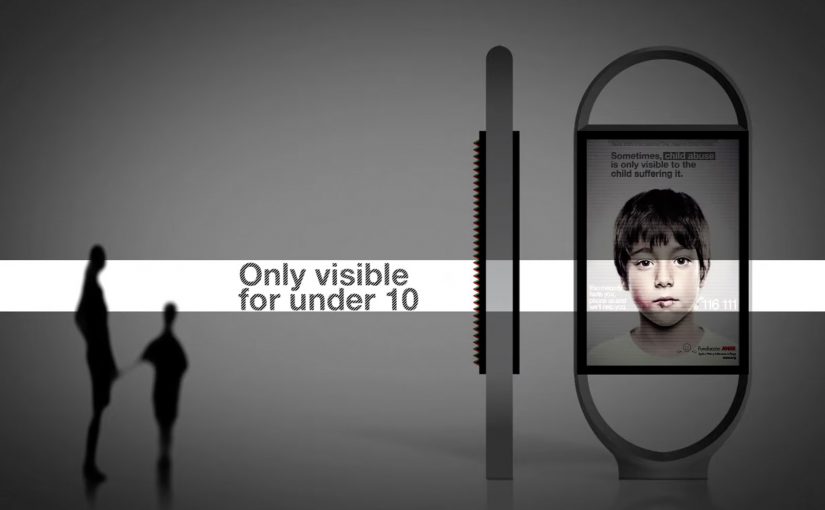
In an effort to give abused children a safer way to reach out for help, the Spanish organization Fundación ANAR created an ad that displays a different message to adults and children at the same time.

The poster uses a lenticular top layer to show different images at varying angles and heights. An adult sees the image of a sad child with the line: “sometimes, child abuse is only visible to the child suffering it.” A child sees bruises and a direct help message with a phone number. This work is widely credited to Grey Group España.

What makes these “adshels with difference”

The shared mechanism is simple: upgrade the shelter from a passive frame into an active communicator. One example changes the hardware so the ad site demonstrates the product. The other changes the optical layer so the message adapts to who is looking.

Because the shelter itself performs the claim, the viewer can grasp the argument in seconds, which is why these ideas travel in public space.

In European city out-of-home media, small physical changes to the site often persuade more powerfully than a clever headline alone.

The real question is whether your out-of-home idea still works when the media unit itself has to do the explaining.

These are the out-of-home ideas worth borrowing because the medium carries the proof, not just the copy.

Why it lands

It makes the proof unavoidable. IKEA does not claim “LED looks better.” It lets the street lighting show it. ANAR does not claim “victims can’t speak safely.” It builds a channel that protects the child in plain sight.

It respects context. Adshels sit in public space where attention is brief. Both ideas communicate at a glance, because the medium itself is doing part of the explanation.

It uses targeting without data. The lenticular execution “targets” by viewpoint and height, not cookies. It is a physical interface decision, not a digital one.

Extractable takeaway: Out-of-home innovations travel when the site behavior carries the argument. If the medium demonstrates the product, or adapts the message to the viewer’s vantage point, the campaign becomes self-explanatory and hard to ignore.

Borrowable adshel moves

  • Turn the placement into the demo. If the product has a sensory benefit, make the environment show it.
  • Use physical segmentation. Angle, distance, height, light, and motion can personalize a message without any personal data.
  • Design for public constraints. Fast comprehension wins. The structure should communicate before the copy finishes.
  • Let the medium do the persuasion. When the execution is the proof, the message needs fewer claims.

A few fast answers before you act

What is an “adshel” in this context?

A street shelter advertising unit, typically at bus stops, that combines a poster frame with lighting and protective glass.

What is the IKEA LEDshel idea actually demonstrating?

LED lighting quality in real conditions. The shelter itself becomes a live showroom for the light range.

How does the ANAR poster show two messages at once?

Through a lenticular layer that changes what is visible based on viewing angle and height, so adults and children see different visuals and text.

Why is this more effective than a standard awareness poster?

Because it delivers a help message to the child without alerting the accompanying adult, which is the real constraint in the situation.

What is the reusable principle across both examples?

Make the media unit behave like the idea. When the medium demonstrates, adapts, or protects, the campaign does not need heavy explanation.
Playboy Magazine: Online Casting via Webcam

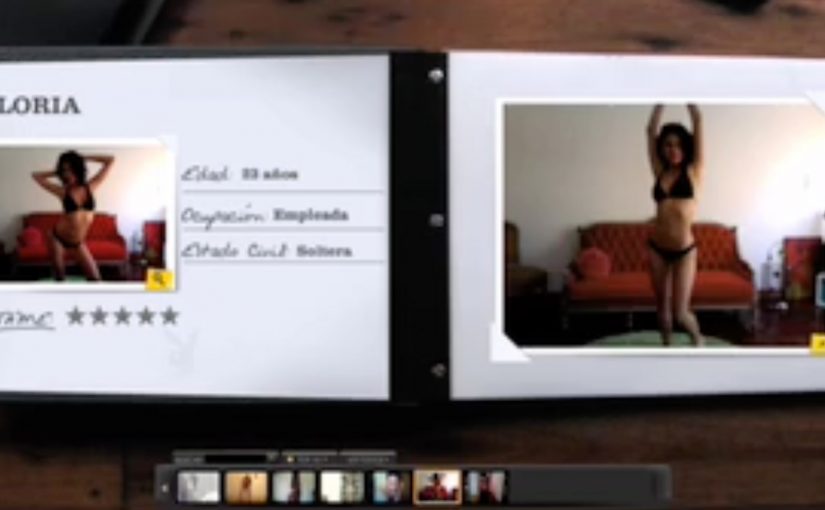
A cover opportunity becomes a browser moment. Instead of going to a studio, aspiring models do a remote “photo session” through their own webcam, then turn the best shots into an online book that friends can vote on.

The pitch is open participation. Any woman with a webcam can make an online photo session and potentially end up on the cover of Playboy Magazine. How does it work. The virtual Playboy photographer takes the pictures of the aspiring models through their own webcam. When they finish they are asked to make an online book with the best pictures. After which they can invite their friends to vote.

The next Playboy Girl is chosen from the favorites on the casting site www.castingplayboy.com.

A photoshoot that travels without travel

The mechanism is a simple funnel. capture content at home, curate a lookbook, then recruit votes. That flips casting from a closed process into something participatory and shareable.

In global media and entertainment marketing, turning selection into a public vote is a reliable way to convert curiosity into distribution.

Why the vote loop is the real engine

The webcam shoot creates the raw material, but the “invite friends” step is what scales it. By “vote loop” I mean the cycle of invite, vote, and reshare that turns each participant into a distribution node.

Extractable takeaway: If you want organic reach, design the post-submission step as a recruiting action that participants feel personally motivated to trigger.

This is not just online casting. It is user-generated content plus social voting, packaged as a competition where the audience becomes the amplification layer.

What Playboy is really buying

This is reach and data wrapped in a story. The real question is whether you want more applicants or more distribution. The brand gets a stream of self-produced submissions, a measurable popularity signal through voting, and a campaign that spreads through personal networks rather than paid media alone.

Steal this casting-to-voting funnel

  • Let people create at the edge. Reduce friction by allowing participation from home.
  • Force curation. A “best of” book is stronger than raw uploads and easier to judge.
  • Build in recruiting. Voting should be the default next step, not an optional extra.
  • Make the prize visible. Publication and status often motivate more than cash.

A few fast answers before you act

What is the core idea behind this Playboy online casting?

A virtual webcam photo session followed by a curated online book and friend-driven voting, turning casting into a shareable competition.

Why does the lookbook step matter?

It forces participants to curate their best shots, which improves quality and makes the submission easier to view and judge.

What makes social voting effective in campaigns like this?

It creates a built-in distribution loop. Participants recruit friends to vote, and those invites function as campaign media.

What is the biggest execution risk?

If the upload, curation, or voting flow feels slow or confusing, people drop out before they share. The funnel has to be fast and obvious.

How do you keep the brand connected to the participant story?

Make the branded environment where submissions live feel premium and consistent, so every share sends people back into the brand’s world.

GGRP: Cardboard Record Player Mailer

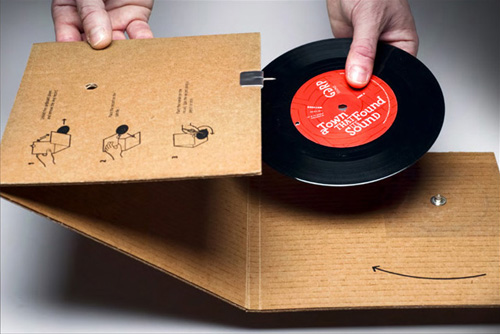
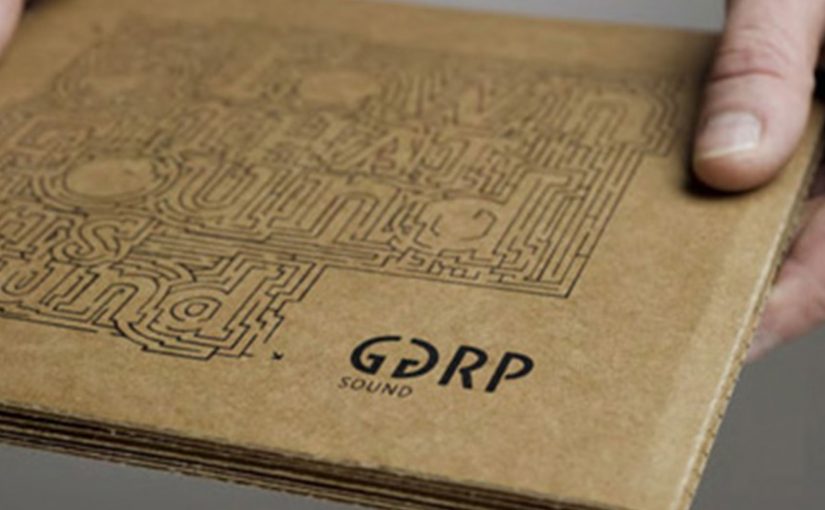
Grey Worldwide in Vancouver created a record player from a piece of corrugated cardboard that folds into an envelope.

GGRP Mailer Open

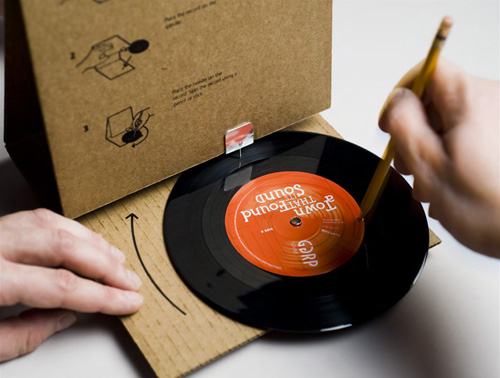
Once assembled, a record can be spun on the player with a pencil. The vibrations go through the needle and are amplified in the cardboard material.

GGRP Mailer CD

The players were sent out to creative directors across North America as a creative demonstration of GGRP’s sound engineering capabilities.

A demo you can literally feel

This is direct mail that behaves like the product promise. Not a brochure about audio craft, but a physical object that turns vibration into sound in your hands. It creates a moment of discovery before you even think about the brand. Then the brand gets credit for making it work.

How the mechanism does the selling

The sleeve folds into a small phonograph. A pencil becomes the spindle. A simple needle converts the grooves into vibration, and the cardboard body acts as the amplifier. No power, no app, no explanation-heavy setup, just a working proof-of-concept hidden inside a mailer.

Here, proof-of-concept means the mailer itself demonstrates the capability before any sales conversation starts. In B2B creative services, the strongest new-business work is often a tangible demo that turns capability into an experience. Because the recipient has to assemble it and hear it working, the mechanism turns a technical claim into remembered evidence. The real question is whether your outreach proves the craft fast enough to earn a second look.

Why it lands with creative directors

It respects the audience. Creative directors do not need to be told what “sound engineering capabilities” means. They need to feel that the shop thinks differently and executes cleanly. The format also earns time. You do not skim it. You assemble it. That extra time is the real attention premium.

Extractable takeaway: When you sell an invisible craft, build a self-contained artifact that proves it in one minute. The artifact becomes your credibility layer, and your follow-up becomes welcome instead of intrusive.

What this mailer teaches about demo design

  • Make the medium the proof. If it does not demonstrate the promise, it is just packaging.
  • Design for a single “aha”. One clear moment beats multiple clever details.
  • Keep the setup friction low. If it takes instructions to start, the audience drops.
  • Target a specific recipient role. This is built for decision-makers who value craft signals.

A few fast answers before you act

What makes this mailer different from a typical promo piece?

It is not a message about capability. It is a working demonstration that the recipient assembles and experiences immediately.

Why is cardboard the right material choice here?

It is cheap to distribute, easy to fold into a mail format, and it can physically amplify vibration, which makes the “sound craft” claim believable.

What is the main business objective of an object like this?

To create high-quality recall and conversation with a small, high-value target list, rather than broad reach.

What is the biggest execution risk?

If the object does not work reliably, the demo backfires. The entire idea depends on the “it actually plays” moment.

How can other B2B brands apply the same pattern?

Translate your capability into a simple physical demo that proves the benefit without needing explanation, then send it only to the people who can buy.