Fast Lane: turning routine into a shortcut you choose
Volkswagen is soon going to launch its new Polo GTI. To create awareness and generate buzz, it built a “Fast Lane” in subways, malls and elevators around Germany, dedicated to everyone who likes to go beyond the regular, who is curious for new stuff, and who enjoys speeding it all up a little.
How it works: add a faster option that feels like play
The mechanism is simple. Place an obvious “normal” route next to an unexpected alternative that is quicker and more fun. Then let people self-select into it. The viewer controls the switch by choosing the fast lane, and that choice becomes the story.
In German urban commuting environments, small design changes in high-footfall spaces can shift behaviour quickly because routine is strong and the contrast is instantly visible.
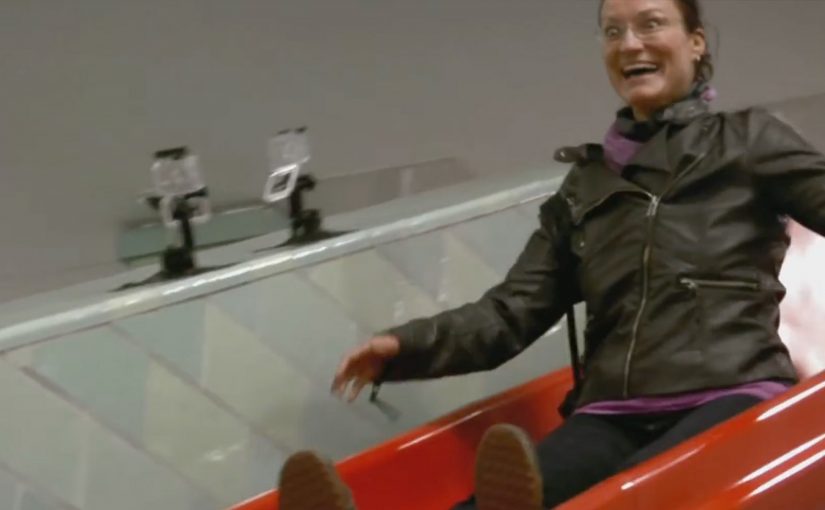
Fast Lane 1: The Slide
Long staircase. Next to it a slide. Which way would you go?
Fast Lane 2: The Shopping Carts
Some carts are pimped with a skateboard. Up for some extra shopping fun?
Fast Lane 3: The Elevator
A sound system turns the ride into a rocket take-off. Welcome on-board.
Why it lands: speed becomes a feeling, not a spec
The campaign does not explain performance. It lets people experience a mindset. Faster. Lighter. A little rebellious. Each execution creates a moment where the “fast” choice feels like a reward, not just efficiency.
The business intent: borrow everyday behaviour as proof
For a GTI launch, “fast” can easily become generic language. Fast Lane makes it concrete. It attaches the idea of speed to real-world micro-decisions, and turns the resulting participation into shareable proof that travels beyond the physical placements.
What to steal if you want to turn a feature into a behaviour
- Build the contrast into the environment. Normal route next to the fun shortcut.
- Make the faster choice self-evident. People should understand it in one glance.
- Let viewer control do the persuasion. Choosing it is more convincing than being told.
- Create a story per location. Each execution is a complete, watchable moment on its own.
A few fast answers before you act
What is Volkswagen’s “Fast Lane” for the Polo GTI?
A set of playful public-space installations (slide, skate carts, rocket-sound elevator) that let people choose a “faster” option, designed to build buzz for the Polo GTI.
What is the core mechanism?
Put a normal route next to an unexpected shortcut that is quicker and more fun. People self-select, and the choice becomes the story.
Why does this work better than talking about performance specs?
It turns “fast” into a felt experience. Participation makes the feature believable without needing explanation.
What business intent does it serve?
It makes the GTI’s positioning concrete and talkable, then relies on the resulting participation moments to travel beyond the physical placements.
What is the most transferable takeaway?
If you want people to believe a feature, design a situation where they can choose it and feel it, not just read about it.