Australian bank NAB positions Australians as an honest lot, and argues they deserve honest credit cards to match. To bring that promise to life, they conducted a series of “honesty experiments” and published the results on YouTube.
Incorrect Change
Lost Wallet
Leaky Pockets
From a product claim to a public proof loop
The mechanism is a classic credibility builder. A “public proof loop” means turning a claim into a repeatable test, then publishing the outcome so the audience can judge it. Run simple real-world tests where people can choose honesty, film the outcome, then let the audience do the judging rather than the brand doing the telling.
In retail banking categories, trust is built faster through observable behaviour than through promises and price claims.
The real question is whether a trust claim can be converted into something people can judge for themselves.
For trust-starved categories, this is a stronger play than another round of product-feature messaging.
Why it lands
These films work because they invite a low-friction emotional conclusion. People want to believe the best of others, and the experiments are structured to deliver that relief, then attach it to the brand stance. The content is also inherently shareable because it is about character, not about banking mechanics.
Extractable takeaway: If you want to own “trust,” do not describe it. Show a behaviour that audiences can recognise as trust in action, then connect it back to the product promise in one simple line.
Then NAB escalates to “thank you” in real time
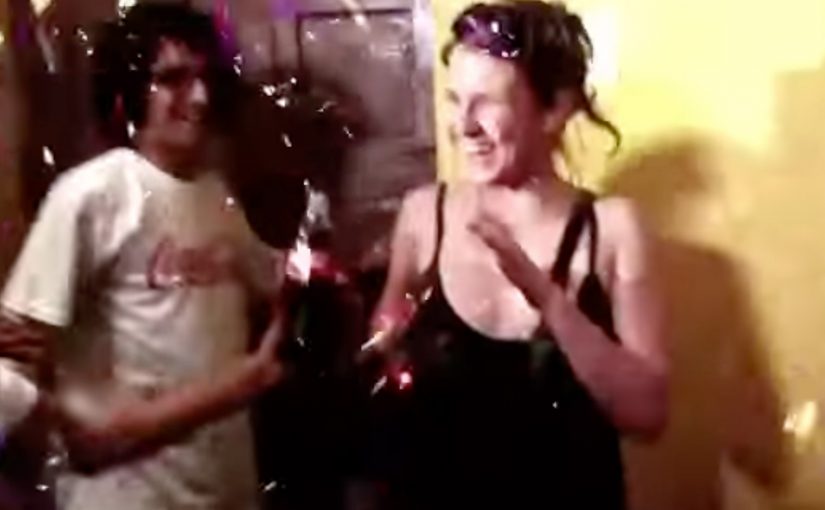
To say thanks in the biggest possible way, NAB followed the experiments with a real-time stunt that thanked honest passers-by immediately after they returned lost objects.
What the second phase adds that video alone cannot
- Immediate reciprocity. Honesty is met with an instant reward, not abstract praise.
- A bigger emotional beat. Surprise gratitude creates a stronger memory than “you did the right thing.”
- Proof at street level. The brand shows up in the moment of integrity, not after the fact.
What to replicate from NAB’s honesty experiments
- Pick one human truth. “Most people are honest” is clearer than a bundle of values.
- Design the choice point. The story lives in a single decision. Keep it simple and legible.
- Let people self-identify. The viewer should be able to imagine themselves in the situation.
- Add a second act. If phase one proves the belief, phase two can reward it and deepen the brand role.
- Protect credibility. Be transparent about rules and ensure the reward does not feel staged or selective.
A few fast answers before you act
What are the “honesty experiments” in one sentence?
A set of filmed, real-world tests where strangers can choose to act honestly, used to support NAB’s “honest credit cards” positioning.
Why do social experiments work for trust-based brands?
They replace claims with observable behaviour. Viewers decide what the outcome means, which feels more credible than advertising language.
What does the real-time thank-you stunt add?
It turns the brand from narrator into participant, rewarding honesty immediately and creating a stronger emotional memory.
What is the biggest risk with this format?
Credibility erosion. If viewers suspect manipulation, selective editing, or unclear rules, the trust message can backfire.
What should you measure beyond views?
Brand trust lift, message association with the product, sentiment, share rate, and whether the work changes consideration versus competitors in the same period.