

Hi-Tec: Liquid Mountaineering

Liquid Mountaineering is a “new sport” attempting to achieve what man has tried to do for centuries: walk on water. To be more precise: run on water.

In the video, the guys claim that with the right water-repellent equipment one can run across bodies of water, like a stone skimming the surface. It is staged as a breakthrough you could learn with practice and the right kit.

How the trick is framed

The mechanism is classic pseudo-documentary: a new “discipline”, a simple sounding explanation, and footage that feels handheld enough to be believable. By pseudo-documentary, I mean it borrows documentary cues so fiction feels observed rather than advertised. The promise is deliberately literal. Not “waterproof”. “Run on water”.

In consumer sportswear marketing, a product story spreads faster when it is packaged as a spectator-proof (easy to describe in one line) “did you see that?” moment rather than a feature list.

The real question is whether viewers still associate the brand with repellency after they learn the stunt was staged.

Why it lands

It uses an impossible goal to make a real benefit memorable. You might not remember the technical claim, but you will remember the visual metaphor for repellency.

Extractable takeaway: Viral product films travel when they dramatize a benefit as an “impossible” demonstration, then let audience debate do the media buying. The trick is to make the metaphor sticky even after the reveal.

It invites disbelief and debate. The campaign gains reach because viewers argue about whether it could be real. That conversation is the distribution.

It turns product performance into myth. Hydrophobic gear becomes a superpower. The exaggeration is the hook. The brand benefit is the association with extreme performance.

Borrowable moves

  • Lead with a single outrageous claim. One sharp premise beats three sensible points.
  • Wrap the story in familiar documentary cues. “New sport” framing makes viewers do the work of believing.
  • Make the benefit visual. If the viewer can describe it instantly, they will share it.
  • Plan the reveal timing. If it is a hoax, decide when you want the truth to surface and what you want people to remember afterward.

This definitely makes a really cool viral video promoting a waterproof line of clothing, shoes and accessories that are supposedly so water repellent that you can literally run on water with them. After some training of course.

PS: The video is fake. It is a viral ad for Hi-Tec water-resistant running shoes.


A few fast answers before you act

What is “Liquid Mountaineering”?

It is presented as a new extreme sport where people can run on water with special water-repellent gear.

Is the video real?

No. The clip is a staged viral advertisement, as stated in the post’s PS.

Why make it a hoax instead of a normal product demo?

Because the “is this even possible?” question creates conversation and sharing. The debate becomes the distribution channel.

What is the product message underneath the stunt?

That the brand’s footwear and gear are highly water resistant. The film uses an exaggerated metaphor to make repellency feel dramatic.

What is the main risk of this approach?

If audiences feel deceived, the emotional swing can flip from delight to annoyance. The campaign has to make the reveal feel playful, not manipulative.
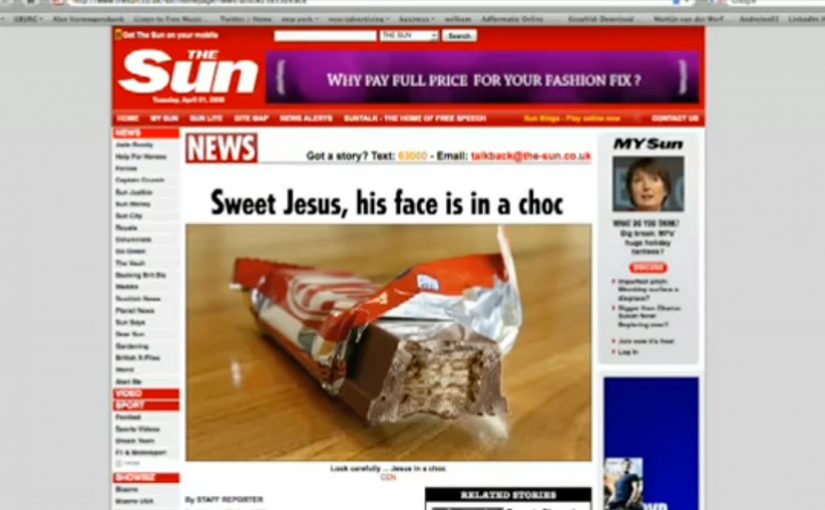
Kit Kat: Jesus Loves Kit Kat

When a bite turns into a “sighting”

Every so often the internet latches onto a “miracle” story. This one starts with a simple, everyday moment. Someone takes a bite of a Kit Kat, and suddenly the bite pattern is framed as a face. Cue the inevitable question. Is it real, or is it just our brains doing what they always do with patterns?

Either way, the punchline lands immediately because the brand line is already waiting for it. Jesus loves Kit Kat. Have a break. Have a Kit Kat.

The stunt behind the headline

The mechanism is a simple one. Take a familiar cultural pattern. The “miraculous sighting” story. Then attach it to an everyday object and let curiosity do the distribution work.

In European FMCG marketing, low-budget PR seeding, meaning you plant the story with a few publishers to trigger pickup, can outperform paid media when the story is easy to retell and the brand cue, the unmistakable product signal inside the joke, is inescapable.

In this case, the campaign is described as being kick-started by sending a tip to major Dutch news sites about a “Jesus face” discovered in a bitten Kit Kat, complete with “proof” photos. Once the story lands, the audience spreads it for free, partly to react, partly to mock, and partly to forward the joke. That works because the audience is invited to judge the “realness” and repeat the brand line while they do it.

Why it lands: the audience writes the punchline

It works because the viewer instantly knows what to do with it. “Is it real” is the hook. “Obviously not” is the release. Then the slogan becomes the comment section fuel, because “Have a break” and “Give me a break” are ready-made responses that keep repeating the brand.

Extractable takeaway: If you use a familiar “sighting” format, design the sharing loop so people repeat the brand line as they debate whether it is “real”.

What the brand is really buying

The real question is whether the stunt forces a repeatable brand line, not whether anyone believes the “sighting”.

This is not persuasion. It is memory and talk value, meaning the worth of being talked about. The goal is to force a moment of attention in a low-involvement category, then lock the attention to a slogan people already know well enough to quote without effort.

Steal the “sighting” shape for earned reach

  • Use a story shape people already recognise. Familiar formats travel faster than “new idea” explanations.
  • Make the brand cue inseparable from the joke. If the gag works without the product, you are funding entertainment, not brand recall.
  • Design for repeatable phrasing. The best hooks come with a built-in line people will type in their own words.
  • Know the risk. Hoax-style PR, where you let people briefly wonder if it is real, can backfire if your category depends on trust, seriousness, or institutional credibility.

A few fast answers before you act

What is happening in “Jesus Loves Kit Kat”?

A playful “sighting” style story frames a bitten Kit Kat as if it reveals a face, and the curiosity and debate around it drives sharing.

What is the core mechanism?

PR seeding plus a familiar meme-like story format. People click to judge it, then share to react, mock, or pass along the joke.

Why does this kind of story travel fast?

Because it is easy to retell and invites opinion. The audience becomes the distributor by arguing about whether it is “real”.

What is the brand risk to watch?

Hoax-style hooks can backfire in categories where trust and seriousness matter. The technique needs category-fit and tone discipline.

What is the most transferable takeaway?

If you use a cultural format people already recognise, make sure the brand cue is inseparable from the punchline, otherwise the joke outlives the brand.