
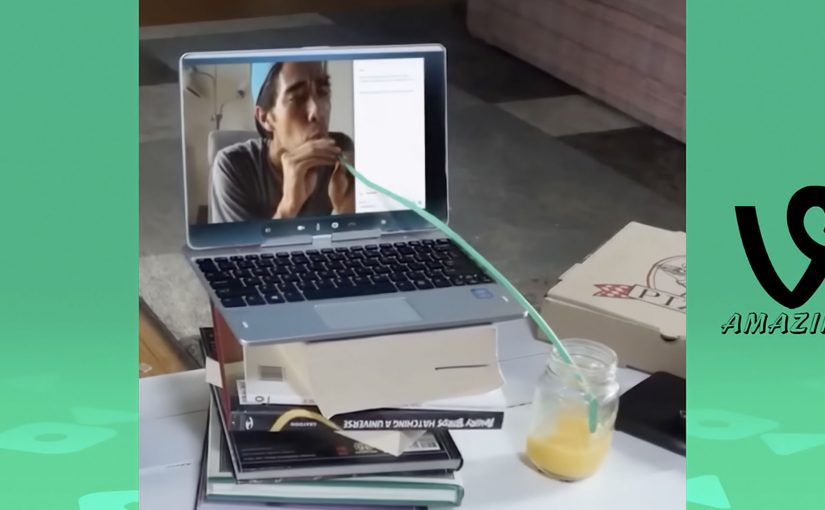
Zach King: The Vine Magician

Filmmaker Zach King uses video editing to create six-second Vine clips that give the viewer the illusion of real magic. The charm is that the “trick” feels physical. Someone walks through a door that should not exist. Objects swap places mid-motion. Reality behaves like it has a hidden shortcut.

Here is a Vine compilation of some of Zach’s most mind-bending videos.

How the “magic” works

The mechanism is not supernatural, it is editorial craft. Most of these illusions rely on precise cut points, clean match movement, and staging that hides the seam. Here, the seam is the hidden join between two shots that the edit tries to conceal. A hand passes in front of the lens. A body turns. A prop blocks the frame for a split second. Then the edit swaps the world underneath. Because the hidden cut preserves the sense of continuous physical movement, the illusion feels real instead of purely digital.

In short-form social video, attention is measured in seconds, so the craft has to read instantly without explanation.

Why it lands

It works because the viewer gets a complete story in a tiny runtime. Each clip has a setup, a turn, and a payoff that you can replay immediately. The loop is the distribution mechanic. You rewatch to understand, you share to test whether others can spot the seam.

Extractable takeaway: When your format is ultra-short, stop thinking in “content minutes” and start thinking in “repeat value”. Build a moment that rewards a second view, because the second view is where sharing usually happens.

What this teaches about creative constraints

Six seconds is not a limitation, it is a design brief. You cannot waste frames on context, so the idea has to be visual and the reveal has to be unmissable. That forces discipline. One illusion, one beat, one clean exit.

The real question is how to turn a six-second constraint into a visual idea people want to replay and share.

What to steal from Vine-era illusion design

  • Use motion as cover. If something moves across the frame, it can hide a transition.
  • Design the loop. End on a pose or frame that makes the replay feel natural.
  • Keep the rule simple. The best clips can be explained in one sentence, even if the execution is hard.
  • Make the seam the curiosity. Viewers enjoy not knowing, as long as the payoff is satisfying.

A few fast answers before you act

What is a “Vine magic” video in this context?

A six-second clip that feels like real-world magic, but is achieved through precise editing, staging, and hidden transitions.

Why do these clips get replayed so often?

Because the viewer wants to spot the seam. Rewatching is part of the fun, and that behavior increases sharing.

What is the core creative structure behind most of these illusions?

A fast visual setup, a single impossible change, then a clean frame that lands the joke or surprise.

What should brands learn from this format?

Design for repeat value. A short clip that people replay and forward can outperform longer content that gets watched once.

How do you adapt this without copying the style?

Pick one visual transformation that expresses your message, then execute it with a clean transition that viewers instinctively want to replay.
KLM: Economy Comfort

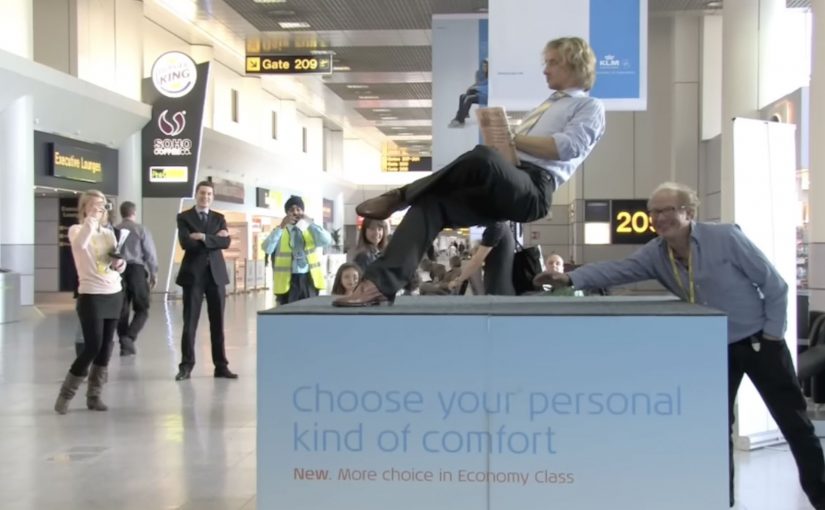
Dutch ad agency Rapp Amstelveen has magician Ramana appear in a European airport, performing his levitation trick to advertise KLM’s comfortable Economy Comfort seats.

A comfort claim made physical

The execution picks a familiar magic trope. Levitation. And places it in a high-friction environment where comfort actually matters. Airports. Waiting. Stress. The stunt is easy to understand even without copy, and the metaphor does the selling: this seat makes the journey feel lighter.

How the mechanism earns attention

Mechanically, it works because it is a live interruption, meaning a real-world moment people witness in person, that behaves like entertainment first and advertising second. People stop because something unusual is happening, then the brand message arrives as the explanation for the spectacle.

In travel and airline marketing, making an abstract benefit feel tangible is often more persuasive than repeating feature lists.

In European travel brands, context-led demonstrations often outperform abstract comfort claims.

Why it lands in an airport context

The location is the multiplier. In an airport, audiences are already thinking about space, fatigue, and the next few hours of their life. A “comfort” message is not a concept. It is an immediate desire. That makes the metaphor feel relevant rather than random.

Extractable takeaway: When the promise is comfort, place the proof where discomfort is already top of mind, so the message lands as a relief, not a claim.

What KLM is really buying with a stunt like this

Beyond awareness, the intent is memorability for a paid upgrade. Economy Comfort is the kind of product that can disappear into pricing tables. A public demonstration gives it a story. The real question is whether your upgrade has a story people will repeat after they leave the airport. And stories travel further than seat specs.

Steal this move for paid upgrades

  • Use a single, legible metaphor. If the audience can “get it” in one second, you win the next ten.
  • Stage it where the benefit is felt. Context turns a claim into a reminder of a real pain point.
  • Let entertainment open the door. Make the first moment about curiosity. Make the second moment about the brand.
  • Turn a feature into a story. Especially for upgrades and add-ons that otherwise live in fine print.

A few fast answers before you act

What is the core idea behind KLM Economy Comfort?

A live levitation stunt in an airport used as a physical metaphor for a more comfortable flight experience.

Why use a magician for a seat upgrade?

Because comfort is hard to “prove” in an ad. A simple spectacle makes the promise feel immediate and memorable.

What role does the airport setting play?

It is where people are already primed to care about comfort, waiting, and travel fatigue. The message meets them at peak relevance.

What is the transferable lesson?

When your benefit is abstract, demonstrate it with a single visual metaphor, in the environment where the benefit matters most.

How can you adapt this if you cannot do a live stunt?

Use a single visual metaphor you can demonstrate in the place where the benefit is felt, then let the brand message arrive as the explanation.