
Despite healthy brand tracking data, 50% of the teens and young adults in Australia hadn’t enjoyed ‘Coke’ in the previous month alone. Here, “brand tracking” refers to awareness and preference metrics that can look healthy even when recent consumption is slipping.
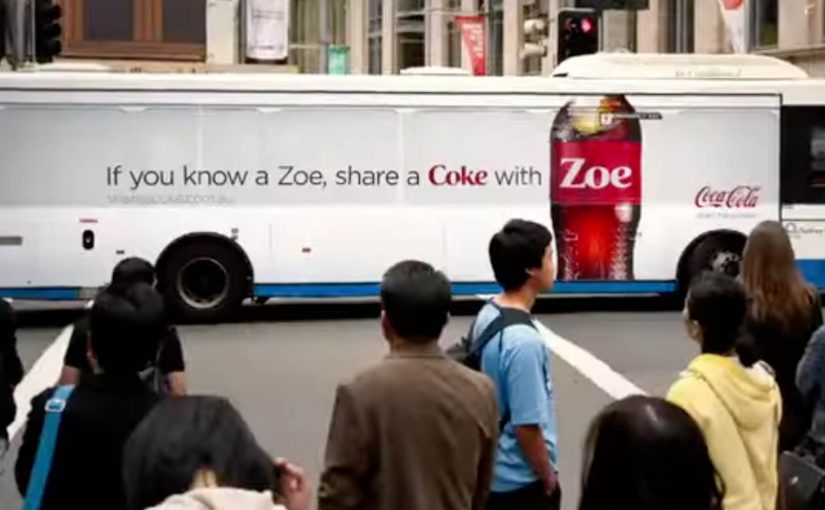
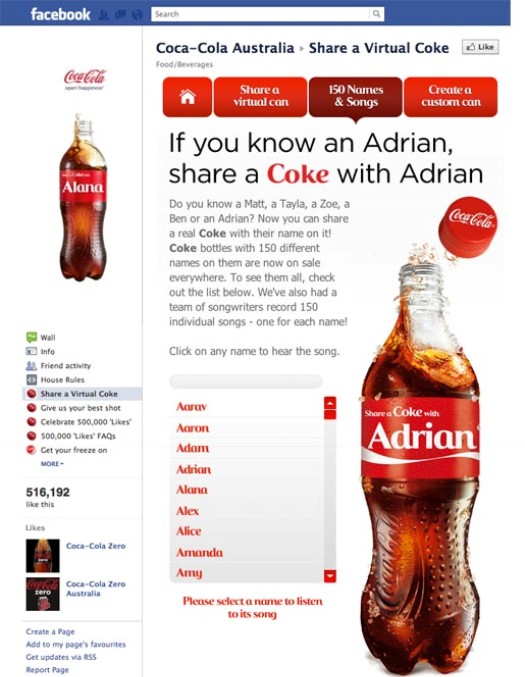
After 125 years of putting the same name on every bottle of ‘Coke’, they decided to do the unthinkable. They printed 150 of the most popular Australian first names on their bottles and then invited all Australians to ‘Share a Coke’ with one another.
The result…
Packaging becomes the conversation
What stands out here is the simplicity. A bottle stops being just a product and becomes a prompt. A name makes it personal. Personal makes it talkable. Talkable makes it shareable.
Because the name turns the pack into a prompt, it triggers talk and sharing without requiring people to learn a new action.
In consumer brands with mass distribution and fragmented media, the pack is one of the most consistent touchpoints, so a pack-level prompt can carry an integrated campaign.
In a world where brands are fighting for attention across channels, this is a reminder that the pack itself can be the media, if it gives people a reason to participate.
Why it works (and why it is more than a label change)
It works because it makes personal relevance visible at the exact moment of choice, and that relevance is what people naturally want to point out and pass along.
Extractable takeaway: If you can make the product itself the trigger for a social action, you reduce friction and get sharing that feels like a natural behaviour, not a forced message.
- It lowers the barrier to engagement. You don’t need a new behaviour. You just need to spot your name, or someone else’s.
- It turns purchase into a social act. The “share” is built into the product, not bolted on as a message.
- It scales personal relevance. The idea is big, but the execution is local. It lives in the names people recognise.
- It links offline and online naturally. When something feels personal in-store, people are more likely to talk about it beyond the store.
The real question is whether your product can create a social reason to talk at the moment of choice, instead of asking media to do all the persuasion.
When you can bake the “share” into the product experience, packaging-led participation is a more reliable lever than a channel-first campaign plan.
What to take from this for integrated campaigns
- Start with a human trigger. A real reason for someone to say: “This is for me”, or “This is for you”.
- Make the product do the work. If the core idea is physically present, the campaign holds together across channels.
- Design for sharing as a behaviour. Not as a slogan. The easiest shares are the ones that feel natural and immediate.
- Keep it legible in one glance. The best integrated ideas can be understood instantly, without explanation.
A few fast answers before you act
What is the “Share a Coke” idea?
It is a packaging-led campaign where Coca-Cola printed popular first names on bottles, then invited people to “Share a Coke” with someone else.
What problem was Coca-Cola trying to solve in Australia?
Despite healthy brand tracking data, 50% of teens and young adults in Australia hadn’t enjoyed ‘Coke’ in the previous month, so the brand aimed to reignite consumption and relevance through conversation.
Why is printing names on bottles strategically interesting?
It makes the product feel personally relevant at the moment of choice. That personal relevance can trigger attention, talk, and sharing without needing complex mechanics.
Is this a “digital campaign” or a “packaging campaign”?
It is both, but it starts with the pack. The packaging is the trigger that can naturally extend into social sharing and broader integrated storytelling.
What is the transferable lesson for other brands?
If you can embed participation into the product experience itself, you reduce friction and increase the odds that people will carry your message across channels for you.