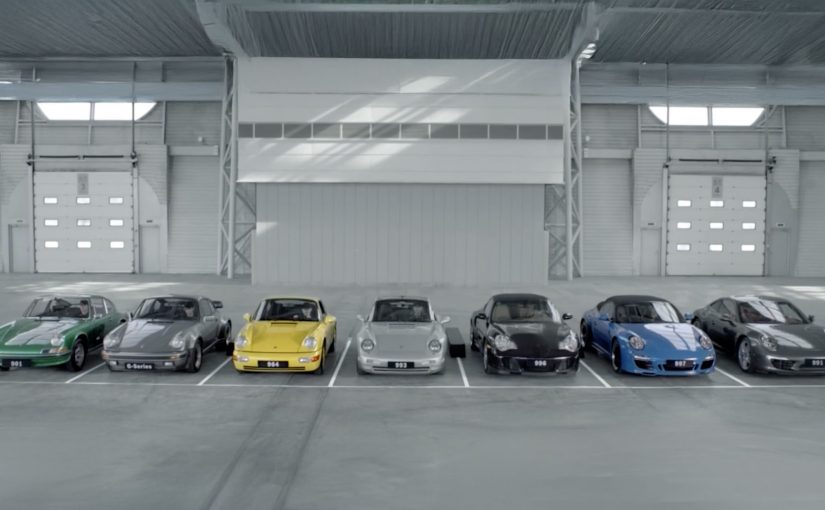
A birthday song plays. But the “instruments” are Porsche 911s. The film stitches together sounds from seven generations of the 911 and turns them into a celebratory tune that feels like performance heritage you can hear.
For the 50th anniversary of the Porsche 911, Fred & Farid Shanghai recorded the sound signatures across the model’s generations, then made them playable online via a musical keyboard. Fans can log in, tap keys, and compose their own tracks using real 911 audio samples.
A branded “sound keyboard” is a web interface that maps recorded product sounds to notes or keys, so people can create short compositions. It turns passive listening into viewer control, and that extra participation time is what drives recall and sharing.
Reported results vary by source. One case write-up reports roughly 2.84 million video views over two months, and the keyboard being played about 1.86 million times worldwide.
Why this lands with Porsche fans
It does not explain the 911. It lets you “play” it. That is the emotional trick. The interaction makes the heritage feel accessible, and the sound makes it feel authentic. You are not learning history. You are using it. Because the keyboard makes the sound playable, the heritage stops being abstract and starts feeling personal.
Extractable takeaway: If you want heritage to feel current, turn the proof into a simple tool people can use, not a story they only watch.
In luxury automotive brand building, sound and craft cues often communicate performance credibility faster than specification copy ever can.
What the campaign is really aiming to shift
In China, the anniversary becomes a brand-image move. It reinforces Porsche as a sports-car maker by leaning on the one asset competitors cannot copy easily. The 911’s recognisable sound character across generations.
The real question is whether your brand has a defensible cue you can turn into something people can play with.
If you have an asset competitors cannot copy easily, you should design the interaction first and then use film to give it a default story.
What to steal for your own heritage-led activation
- Turn heritage into a tool. Give people something they can do, not only something they can watch.
- Use sensory proof. Sound is hard to fake and easy to remember.
- Anchor interaction with a hero asset. The film gives the idea a “default” story, then the keyboard lets fans personalise it.
- Make sharing inherent. Compositions are naturally shareable outputs. That is stronger than asking for shares.
A few fast answers before you act
What is the Porsche 911 Birthday Song campaign?
It is a 50th anniversary activation that records sounds from multiple 911 generations and turns them into two outputs. A hero “Birthday Song” film and an interactive web keyboard where fans can compose their own tunes.
Why use sound instead of visuals or specs?
Because sound carries performance identity instantly. It communicates emotional credibility and heritage without requiring technical explanation.
What makes the interactive keyboard more than a gimmick?
It creates participation time and personal output. When people make something themselves, they stay longer and are more likely to share. That improves memorability.
What business goal does this serve in China?
Strengthening Porsche’s sports-car credentials by making the 911’s heritage feel distinctive, modern, and culturally shareable.
What is the biggest execution risk with sound-led interactivity?
If the interface is slow or the sounds feel too similar, the “play” loop collapses. The experience needs immediate feedback and clearly different audio notes to feel satisfying.