
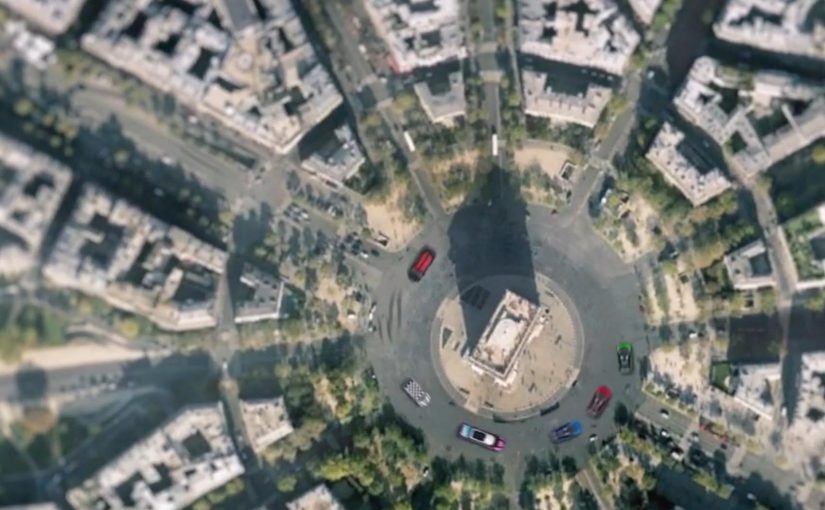
Mini France has managed to successfully offer a virtual Mini experience with the help of a Social/Google Maps mash-up advergame called “Mini Maps”. Here, advergame means a branded game that turns the marketing idea into the experience itself.
With DDB Paris and Unit9 they created a Facebook app that lets you customize a virtual Mini and then challenge Facebook friends to time trials around the world through Google Maps. In the challenge you are racing your friends over satellite images of your favorite locations around the world!
Why this works
- The idea is instantly graspable. Customize your Mini. Pick a place. Race the clock. Challenge friends.
- Google Maps is not a backdrop. The satellite layer becomes the playable surface, which makes every track feel personal.
- Social competition is built in. Time trials make it easy to compare performance without complex multiplayer setup.
In interactive brand marketing, the scalable advantage comes when a familiar platform becomes part of the mechanic, not just part of the media plan.
What this signals for interactive brand experiences
The real question is not whether a brand can borrow a popular platform, but whether the platform becomes the mechanic that makes the brand memorable. The strongest move here is that Google Maps is not a skin around the idea. It is the idea in use. That matters because location becomes the hook, customization becomes the commitment step, and friendly competition becomes the retention loop, meaning the simple reason people come back and play again. This gives the brand repeat interaction instead of one-time exposure.
Extractable takeaway: When the platform supplies the play mechanic, the brand experience feels more native, more personal, and easier to revisit with friends.
What to steal for map-based social games
- Use real places as the content. When the track is a familiar location, the hook is instant and personal.
- Make competition the retention loop. Time trials against friends give players a reason to come back and improve.
- Keep customization lightweight but expressive. A few visible choices are enough for ownership without slowing play.
- Build the platform into the mechanic. If Google Maps is the story, the experience should demonstrate it, not just reference it.
A few fast answers before you act
What is “Mini Maps”?
“Mini Maps” is a Facebook advergame for Mini France that combines social sharing with Google Maps to create location-based time trial races.
What does the viewer actually do?
You customize a virtual Mini and then challenge Facebook friends to time trials across Google Maps locations, racing over satellite imagery.
Why is Google Maps central to the experience?
Because it provides the world itself. The satellite view turns real places into tracks, which makes the challenge feel more personal and replayable.
What is the reusable pattern here?
Start with a concrete action, move to a simple challenge mechanic, then let social competition drive repeated return visits.
What should brands copy from this model?
Use a platform feature as the core mechanic, keep the player action simple, and add a lightweight social challenge that gives people a reason to come back.