
Adidas Boost

Adidas is using its new Boost technology. Built around returning energy to runners. To promote it, TBWA\Moscow created a running project that does something surprisingly literal. It turns running energy into electricity to light up a stadium.

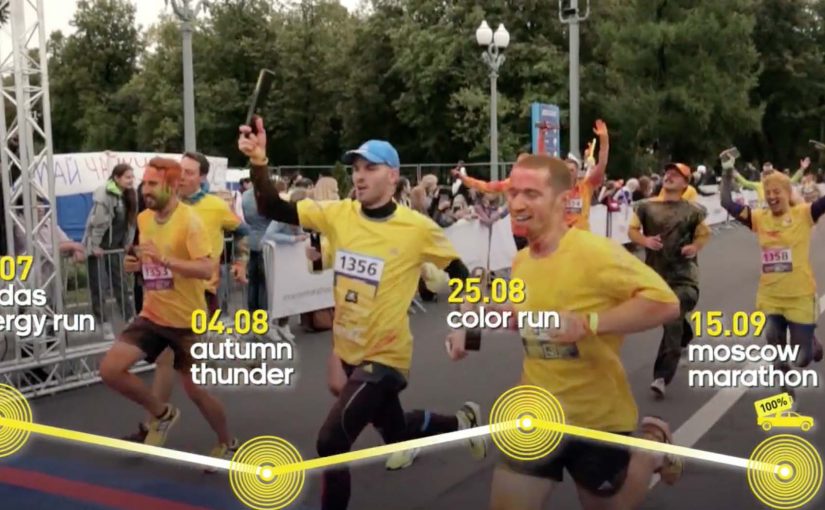
The project is called “Charge the city with the energy of running”. It covers four races. Adidas Energy Run, Autumn Thunder, Color Run and the Moscow Marathon. Runners are given mobile generators that transform kinetic energy into electricity. The collected energy from hundreds of runners is then channeled to illuminate a stadium in Protvino. A town whose stadium has had no light since 1984.

Why this works as a product story

The benefit claim behind Boost is “energy return”, meaning the product is framed around giving runners usable energy back through the run. This activation makes that claim physical. You do not just hear about energy. You see it converted, stored, and used for something meaningful. Because the idea turns the benefit into visible proof, the product story becomes easier to grasp and repeat.

Extractable takeaway: If a product promise is abstract, give people a way to watch it become a concrete outcome.

Why the race selection matters

The real question is how to make a performance claim feel credible at scale, not just catchy in an ad. By spanning multiple races, the idea scales naturally. More events means more runners. More runners means more energy. The story gets stronger with participation, and every participant can feel like they contributed to a shared output.

In brand activation work, that matters because shared physical outcomes make abstract product claims easier for people to believe and retell.

This is a stronger brand move than a standard product demo because participation itself generates the evidence.

What to borrow for brand activations

  • Make the product promise measurable. Convert the benefit into something people can see and count.
  • Build a shared outcome. Lighting a stadium is a clear “we did this together” moment.
  • Use participation as media. The crowd is not an audience. The crowd is the engine.

A few fast answers before you act

What is Adidas Boost in this context?

A running-shoe technology positioned around returning energy to runners, promoted here via a real-world energy-generation project.

What was the “Charge the city with the energy of running” project?

A TBWA\Moscow activation where runners used mobile generators to convert kinetic energy into electricity to light a stadium in Protvino.

Which races were included?

Adidas Energy Run, Autumn Thunder, Color Run and the Moscow Marathon.

What was the impact point in Protvino?

The collected electricity was used to illuminate a stadium that had no light since 1984.

Why is this a strong marketing mechanic?

Because it turns the product promise into visible proof, and makes participation create the outcome.

Philips Russia: The Art of Ironing

Earlier this year I had covered a couple of novel approaches to art. Joining that collection is this film from Philips Russia, where the performance of its irons and steamer products is demonstrated by recreating famous Dutch paintings on a plain piece of white cloth.

It is a simple setup with a surprising payoff. A sheet. A tool you already understand. Then, with pressure, heat, and steam, the fabric starts behaving like a canvas.

When fabric becomes a canvas

The craft trick is that wrinkles and flattened areas act like light and shadow. Steam relaxes fibres, pressure fixes the fold, and controlled temperature makes the result repeatable. In other words, the “brushstroke” is not pigment. It is texture, created and locked in by the iron.

In global consumer electronics and home appliance marketing, the hardest job is to make small performance differences feel tangible in seconds.

Why it lands

This works because it makes an invisible promise visible. Most iron claims are abstract. More steam. Better glide. Fewer wrinkles. Here, the demonstration turns those claims into a proof you can read from across the room. That is why the idea persuades so quickly: the same steam, pressure, and temperature control needed to shape fabric into a portrait also signals control over everyday wrinkles. If an iron can reliably “draw” with fabric, it can reliably handle a shirt collar.

Extractable takeaway: When your product benefit is hard to evaluate (speed, precision, consistency), design a demo where the benefit becomes a visible artefact. The artefact should be legible instantly and hard to fake without the real capability.

What Philips is really selling

The paintings are the hook, but the real message is controllability. Consistent steam output. Predictable temperature. Even pressure. The art is not the point. It is the credibility vehicle that lets viewers infer performance without needing specs.

The real question is how to make product control visible before a viewer has to trust the spec sheet.

The spot is credited to DDB Moscow, which fits the overall approach. Make the proof the story, not the claim.

What to steal for your next product demo

  • Pick a “hero capability” and exaggerate it safely. If precision matters, show precision at a level nobody expects in the category.
  • Use a familiar reference. Famous paintings function as a built-in quality benchmark. Viewers know what “good” looks like.
  • Make the proof readable without explanation. If the demo needs narration to work, it is probably not a demo yet.
  • Engineer for repeatability. The best demos look like magic, but behave like a process.

A few fast answers before you act

What is “The Art of Ironing”?

It is a Philips Russia film that demonstrates iron and steamer performance by recreating classic Dutch paintings using wrinkles and flattened texture on white cloth.

What product point does the demo prove?

Control and consistency. Steam output, temperature stability, and pressure control are implied by the ability to create repeatable, detailed fabric texture.

Who is credited for the campaign?

The campaign is credited to DDB Moscow.

Why use famous paintings instead of an original design?

Recognition compresses understanding. Viewers instantly know the reference, so they can judge the fidelity without being taught the criteria.

How can another brand use this approach without copying it?

Translate the principle, not the prop. Choose a culturally familiar benchmark in your category, then create a visible artefact that only your real capability can produce.