
5 World Cup 2026 Campaigns: Fan Rituals

As the 2026 World Cup approaches, the strongest May campaigns are not just using football. They are claiming the rituals around it.

When brands stop borrowing the game

May’s strongest campaigns share one pattern. They do not treat the World Cup as borrowed attention. They treat it as a map of fan behavior.

Fan rituals are the repeated behaviors before, during, and after a match that show where a brand can credibly enter the experience.

The mechanism is simple: when a brand chooses one specific fan ritual, the campaign has a clearer job to do because it can improve a behavior people already understand.

For brand teams, that is not a creative nuance but an operating advantage, because ritual-led campaigns are easier to brief, localize, activate, measure, and extend across content, commerce, retail, CRM, and social channels.

The strongest May World Cup work is the work that chooses one fan ritual and makes the brand useful inside it.

The real question is whether the brand can make a fan moment easier, more social, more rewarding, or more repeatable without feeling pasted onto the tournament.

Campaigns claiming the moments around the match

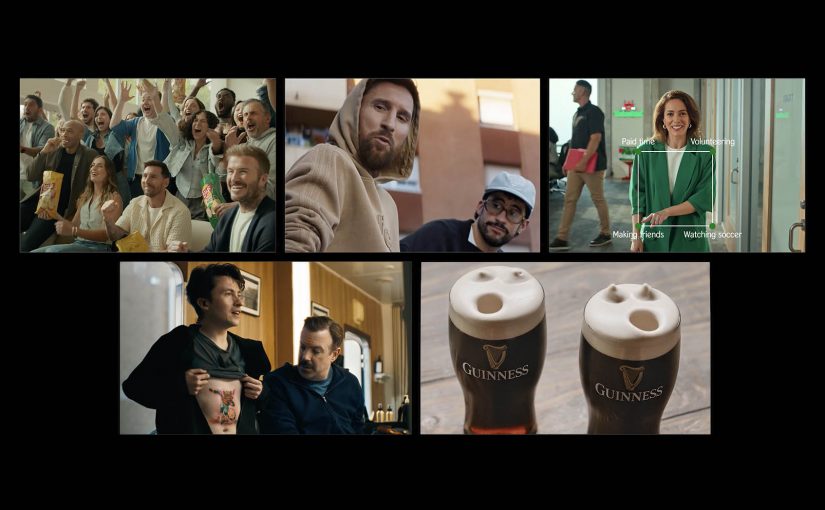
Lay’s: The Epic Watch Party

Lay’s owns the watch-party snack ritual. The campaign brings Lionel Messi, David Beckham, Thierry Henry, Alexia Putellas, and Steve Carell into the same fan-facing idea, but the smarter move is not the celebrity stack. It is the behavior choice. Lay’s does not try to own football skill, national pride, or tournament drama. It owns the moment when people gather, open snacks, and turn a match into a shared viewing occasion.

Adidas: Backyard Legends

Adidas owns football mythology and backyard origin stories. Backyard Legends works because it understands that football culture is not only built in stadiums. It is built in small courts, neighborhood pitches, borrowed spaces, impossible matchups, and exaggerated memories. By pulling football icons, music, film, and younger talent into one mythic backyard story, Adidas turns the World Cup into a reminder that global football still depends on local imagination.

Heineken: Fan Volunteers

Heineken owns the workday viewing conflict. Fan Volunteers is strategically sharp because it starts with a real friction: many World Cup matches happen when people are meant to be working. Instead of pretending that tension does not exist, Heineken builds a tongue-in-cheek participation mechanic around Volunteer Time Off (VTO), local nonprofit activity, and matchday viewing. The brand does not simply say “watch football.” It creates a socially acceptable route into the behavior.

Visa: Tap In

Visa owns participation, rewards, and payment utility. Tap In translates a simple football action into a commercial mechanism: one tap can unlock access, prizes, promotions, and fan participation. That gives Visa a better role than generic sponsorship visibility. The brand is closest to the transaction layer, so the campaign works when it connects match moments to frictionless payment, cardholder rewards, local business support, and real-time participation.

Guinness: The World’s Cup and Singing Pints

Guinness owns the pub gathering ritual. The World’s Cup works because it does not chase the match itself. It claims the place where the match becomes social: the pub, the pint, the bartender, the table, and the strangers who feel like teammates by the final whistle. The smart part is continuity. Guinness connects the World Cup work to the 2023 Singing Pints St. Patrick’s Day ad, showing how a familiar pint-based creative idea can be reworked into a football reaction.

NESCAFÉ also tried to claim the post-match conversation with “The Third Half,” but the campaign works better as a strategic territory than as a standout creative execution.

Why this May pattern matters

The useful shift is from tournament association to behavior ownership. That matters because a World Cup brief can easily become a list of borrowed symbols: famous players, flags, chants, stadiums, trophies, and generic excitement. The stronger campaigns are more disciplined. They identify a fan moment, then build the brand role around that moment.

That is why the May set feels commercially useful. Lay’s has the snack and gathering moment. Adidas has the origin-story and football-culture moment. Heineken has the weekday tension. Visa has the tap, reward, and access layer. Guinness has the pub ritual. NESCAFÉ has a valid territory in the post-match conversation, even if the execution is not as strong as the strategic claim.

What brand teams should take from World Cup ritual work

The shared move across the five strongest campaigns is not “use football.” It is sharper than that. Each campaign picks a fan behavior the brand can credibly improve, then turns that behavior into a repeatable activation system across film, social, retail, promotions, payments, hospitality, or experience.

Takeaway: Do not brief a World Cup campaign around attention. Brief it around the fan moment your brand can credibly improve, then make that moment easier to activate, easier to repeat, and easier to measure.


A few fast answers before you act

What makes a good World Cup campaign?

A good World Cup campaign chooses a specific fan behavior and gives the brand a credible role inside it. Fame helps, but the campaign is stronger when the brand improves a real moment around the match.

Which brands stood out before the 2026 World Cup?

Lay’s, Adidas, Heineken, Visa, and Guinness stood out because each brand claimed a different football ritual. Lay’s claimed the watch party, Adidas claimed backyard football mythology, Heineken claimed workday viewing tension, Visa claimed participation and payment utility, and Guinness claimed the pub gathering.

Why are brands focusing on fan rituals?

Brands are focusing on fan rituals because rituals create repeatable behavior. A campaign built around a repeatable behavior is easier to activate across channels than a campaign built only around tournament excitement.

What can marketers learn from these campaigns?

Marketers should start with the fan moment, not the sponsorship asset. The best campaign role is the one the brand can credibly support through product, service, channel, data, retail, or experience.

Which campaign is the most strategically useful?

Visa is the most structurally useful because Tap In connects the match moment to payment, rewards, access, and participation. Lay’s is the cleanest behavior fit because snacks already belong naturally inside the watch-party ritual.
Adidas Boost

Adidas is using its new Boost technology. Built around returning energy to runners. To promote it, TBWA\Moscow created a running project that does something surprisingly literal. It turns running energy into electricity to light up a stadium.

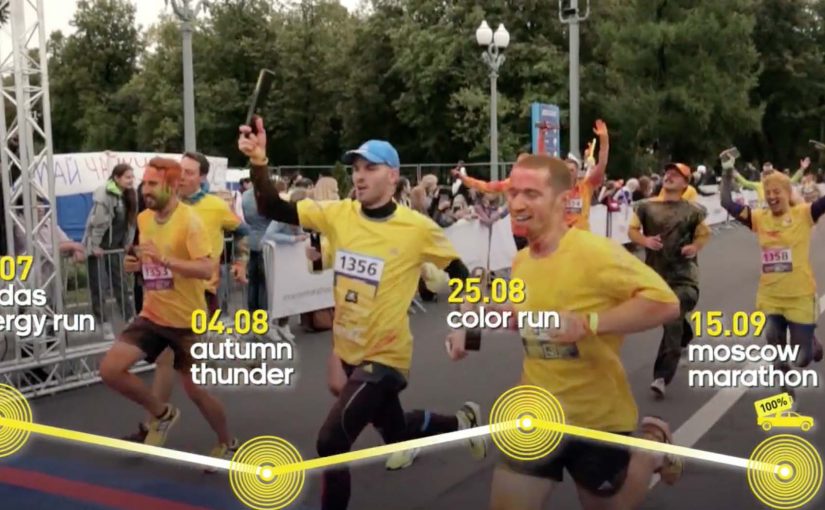
The project is called “Charge the city with the energy of running”. It covers four races. Adidas Energy Run, Autumn Thunder, Color Run and the Moscow Marathon. Runners are given mobile generators that transform kinetic energy into electricity. The collected energy from hundreds of runners is then channeled to illuminate a stadium in Protvino. A town whose stadium has had no light since 1984.

Why this works as a product story

The benefit claim behind Boost is “energy return”, meaning the product is framed around giving runners usable energy back through the run. This activation makes that claim physical. You do not just hear about energy. You see it converted, stored, and used for something meaningful. Because the idea turns the benefit into visible proof, the product story becomes easier to grasp and repeat.

Extractable takeaway: If a product promise is abstract, give people a way to watch it become a concrete outcome.

Why the race selection matters

The real question is how to make a performance claim feel credible at scale, not just catchy in an ad. By spanning multiple races, the idea scales naturally. More events means more runners. More runners means more energy. The story gets stronger with participation, and every participant can feel like they contributed to a shared output.

In brand activation work, that matters because shared physical outcomes make abstract product claims easier for people to believe and retell.

This is a stronger brand move than a standard product demo because participation itself generates the evidence.

What to borrow for brand activations

  • Make the product promise measurable. Convert the benefit into something people can see and count.
  • Build a shared outcome. Lighting a stadium is a clear “we did this together” moment.
  • Use participation as media. The crowd is not an audience. The crowd is the engine.

A few fast answers before you act

What is Adidas Boost in this context?

A running-shoe technology positioned around returning energy to runners, promoted here via a real-world energy-generation project.

What was the “Charge the city with the energy of running” project?

A TBWA\Moscow activation where runners used mobile generators to convert kinetic energy into electricity to light a stadium in Protvino.

Which races were included?

Adidas Energy Run, Autumn Thunder, Color Run and the Moscow Marathon.

What was the impact point in Protvino?

The collected electricity was used to illuminate a stadium that had no light since 1984.

Why is this a strong marketing mechanic?

Because it turns the product promise into visible proof, and makes participation create the outcome.

adidas Y-3 Interactive Live Stream

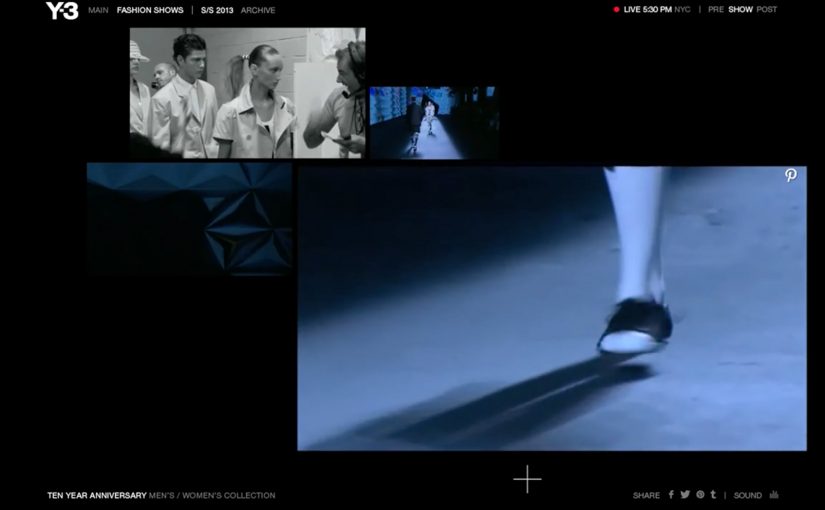
At New York Fashion Week in September 2012, adidas Y-3 revealed its Spring/Summer 2013 collection with an “Interactive Live Stream Experience” built by Acne Production. The online audience got four different runway views, could magnify one view without losing perspective of the show as a whole, and could pin each look to Pinterest.

Since 2010, I have noticed a steady increase in innovations at fashion shows around the world. This execution pushed that trend forward by treating the live stream itself as a designed product, not a passive camera feed.

The context. Y-3 at New York Fashion Week

The show marked the 10th anniversary of adidas’ partnership with Yohji Yamamoto. Athletes, celebrities, and fashion mavens gathered at St John’s Center, which was transformed by Dev Harlan’s 3D projections.

The experience. Four views, one zoomed, full context retained

Acne set up the live stream with four concurrent runway angles. The key interaction was control. Here, control means choosing which runway angle to enlarge while the rest of the show stays visible. Because viewers could focus on one angle without losing the full stage picture, the stream felt curated and intentional rather than fragmented.

Why Pinterest mattered in the flow

Pinning each look turned viewing into collecting. It captured intent at the moment of attention and let the audience take the show with them. One click turned a runway moment into a saved, shareable reference.

Extractable takeaway: When a live format lets people save individual moments without leaving the experience, attention becomes portable and the event keeps working after it ends.

In fashion and brand storytelling, the scalable advantage is not just reach, but designing a live moment so viewers can navigate it, keep pieces of it, and revisit it later.

The business intent is to turn fleeting runway attention into saved looks and shareable references without pulling viewers out of the live moment.

This is a stronger digital show model than a single passive camera feed because it turns viewing, collecting, and sharing into one connected experience.

The real question is how to turn a live stream from a one-time broadcast into a format that creates ongoing attention and reuse.

What fashion brands can lift from this

  • Give viewers control, not just a feed: Multiple camera angles plus a “magnify” interaction keeps a live stream feeling explorable, not passive.
  • Preserve context while zooming in: Let people focus on one view without losing the whole runway. That is the difference between browsing and watching.
  • Make curation the sharing mechanic: “Pin each look to Pinterest” turns the show into a personal collection that naturally travels beyond the event.
  • Use production craft as a multiplier: 3D projections and a transformed venue become part of the story, not just decoration, and they travel well in recaps.
  • Design for the afterlife of the live moment: The live experience creates assets and saved looks that keep circulating after the show ends.

A few fast answers before you act

What was the adidas Y-3 Interactive Live Stream?

It was a multi-angle live stream for the Y-3 Spring/Summer 2013 runway that let viewers zoom one camera view while still keeping the full-show context, and pin looks to Pinterest.

What was the core interaction pattern?

Multi-view streaming with user-controlled emphasis. Viewers chose what to focus on without breaking the narrative of the show.

Why did “keep context” matter in live streaming?

If zoom removed context, viewers felt lost. Keeping the full show visible preserved rhythm and made the experience feel like one coherent event.

Why add Pinterest at the point of viewing?

It turned attention into a saved action immediately. Instead of asking viewers to remember a look later, the stream let them collect it while interest was highest.

What is the practical lesson for digital show formats?

Design the stream like a product. Give the audience simple controls that match how they watch, and offer a frictionless way to save and share what they like.