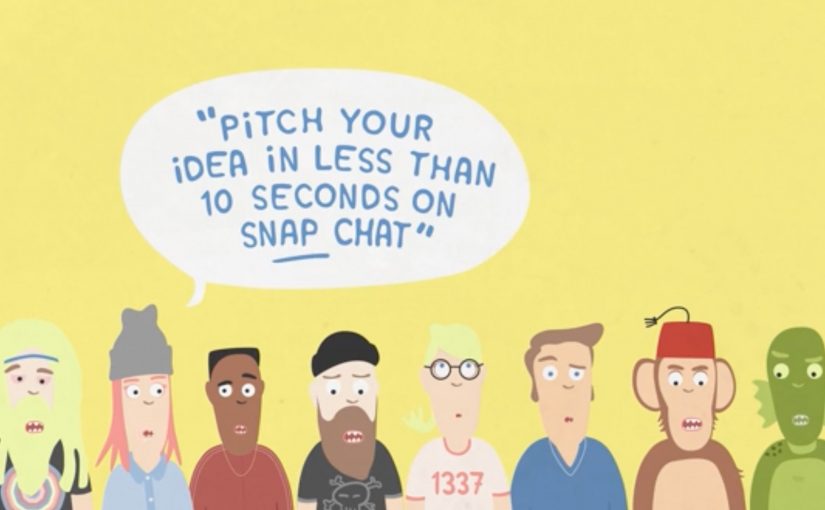
Its been a while (2011) since I came across an innovative Social Media recruitment campaign. In this latest example Norwegian ad agency DDB Oslo has tapped the growing trend of chat apps to attract talent to its agency.
To seek out new talent they created “The Snapchat Pitch”. Interested job seekers had to sum up their concept in 10 seconds or less via video, drawing or song and send it over to DDB Oslo via Snapchat. If the DDB creative department liked the pitch, they would fly the job seekers over to their office for a final interview.
Why Snapchat was the right medium for this recruitment idea
The constraint is the feature. Ten seconds forces clarity. It pushes candidates away from long explanations and toward an idea that lands instantly. That is a useful filter for creative roles, because the pitch is not only the message. It is also proof of judgment under pressure.
Extractable takeaway: When the format itself forces the behavior you want to assess, the application becomes a live demonstration instead of a claim on a CV.
Snapchat also shapes the tone. It is informal, fast, and personal. That lowers the barrier to submit, and it signals that DDB Oslo is looking for modern creators who can think in native mobile formats, not just traditional portfolio pieces. Here, native mobile formats means short, informal creative communication built for the phone screen, not adapted from a longer presentation. Snapchat is not a gimmick here. It is the right screening tool because the medium tests the same creative compression the job demands.
In agency recruitment, where portfolios often reward polish more than immediacy, that makes the channel itself part of the assessment.
What makes it different from typical agency recruitment
Most recruitment campaigns ask for credentials first and creativity second. This flips it. The creative output is the entry ticket. The interview is the reward. That sequencing matters because it makes the selection criteria visible and fair. Everyone starts with the same brief. Communicate an idea in 10 seconds.
The real question is whether the first application step can reveal creative judgment before the interview begins.
What DDB Oslo is really optimizing for
For DDB Oslo, the business intent is not just to look different. It is to widen the top of the funnel while screening for candidates who can already work inside a mobile-first creative constraint. That makes the application mechanic do two jobs at once. It attracts attention and improves fit.
What to borrow if you want to attract talent
- Use a format-native challenge. Pick a platform where the format itself tests the skill you care about.
- Make the first step lightweight. Low friction increases the number and diversity of submissions.
- Reward the best with a real-world next step. A flown-in interview makes the upside tangible and shareable.
A few fast answers before you act
What is “The Snapchat Pitch”?
It is a recruitment idea by DDB Oslo where job seekers pitched a concept in 10 seconds or less via Snapchat using video, drawing, or song.
What did candidates have to submit?
A short concept pitch that fits into 10 seconds, sent to DDB Oslo through Snapchat.
What happened if the pitch was good?
If the DDB creative department liked the pitch, they would fly the job seeker to the office for a final interview.
Why use Snapchat for recruiting?
The platform enforces brevity and rewards clarity. It also tests whether candidates can think and communicate in a modern mobile-native format.
Why does the 10-second limit matter?
It turns the application itself into a filter. Candidates have to show judgment, clarity, and creative compression before they ever reach the interview stage.