
6 Best Campaigns: Clarity Wins in March

6 Best Campaigns: Clarity Wins in March

When brand logic becomes visible

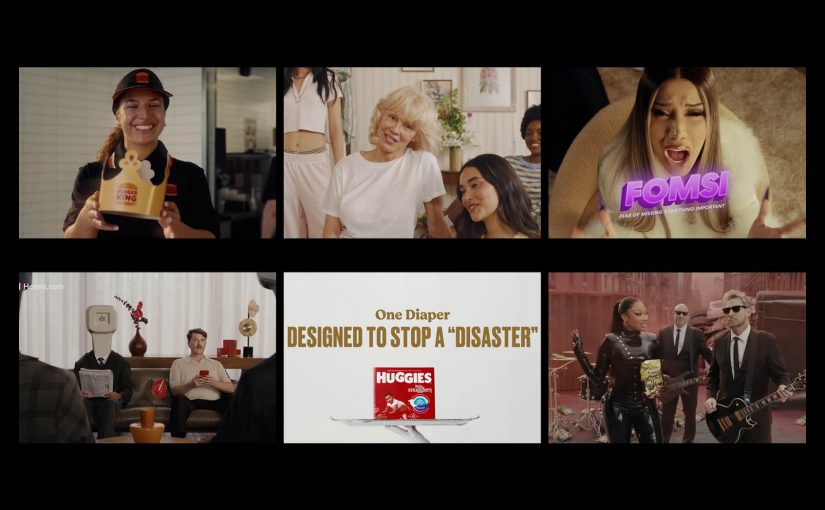
Across Burger King, Aerie, Yahoo Mail, Hotels.com, Huggies, and Cheetos, the work does not resolve into one dominant style. What it does share is something more useful. Each campaign makes the underlying brand logic easier to grasp without needing the case-study explanation afterward.

Brand logic is the commercial rule that links what a brand says, what it does, and why the audience should care. The strongest work this month makes that rule visible early, which matters because a legible mechanism improves comprehension, speeds recall, and gives the campaign a better chance of carrying business intent instead of just generating surface attention.

For enterprise brand teams, that is not a creative nuance but an operating advantage, because clearer strategy survives translation across agencies, channels, retail partners, and internal stakeholders.

It also travels better across consumer experience platforms and MarTech systems, where the strategy has to remain legible through content, CRM, personalization, commerce, and media execution.

The strongest campaigns now win by making strategy legible before they try to make execution louder.

The real question is whether people can decode the commercial intent fast enough for the work to compound in culture instead of stalling as cleverness.

Six campaigns that made strategy easier to see

Burger King: There’s a New King, and It’s You

Burger King turns turnaround work into the campaign itself. Burger King U.S. and Canada president Tom Curtis helps anchor the message, and the brand shifts the crown from the mascot to the guest, ties the story to years of restaurant modernization, operational improvement, and feedback loops, and makes the listening agenda visible instead of hiding it behind generic brand language. That is why the work lands. It turns brand repair into a public narrative people can understand immediately.

Aerie: 100% Aerie Real

Aerie does not use AI as a trend hook. It uses Pamela Anderson to reinforce a policy-backed position that the brand will not use AI-generated bodies or people in marketing, extending its broader authenticity stance. The important move here is operational, not cosmetic. A cultural tension becomes a codified boundary, and that makes the brand stance more credible than a one-off message about authenticity.

Yahoo Mail: Planner

Yahoo Mail gives its AI feature a human entry point. In Yahoo’s launch framing, Planner is an AI-powered personal productivity hub, and rapper Cardi B introduces “FOMSI,” or fear of missing something important, as the tension the feature resolves. That is the smart translation layer. The product is not positioned as abstract intelligence. It is positioned as relief from inbox anxiety.

Hotels.com: It’s All in the Name

Hotels.com strips the proposition down to literal truth. In its new brand platform, the company argues that plenty of things in life are misleading, but its own name is not, and pairs that with a refreshed visual identity and a promise around rewards, simplicity, and flexibility. The discipline here is the point. The brand does not add complexity to seem more interesting. It removes abstraction so the value proposition is easier to decode and remember.

Huggies: Expensive Sh*t

Huggies takes a functional claim and stages it as risky entertainment. The one-hour event put 18 babies in Huggies Little Snugglers on high-value luxury items, streamed the result across TikTok Live, Instagram Live, and YouTube Live, and turned blowout protection into proof people would actually watch. That is what elevates it. The demonstration is not just believable. It is designed for distribution.

Cheetos: Pickle’s Back

Cheetos relaunches Flamin’ Hot Dill Pickle by packaging the return as entertainment first and product news second. The official music video pairs Megan Thee Stallion with Nickelback and turns a flavor comeback into a cultural moment rather than a standard limited-time announcement. That is the lesson. Launch mechanics matter more when the format feels native to how people already consume and share attention.

What brand teams should take from March’s best work

The common move across all six examples is not louder storytelling. It is clearer exposure of the mechanism.

  • Burger King makes operational change visible.
  • Aerie makes the authenticity rule visible.
  • Yahoo makes the AI utility visible.
  • Hotels.com makes the product proposition visible.
  • Huggies makes the product performance visible.
  • Cheetos makes the launch format visible.

The best campaigns of March 2026 did not win by saying more. They won by making the strategy easier to see, easier to feel, and easier to repeat.


A few fast answers before you act

What defined the strongest campaigns in March 2026?

The strongest work made the commercial idea immediately legible. Instead of asking the audience to infer the strategy, the campaigns surfaced it through proof, policy, simplicity, or entertainment.

How are brands using AI differently in campaigns?

The better use cases split in two directions. Some brands, like Yahoo Mail, frame AI as practical relief for a real problem. Others, like Aerie, turn their refusal to use AI in customer-facing imagery into a differentiating brand stance.

Why is clarity becoming a competitive advantage in advertising?

Clarity lowers decoding effort. When people understand the mechanism quickly, recall improves, the message travels faster, and the campaign is more likely to carry commercial intent instead of being remembered only for style.

What role does product demonstration play now?

Product demonstration still works, but it works harder when it is engineered for attention, social circulation, and emotional payoff, not when it stays trapped in a conventional feature explanation. Huggies is the clearest example this month.

What is changing in how brands launch products?

More launches are being wrapped in formats people actively choose to watch, including music video logic, creator energy, or entertainment structures. Cheetos shows how a product return can behave more like culture than an announcement.
Burger King Burn that Ad

Burger King Burn that Ad

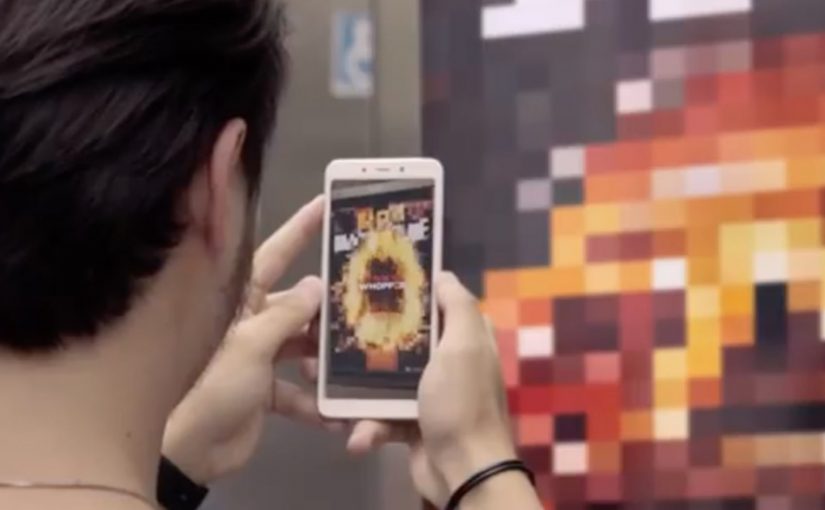
In Brazil, Burger King and ad agency David SP use augmented reality to “burn” competitors’ ads through consumers’ mobile phones. The reward is simple and immediate. Participate, and you earn a free Whopper.

Burger King expects to give away 500,000 Whoppers through the promotion, pushing more people to use Burger King Express, the service that lets customers pre-order food for pickup.

How “Burn that Ad” works

The mechanic turns rival advertising into a trigger. Here, the mechanic is one simple action that immediately returns a coupon reward. You point your phone at a competitor’s ad, the experience “burns” it in AR, and the payoff is a Whopper coupon. It is a direct, product-first incentive tied to a single action.

In quick-service restaurants, where choice is made in seconds, immediate incentives can shift behaviour faster than storytelling.

Why the reward is the strategy

This is not a brand-film play. It is a behavioural exchange. The AR effect is decoration. The engine is the immediate product reward tied to one action. The real question is whether your mechanic creates an immediate, low-friction exchange that makes a new behaviour worth trying. Because the reward is immediate and tied to one action, the AR burn becomes a conversion trigger rather than a gimmick. The customer does something specific in the moment, and Burger King pays them back with something they value immediately. That makes participation scalable beyond the novelty of AR.

Extractable takeaway: If you want people to adopt a new operational path, design a one-step exchange where the reward is immediate, tangible, and triggered by a single action.

The operational goal: Burger King Express

The giveaway is not only about footfall. It is designed to drive adoption of pre-order pickup via Burger King Express. The campaign builds a reason to try the service, not just the product.

What to steal

  • Make competitors the trigger: Turn a competitor’s presence into your acquisition trigger, without relying on complicated steps.
  • Keep it low-friction: Keep the action simple and the reward tangible.
  • Scale an operational behaviour: Link the incentive to an operational behaviour you want to scale, such as pickup pre-order adoption.

A few fast answers before you act

What is “Burn that Ad”?

A Burger King Brazil promotion that uses augmented reality to “burn” competitors’ ads on mobile phones and reward participants with a free Whopper.

What is the incentive?

A free Whopper, delivered via the promotion’s reward mechanic.

How many Whoppers does Burger King plan to give away?

500,000.

What is Burger King Express?

A Burger King service that lets customers pre-order food for pickup.

What business behaviour does it push beyond the giveaway?

Using Burger King Express to pre-order food for pickup.

Burger King Truckvertising

Burger King Truckvertising

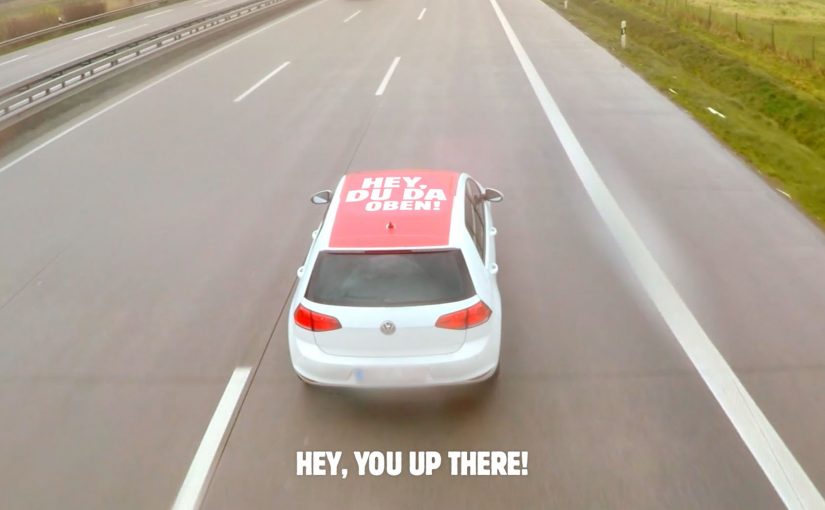
Due to strict laws, reportedly around 13,000km of the German motorway network is ad-free. So to convince truckers in Germany to buy freshly grilled Whoppers, Burger King and agency Grabarz & Partner create ads that only truckers can see. The ads sit on the roof of multiple cars that take turns overtaking trucks.

The cars do not just show an ad. They run a sequence of messages that feels like a conversation from the road:

  • “Hey, you up there!”
  • “You look hungry!”
  • “Why don’t you try out the Whopper?”
  • “Fresh and flame grilled”

Once the first few cars get the truckers’ attention, the remainder guides them to the next Burger King, turning the motorway into a moving funnel:

  • “If yes, then wink”
  • “Follow me to Burger King”

As a result, many truckers give in to temptation and follow the cars to the next XXL Burger King Drive-In.

The constraint that forces the creativity

The starting point is the limitation. Large parts of the German motorway network are ad-free, so the classic roadside billboard play is unavailable at scale.

The execution is “roof media” plus choreography

Here, “roof media” means ads mounted on the roofs of overtaking cars so truck drivers can read them clearly from above.

Burger King turns overtaking cars into a media surface and a delivery system. Roof placements ensure the message is visible from the truck cab. A rotating set of cars keeps the sequence going long enough to land.

The craft is the choreography. It is not one clever line. It is a paced interaction that escalates from attention, to appetite, to direction.

Why this works as shopper marketing in motion

The strength of this idea is that it turns media, message, and route into one conversion system. It works because the format, the sequence, and the physical route all point to the same next action: pull in at the next drive-in.

Extractable takeaway: When the audience is already moving toward a purchasable moment, the strongest creative system is the one that removes the need to interpret the ad and simply guides the next step.

In roadside retail and travel-heavy categories, the scalable advantage often comes from linking visibility, direction, and store access in one uninterrupted journey.

The real question is not how to make drivers notice the message, but how to turn that moment of notice into a low-friction detour.

The business aim is immediate drive-in visits from truckers who are already on the road and close to a Burger King location.

It also respects context. Truckers are not asked to scan, click, or search. They are asked to notice, react, then follow.

What to steal from Truckvertising

  • Turn constraints into the brief: Start with a hard constraint and treat it as a design brief, not a blocker.
  • Match the format to the moment: Use a format the audience cannot ignore in their context, in this case overhead visibility from a cab.
  • Design a behaviour sequence: Build a sequence that moves from attention to action, not a single punchline.

A few fast answers before you act

What is “Truckvertising” in one line?

Car-roof ads overtake trucks on ad-free motorways, deliver messages to truckers, then guide them to the next Burger King drive-in.

Why put the ad on the roof?

The roof is the placement truck drivers can reliably read from the higher truck cab as cars overtake them.

What is the conversion mechanic?

A staged sequence of overtaking cars gets attention, builds appetite, then provides directions to the next Burger King.

Why does the sequencing matter?

The idea is not one static message. Repeated overtakes let the campaign move from attention, to appetite, to direction.

What is the underlying business aim?

The goal is immediate local store visits and Whopper purchase intent from a high-propensity audience already in transit.