
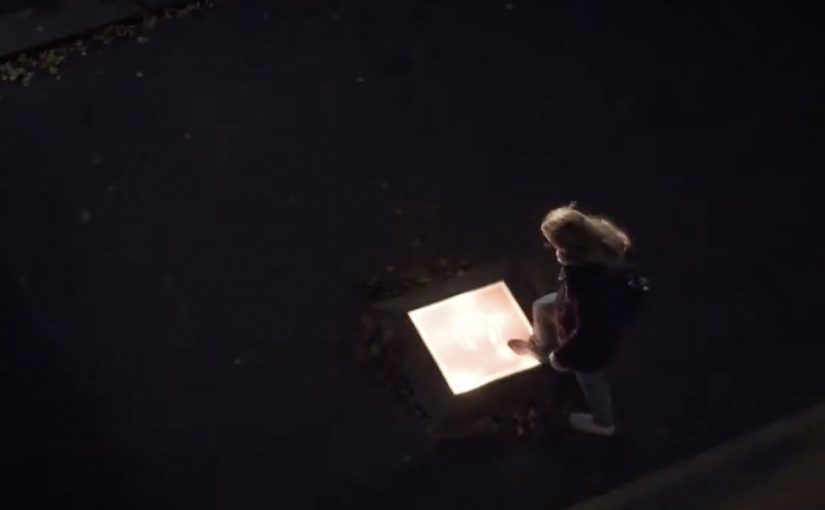
Microsoft has been heavily advertising the new Windows 8, Surface RT and Windows Phone 8 along with their respective features. In Norway, Microsoft partners with Norwegian electro rock band Datarock to bring the experience of Windows 8 and Windows Phone 8 Live Tile functionality to unsuspecting residents of downtown Oslo. Live Tiles are interface elements that surface changing, real-time information before you click.
A giant lit-up “tile” appears on the street outside a seemingly closed-off venue. When a passer-by steps onto it, the wall drops and the hidden party spills into the street, with Datarock performing live. The result is an evening to remember.
What the stunt makes you understand about Live Tiles
Live Tiles are designed to feel active, not static. They are not just shortcuts to apps. They are meant to show “something is happening” before you even click. This activation dramatizes that promise by making the tile itself the trigger for real-world content. Because the tile is both preview and trigger, the promise of “something is happening” becomes instantly believable.
In European city-center launches, the most effective experiential stunts translate a UI idea into a single physical action people can trigger without instructions.
Why the surprise mechanic works
The build-up is visible. You hear music, you see a barrier, you notice something glowing at your feet. Curiosity does the recruiting. The moment of commitment is tiny, just stepping onto the tile, but the payoff is oversized, because the environment changes instantly around you.
Extractable takeaway: If you want people to understand a product behavior fast, design a tiny, obvious trigger that unlocks an outsized change in the environment.
What Microsoft is really selling here
Specs are not the message. The message is a feeling: Windows looks alive. By turning a UI element into a street-level “switch” that unleashes a live experience, the campaign makes the feature memorable even for people who never touch the product that night.
The real question is whether your feature can be felt through a simple trigger before it is explained.
This kind of launch is the right move when you want the feature’s behavior to become the story people repeat.
Trigger-based patterns for feature marketing
- Convert the feature into a trigger. If the benefit is “real-time,” make the audience activate something in real time.
- Make the payoff disproportionate. A small action should unlock a big reveal.
- Stage it for bystanders too. The crowd reaction is part of the content.
- Keep the story tellable. “I stepped on a tile and a concert exploded” is easy to repeat.
A few fast answers before you act
What is “The Live Tile Experiment”?
It is a street stunt in Oslo that turns the Live Tile concept into a physical trigger. Step on a giant tile and a hidden Datarock performance is revealed as the wall drops.
What product feature does it communicate?
Live Tiles, the Windows 8 and Windows Phone 8 interface element designed to display changing, real-time information and content.
Why use a concert reveal instead of a traditional demo?
A live reveal creates an emotional memory tied to the feature idea. It shows “alive and dynamic” faster than any explanation.
What makes the activation easy for the public to participate in?
The required action is obvious and low effort. People only need to step onto the tile to trigger the outcome.
What is the key lesson for feature launches?
Do not describe the benefit. Stage a moment that behaves like the benefit, so people feel it immediately.