
Benefit Cosmetics: Temptation Telephone

Benefit Cosmetics: Temptation Telephone

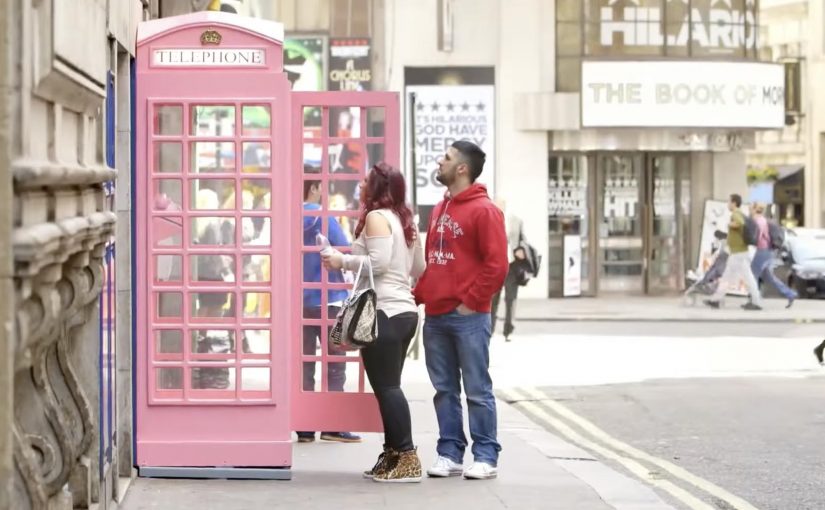
‘Ring ring…’ A pink telephone starts ringing in the middle of London. The question is simple. Do you pick it up.

Benefit Cosmetics places a pink phone booth on a busy street for a day and turns the call into a dare. If you answer, you are pulled into a pop-up “celebrity moment”. A quick makeover, then a trip to Café de Paris where you are pushed onto the stage to sing Whitney Houston’s “I Wanna Dance With Somebody” with a live band in front of a packed room.

The temptation mechanic

The mechanism is built around a single micro-decision, meaning one small public choice with immediate consequences. Answering a ringing phone in public. The payoff is immediate escalation. You are not given a flyer or a discount. You are given a story you will retell. The booth, the ring, the dare, the stage. The whole thing is designed to transform a passerby into the headline.

In beauty retail and experiential marketing, the fastest way to earn attention is to convert curiosity into a socially shareable moment that makes the participant feel chosen.

Why it lands

This works because it exploits a universal impulse. Most people want to know what happens if they answer. The booth creates theatre, the ringing creates urgency, and the venue creates legitimacy. That sequence works because the first action feels harmless, while the public payoff turns a passing impulse into a memorable story. The participant does not feel like they “took part in advertising”. They feel like they got a once-only experience, which is exactly what makes the footage feel authentic and replayable.

Extractable takeaway: When you can own a clear “dare”, design it around a tiny public action with a big, fast reward, then stage the reward somewhere iconic so the story carries your brand without further explanation.

What Benefit Cosmetics is really selling

The real question is whether Benefit can make confidence feel like something you step into, not something you buy. Benefit is not really selling makeup here. It is selling permission to be bold. The makeover is a prop. The real product is the feeling of stepping into the spotlight for ten minutes.

What to steal from Benefit’s temptation loop

  • Engineer a single, obvious trigger. One action. One choice. Answer or walk past.
  • Pay off immediately. Curiosity dies fast. Reward it fast.
  • Borrow an iconic container. A recognizable venue turns a stunt into “a real event”.
  • Make the participant the content. Their nerves and laughter do more than scripted copy ever will.

A few fast answers before you act

What is Benefit’s “Temptation Telephone”?

A one-day street activation where a ringing pink phone booth lures passersby into answering, then escalates into a makeover and a live on-stage performance at Café de Paris.

Why does the ringing phone work as a trigger?

Because it creates an unavoidable question. Who is calling. What happens if I answer. That curiosity produces voluntary engagement.

What role does Café de Paris play in the idea?

It supplies instant credibility and spectacle. The venue makes the payoff feel like a “real night out”, not a brand demo.

What makes this feel shareable rather than staged?

The participant’s reaction arc. Hesitation, commitment, then performance. Viewers watch to see whether the person goes through with it.

When is this pattern a good fit?

When your brand can credibly promise confidence, fun, or transformation, and you can deliver a fast, memorable payoff tied to a single public decision.

bpost Live Webshop: Every second cheaper

bpost Live Webshop: Every second cheaper

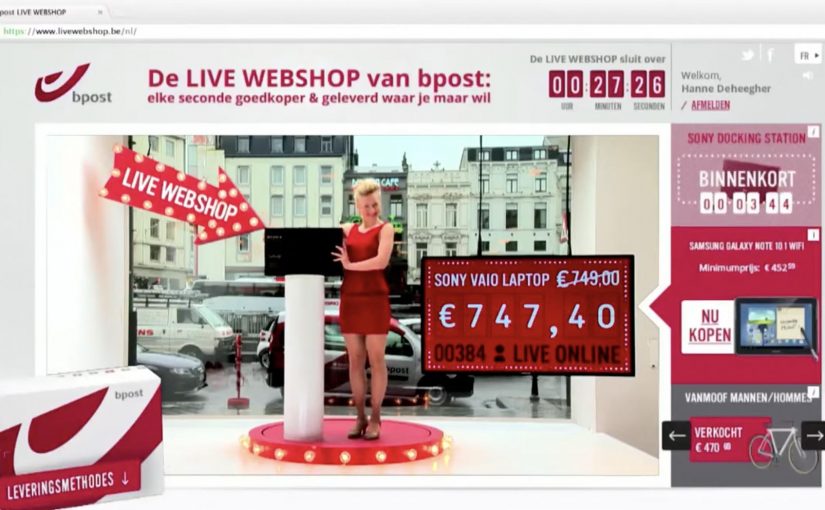
bpost is Belgium’s postal operator. To prove their ability to deliver, and to fend off new contenders in the delivery market, they open a pop-up store right in central Brussels that you can watch like a shop window.

A range of must-have items is put on display, from smartphones to designer coffee makers. The twist is that the only way to buy them is through a special online auction where the price of every product drops every second.

People have to act fast to catch an item before someone else does. Once sold, the item is picked up by a postman right in front of the webcam and delivered to the winning bidder, so everyone watching can see how quick and reliable the service is.

In European parcel and delivery markets, the hardest promise to prove is speed and reliability, so public demonstrations often land harder than product claims.

The real question is how you make a service promise visible enough that people trust it without having to take your word for it.

As a result, awareness of bpack, the delivery service being promoted, is reported as rising to 65%. In 6 days, 260,000 unique visitors are reported. For every hour the shop is online, bpost is reported as selling 8 products on average.

A webshop you can watch, not just click

The pop-up window makes the online mechanic tangible. People see the products in real life, then experience the purchase as a live moment, with delivery turning into the proof point rather than a line in the footer.

Why the “dropping price” mechanic creates urgency

A price that decreases every second builds a clear trade-off: wait for a better deal, or buy now before someone else does. Because the price is visibly falling, hesitation becomes a risk you can feel. That tension is the game. It keeps attention locked and makes the checkout decision feel like winning, not spending.

Extractable takeaway: Use a visible, fast-moving trade-off so waiting feels costly and acting feels like progress, not purchase.

What bpost is really selling with bpack

The service story is simple: “wherever you are, we deliver.” The activation turns that into something visible, with a postman dispatching the parcel immediately after purchase. The product is delivery confidence. Proof beats claims when reliability is the benefit.

Service-proof moves worth reusing

  • Make the benefit observable. If your promise is speed, show speed in public.
  • Use a mechanic that explains itself. A visible countdown beats a paragraph of copy.
  • Build in a live “receipt”. The moment of dispatch is the proof people remember.
  • Design for spectators. If watching is entertaining, the audience becomes the distribution layer.

A few fast answers before you act

What is the bpost Live Webshop?

It is a pop-up retail window in Brussels where products can only be bought via a live webshop auction, with prices dropping every second and delivery shown on camera to prove service speed.

How does the “price drops every second” auction work?

Each product starts at a set price and continuously decreases over time. The first person to click and buy wins the item at that moment’s price.

Why show a postman picking up the parcel live?

Because it turns a delivery claim into visible proof. The dispatch moment demonstrates reliability and speed better than messaging can.

What is bpack in this campaign?

bpack is positioned as the delivery service being promoted. The activation is designed to raise awareness and trust in that specific service.

What is the main lesson for brands selling services?

When trust is the barrier, do not just explain the promise. Stage it so people can watch the promise being kept.

Samsung Live Human Outdoor: Billboard caricature

Samsung Live Human Outdoor: Billboard caricature

With the new Samsung Note 10.1, caricature artists can now go digital. To highlight this feature and raise awareness about the tablet, Samsung puts a real caricature artist “into” an outdoor billboard experience and has him draw live caricatures of passers-by. The finished drawings are then put on the Samsung Portugal Facebook page.

A live billboard that behaves like a street-portrait stand

The mechanism is simple. People stop. They watch themselves being drawn in real time. The artist works digitally using the Note 10.1, and the billboard becomes a public canvas that makes the device’s creative promise visible from across the street.

In consumer electronics marketing, live demos in public spaces work when the product capability is undeniable without any explanation.

Why it lands: you do not “see a feature,” you experience it

This is not a spec sheet. The real question is whether your launch turns a capability into a moment people actively want, or just a message they tolerate. The device becomes the instrument of a familiar craft, and the outcome is something people actually want. A caricature is personal, fast, and inherently shareable, which makes the crowd effect, the people who stop to watch, do the distribution work.

Extractable takeaway: If your live demo produces a personal artifact on the spot, proof travels further because people share the outcome, not your claims.

What Samsung is really achieving

  • Proof at full scale. A drawing tool is hard to dramatize in a 30-second spot. On a billboard, the proof is the show.
  • A reason to stop. The promise is not “look at our tablet.” The promise is “get drawn.”
  • A built-in content pipeline. The Facebook posting turns a one-off street moment into a browsable gallery.

What to steal for your next live product demonstration

  • Choose an outcome people value. A personal artifact beats a generic demo every time.
  • Make the capability visible from distance. If it only works up close, most of the street never understands it.
  • Close the loop digitally. Give people a clear place to find “their” result after the moment ends.
  • Let the crowd be the media. A live, public performance naturally draws more viewers than static outdoor.

A few fast answers before you act

What is Samsung Live Human Outdoor?

It is an outdoor activation where a caricature artist draws passers-by live using the Samsung Note 10.1, with finished sketches published to Samsung Portugal’s Facebook gallery.

What product feature is being demonstrated?

The ability to create digital drawings naturally and quickly on a tablet, associated with pen-based input and creative apps.

Why use caricatures instead of a standard product demo?

Because the outcome is personal and entertaining, which makes people stop, watch, and share, while the product capability is being demonstrated in plain sight.

What makes this “live communication” rather than outdoor advertising?

The billboard is not only a display. It is a real-time performance and interaction, with the public influencing the content through participation.

What is the main lesson for experiential product launches?

Turn a feature into a moment people want. If the experience creates a valued takeaway, attention becomes voluntary and sustained.