
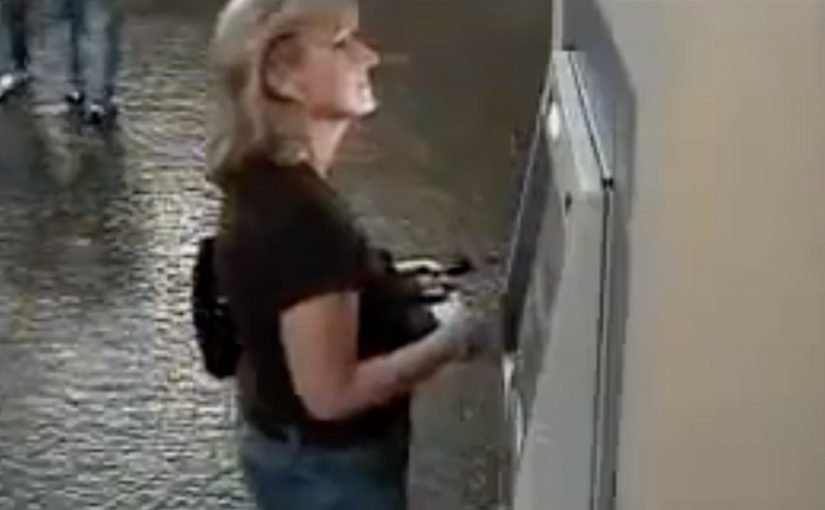
Jimmy Kimmel: Talking ATM

Jimmy Kimmel: Talking ATM

Here is some Monday morning humor with talk show host Jimmy Kimmel pranking innocent people with a “Talking ATM”.

What the bit is, in one clean idea

The premise is as simple as it sounds. You walk up to an ATM expecting silence and routine. Instead, the machine “talks back”, and the normal transaction turns into a public surprise.

Here, the bit is the repeatable comic setup, an ordinary ATM behaving like a person in public.

The mechanism is minimal. Put the prank inside a familiar object, then let the setting do the rest. Because everyone understands what an ATM is for, the moment the ATM behaves differently, the audience immediately gets the joke.

In everyday urban life where people run on autopilot, the cleanest pranks work by interrupting a routine object, not by adding complicated setup.

Why it works on camera

This lands because it is universal and fast. There is no niche reference to decode, and the reactions happen in seconds. The “victim” goes from focused to confused to laughing, and viewers get the same emotional arc without needing context.

Extractable takeaway: For shareable humor, build around a routine people recognize instantly, then flip one expectation. The clearer the routine, the bigger the reaction.

What brands can learn from this style of content

The real question is how you borrow the clarity of a universal routine without copying the prank.

The lesson is not “prank people”. It is “use familiarity as your amplifier”. When the object is universally understood, you can spend your creative budget on the twist, not on explaining the world you built.

Have a great week. For more videos of Jimmy Kimmel click here.

Steal this pattern, not the ATM

  • Start with a known ritual. Withdraw cash. Buy coffee. Scan a ticket. Simple beats clever.
  • Change one rule only. The moment should be legible on mute.
  • Design for reaction clarity. Confusion first, then release. That is the loop people share.
  • Keep it short. The best bits do not overstay the premise.

A few fast answers before you act

What is “Talking ATM”?

A Jimmy Kimmel prank segment where an ATM appears to speak to people during a withdrawal, turning a routine moment into a surprise reaction.

Why is an ATM such a good prank object?

Because it is a universal routine object. People expect it to be silent and transactional, so any break in that expectation is instantly noticeable.

What is the core mechanism that makes it shareable?

A familiar setup plus a single clear twist, delivered quickly enough that viewers can understand the premise and enjoy the reaction without explanation.

What is the safest marketing takeaway?

Use familiar rituals to reduce explanation, then concentrate creativity in one unmistakable moment that people can describe in a sentence.

What should a brand copy from this format?

Copy the structural discipline, not the stunt: start with a routine people already understand, change one clear rule, and make the reaction easy to grasp in seconds.
NIVEA: Deo Stress Test

NIVEA: Deo Stress Test

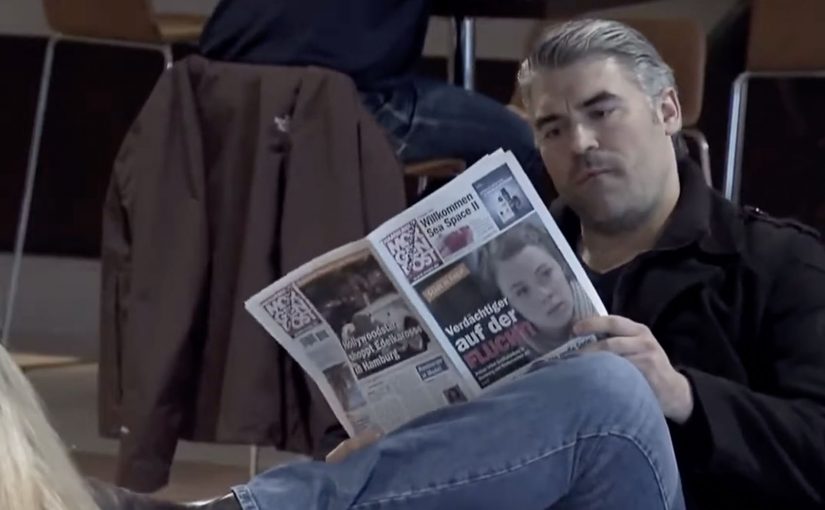
A woman waits in an airport lounge. A newspaper lands nearby. Her face is on the cover, framed as a dangerous suspect. Seconds later, a TV broadcast repeats the same “wanted” story. The room shifts. People stare. The pressure spikes.

This is the “Stress Test” prank used to launch NIVEA Deo Stress Protect in Germany. The set-up covertly photographs real passengers, then inserts their images into a rapid sequence of believable media moments. A fake front page. A fake news segment. A looming “security” approach. Then the reveal. The suitcase opens and the product appears as the punchline.

Prankvertising is a brand activation that creates a real-world surprise for unsuspecting participants, then packages the reaction as content. It is only worth doing when the prank is tightly controlled, the audience understands the logic, and the reveal cleanly connects the stress to the product promise.

Turning “stress sweat” into something you can feel

Stress-induced sweating is hard to demonstrate in advertising without sounding clinical. This campaign solves that with one blunt translation. Make stress visible. Make it public. Make it uncomfortable. Then position the deodorant as the relief valve.

In European FMCG launches, where functional claims are easy to ignore, a live stunt can turn a product benefit into a story people retell.

The real question is whether the stress you trigger is in service of the product truth, or just spectacle that turns the audience against you.

Why this landed, and why it drew criticism

The mechanism is instantly legible, so viewers stay for the reactions. But that same realism creates a risk. If the line between tension and harm feels too thin, the brand gets attention for the wrong reason. Trade coverage at the time noted both the viral momentum and the backlash, which is the trade-off with high-intensity stunts.

Extractable takeaway: When you use real-world tension to dramatize a benefit, the reveal has to resolve that tension fast, and make the product the clear relief.

Borrow the stunt without inheriting the downside

  • Anchor the stunt to a single product truth. Here it is stress. Everything in the sequence reinforces it.
  • Make the reveal unmissable. The product has to arrive as the resolution, not as an afterthought.
  • Design an ethical escape hatch. Keep the duration short, avoid escalating beyond what you can safely control, and ensure participants are cared for immediately.
  • Pre-plan the criticism. If you choose fear as a lever, you must be ready to justify it and explain safeguards.

A few fast answers before you act

What happens in the NIVEA Deo “Stress Test” airport prank?

Unsuspecting passengers are covertly photographed and then confronted with fake media outputs that portray them as “wanted”. The tension builds until the reveal introduces NIVEA Stress Protect as the relief and the message.

What product benefit is this trying to dramatize?

Stress-induced sweating. The activation makes stress feel immediate and physical, then frames the deodorant as protection in high-pressure moments.

Who created the campaign?

Trade write-ups commonly credit Felix & Lamberti (Hamburg, Germany), with production credits listed in trade write-ups. Labamba is also mentioned as a partner in some execution notes and case material.

Why do stunts like this go viral?

They compress a clear story into a few minutes. Viewers understand the situation instantly, then watch for human reactions and the reveal.

What is the biggest risk with prankvertising?

Brand damage from perceived cruelty or unsafe escalation. If the audience thinks you harmed people for clicks, the message flips from “clever” to “reckless”.

Jimmy Kimmel: First Look at iPhone 5

Jimmy Kimmel: First Look at iPhone 5

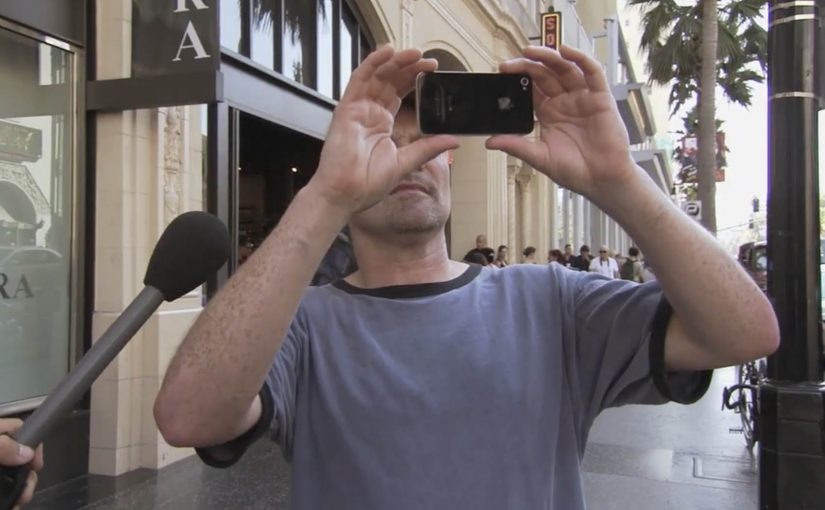
The iPhone 5 still has some weeks to go before it is officially available. That little detail did not stop talk show host Jimmy Kimmel from giving random people on the streets a chance to “test” the iPhone 5, which was actually just an iPhone 4S.

How the prank works

The mechanism is simple: present a familiar object as a new one, then ask for first impressions on the spot. The humor comes from watching people project “newness” onto something they are already holding, then confidently describe improvements that cannot be there because nothing changed.

In consumer tech launches, perceived novelty often shapes first impressions as much as real novelty does.

The real question is whether the launch story is shaping the feedback you think you are collecting.

Why it lands

The segment exposes expectation marketing in real time, meaning the expectation itself becomes part of the perceived product experience. It makes a point without preaching. It lets people’s own words demonstrate how branding, timing, and context can change what we think we are seeing.

Extractable takeaway: When audiences expect a breakthrough, they interpret ambiguous cues as improvements. Marketing and product teams should separate product experience from launch narrative when they need truth, because the narrative can become the experience.

It turns product hype into a social mirror. Viewers do not only laugh at the interviewees. They recognize the pattern, because everyone has “felt” an upgrade before they could name a feature.

It is edit-friendly proof. Quick street soundbites create a fast rhythm and a clear punchline. The format is built for sharing because each reaction is a self-contained beat.

Borrowable moves from the iPhone prank

  • Use a clean, repeatable setup. One premise, one question, many reactions. The simplicity is what creates volume and pace.
  • Build the contrast into the reveal. The punchline is strongest when viewers understand that the object never changed.
  • Let the audience diagnose the insight. Showing beats telling. The segment works because the viewer reaches the conclusion themselves.

A few fast answers before you act

What is the core joke of the segment?

People are asked to review a “new” iPhone, but they are actually holding an older model, and many still describe it as better.

What does this say about consumer perception?

That context and expectation can shape what people think they notice, especially when differences are subtle or undefined.

Is this a critique of Apple or of people?

It plays more like a critique of hype mechanics and social pressure in “first impression” moments than a critique of one brand.

Why is the street-interview format effective here?

It creates instant, unscripted soundbites, and the variety of reactions keeps the piece moving.

What is the practical lesson for marketers and product teams?

If you need truth, test products in neutral conditions. If you want buzz, understand that the story around a product can amplify perceived value, sometimes beyond what the product alone delivers.