
Roman Atwood: The World’s Most Contagious Prank

Roman Atwood: The World’s Most Contagious Prank

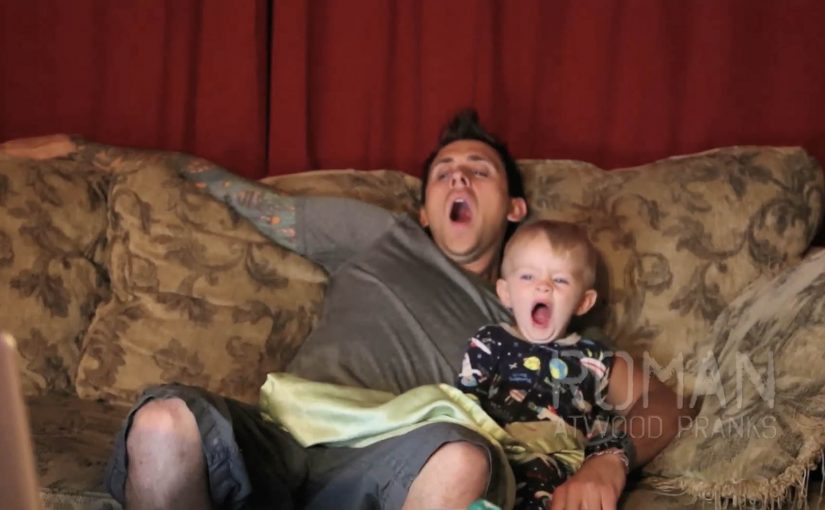
Here is an infectious yawning video created by YouTuber Roman Atwood. Try watching this nearly three minute clip of constant yawning without letting one loose yourself. I could not help but yawn while watching it.

The simplest mechanism in the world

The mechanism is pure mimicry and suggestion. You see a yawn. You anticipate a yawn. Then your body does the rest. The prank is not about shock. It is about stacking the same trigger again and again until your reflex gives in.

In social video, simple human reflexes and repeatable triggers can outperform high production because the viewer feels personally involved.

Why it lands

This works because it turns the viewer into the subject. The content is not only “watch someone yawn”. It is “can you resist”. That tiny competitive frame, a simple self-test with a clear pass-or-fail outcome, creates attention, and attention makes the reflex even harder to ignore. The real question is how you turn a passive viewer into an active participant with almost no friction. The smarter lesson for marketers is that participation can beat production value when the trigger is immediate and universal.

Extractable takeaway: If you can anchor a video around a universal, involuntary response and wrap it in a clear challenge, the audience participates while they watch. Participation is what makes the clip shareable.

How to build your own contagious challenge

  • Start with the reaction you want: pick a response that is immediate and universal, then build backwards.
  • Use repetition with purpose: one trigger is a gag. Many triggers become a challenge.
  • Make the premise explainable in one sentence: “watch this without yawning” is the whole pitch.
  • Let viewers test themselves: self-tests create comments, shares, and rematches.
  • Keep it short and focused: the tighter the loop, the stronger the contagion.

A few fast answers before you act

What is “The World’s Most Contagious Prank”?

It is a yawning prank video where the creator yawns repeatedly in public to see if bystanders and viewers “catch” the yawn reflex.

Why do people share videos like this?

Because the challenge frame is social. People want to test friends, compare reactions, and prove whether they can resist.

Is this a prank or a social experiment?

It sits in between. It uses a prank setup, but the entertainment comes from observing a predictable human reflex spread from person to person.

What is the key lesson for video marketing?

Design around a specific viewer response, then make the viewer feel like the outcome depends on them.

What is the main risk of copying this format?

If the trigger is not truly universal or the loop feels repetitive without payoff, people drop off quickly. The mechanic has to be instantly felt, not only understood.

NIVEA: Deo Stress Test

NIVEA: Deo Stress Test

A woman waits in an airport lounge. A newspaper lands nearby. Her face is on the cover, framed as a dangerous suspect. Seconds later, a TV broadcast repeats the same “wanted” story. The room shifts. People stare. The pressure spikes.

This is the “Stress Test” prank used to launch NIVEA Deo Stress Protect in Germany. The set-up covertly photographs real passengers, then inserts their images into a rapid sequence of believable media moments. A fake front page. A fake news segment. A looming “security” approach. Then the reveal. The suitcase opens and the product appears as the punchline.

Prankvertising is a brand activation that creates a real-world surprise for unsuspecting participants, then packages the reaction as content. It is only worth doing when the prank is tightly controlled, the audience understands the logic, and the reveal cleanly connects the stress to the product promise.

Turning “stress sweat” into something you can feel

Stress-induced sweating is hard to demonstrate in advertising without sounding clinical. This campaign solves that with one blunt translation. Make stress visible. Make it public. Make it uncomfortable. Then position the deodorant as the relief valve.

In European FMCG launches, where functional claims are easy to ignore, a live stunt can turn a product benefit into a story people retell.

The real question is whether the stress you trigger is in service of the product truth, or just spectacle that turns the audience against you.

Why this landed, and why it drew criticism

The mechanism is instantly legible, so viewers stay for the reactions. But that same realism creates a risk. If the line between tension and harm feels too thin, the brand gets attention for the wrong reason. Trade coverage at the time noted both the viral momentum and the backlash, which is the trade-off with high-intensity stunts.

Extractable takeaway: When you use real-world tension to dramatize a benefit, the reveal has to resolve that tension fast, and make the product the clear relief.

Borrow the stunt without inheriting the downside

  • Anchor the stunt to a single product truth. Here it is stress. Everything in the sequence reinforces it.
  • Make the reveal unmissable. The product has to arrive as the resolution, not as an afterthought.
  • Design an ethical escape hatch. Keep the duration short, avoid escalating beyond what you can safely control, and ensure participants are cared for immediately.
  • Pre-plan the criticism. If you choose fear as a lever, you must be ready to justify it and explain safeguards.

A few fast answers before you act

What happens in the NIVEA Deo “Stress Test” airport prank?

Unsuspecting passengers are covertly photographed and then confronted with fake media outputs that portray them as “wanted”. The tension builds until the reveal introduces NIVEA Stress Protect as the relief and the message.

What product benefit is this trying to dramatize?

Stress-induced sweating. The activation makes stress feel immediate and physical, then frames the deodorant as protection in high-pressure moments.

Who created the campaign?

Trade write-ups commonly credit Felix & Lamberti (Hamburg, Germany), with production credits listed in trade write-ups. Labamba is also mentioned as a partner in some execution notes and case material.

Why do stunts like this go viral?

They compress a clear story into a few minutes. Viewers understand the situation instantly, then watch for human reactions and the reveal.

What is the biggest risk with prankvertising?

Brand damage from perceived cruelty or unsafe escalation. If the audience thinks you harmed people for clicks, the message flips from “clever” to “reckless”.

Mobistar: Basta Call Center Prank

Mobistar: Basta Call Center Prank

Mobistar is long described as one of Belgium’s leading mobile operators and one of the country’s biggest advertisers. Over time, it also becomes known in public conversation for frustrating customer service.

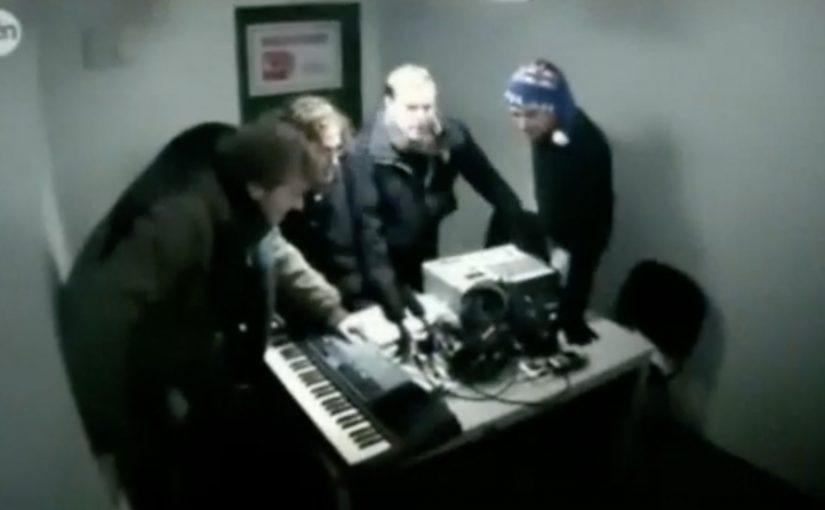
So on January 10, 2011, Belgian TV makers at VRT decide to prank Mobistar, and the segment later airs on their new comedy show, Basta. A Mobistar security guard named Mathieu becomes the unlikely hero, largely because he stays calm and friendly throughout.

The prank that turns “call center pain” into a live experience

The execution is cruelly simple. A physical setup triggers a phone call. That phone call leads into an intentionally endless customer-service loop of transfers, hold music, dead ends, and “let me check with my boss” deflections. The joke is not the person calling. The joke is the system that can trap anyone, even someone trying to do the right thing.

In European telecom markets, customer service reputation can outweigh product features in the public conversation.

Why it lands: it exposes the gap between message and reality

Modern consumers get tired of overpromising brand messages, especially when the lived experience does not match. This prank goes viral because it dramatizes that mismatch without a lecture. You can feel the frustration build, and you recognize it instantly if you have ever battled a helpdesk script.

Extractable takeaway: If your brand invests heavily in advertising but underinvests in service, someone else will eventually tell your story for you. The narrative people remember will be the experience, not the tagline.

The uncomfortable lesson for big advertisers

The real question is whether your marketing is amplifying a service experience worth talking about, or drawing more attention to one people already resent.

The punchline carries a serious point. If brands want trust, they need to fund the product and the service before they fund the promise. Great campaigns amplify a great experience. They cannot replace it for long.

What to steal if you run CX, service, or brand

  • Audit your “moments of truth”: contact centers, chat, returns, and complaints shape reputation faster than brand film.
  • Measure friction, not just satisfaction: transfers, resolution time, and repeat-contact rate are where trust is won or lost.
  • Stop advertising around known pain: fix the root issue first, then scale the promise.
  • Turn service into a brand asset: when service is excellent, it becomes shareable for the right reasons.
  • Protect frontline humans: if your system is broken, your staff and customers suffer together.

A few fast answers before you act

What happened in the Mobistar prank?

A TV team stages a scenario that forces a Mobistar employee into an exaggerated, endless customer-service loop, mirroring the frustrations customers report when they seek help.

Why did Mathieu become the “hero” of the clip?

Because he stays polite and persistent while the system around him becomes increasingly absurd. His demeanor contrasts with the experience the prank is criticizing.

What is the business takeaway for brands?

Advertising cannot sustainably outshine poor service. When the lived experience disappoints, culture and media will surface the truth faster than any campaign can mask it.

How should a telecom brand respond to criticism like this?

Fix operational drivers first: staffing, escalation paths, first-contact resolution, and transparency. Then communicate improvements with proof, not slogans.

What should leaders measure to prevent this kind of reputational damage?

Resolution time, transfer rate, repeat-contact rate, complaint volume by issue, and sentiment in customer conversations. These tend to predict reputation better than awareness metrics.