
World’s Biggest Hug: Christ the Redeemer PSA

A monument-sized gesture

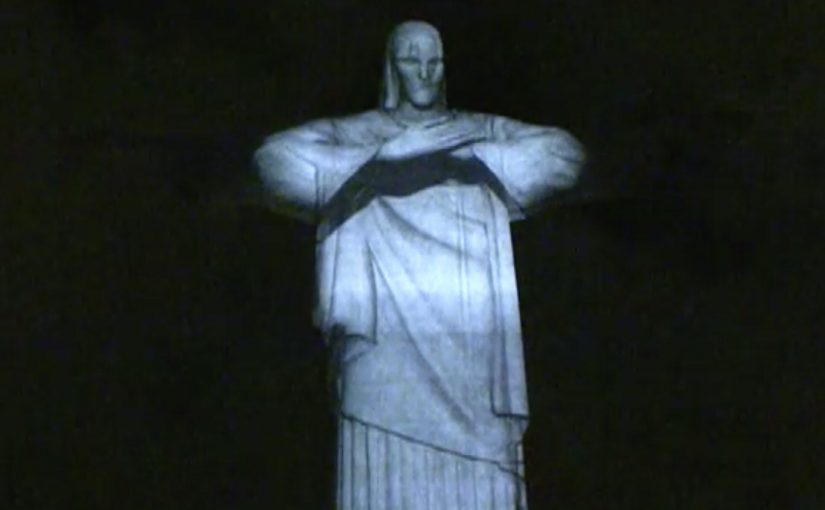
In October 2010, Conselho Nacional do SESI ran a campaign described as the “world’s biggest hug” by using the Christ the Redeemer statue in Rio de Janeiro as the canvas.

Across two nights, the statue’s spotlights were switched off and replaced with projections and 3D imagery that made it look like Christ was closing his arms around the city. The moment linked back to the Carinho de Verdade (“True Affection”) campaign, built to raise awareness of sexual abuse affecting children and teenagers and to promote healthier relationships of trust.

Visualfarm Brazil created the projection using Coolux Germany’s Pandoras Box technology. Below is the recorded footage of the projection itself.

How the illusion works. A quick mechanics recap

The execution combines three things: a landmark people already read as a symbol of protection, a temporary “blackout” that resets attention, and projection mapping that makes a static surface feel alive.

Projection mapping is the practice of aligning video to the exact geometry of a 3D surface so the object appears to change shape, gain depth, or move, even though nothing physical moves.

In global public-awareness communications, landmark-scale stunts work best when the symbolism is instantly legible and the path from emotion to action is frictionless.

Why it lands when it could have been “just a stunt”

The hug is a universal gesture with a clear meaning. It does not need translation, and it carries warmth without feeling like a lecture. Using the Christ the Redeemer silhouette makes that meaning immediate at city scale, then the darkness-to-light reveal gives it a shared “you had to be there” quality that naturally travels by word of mouth and video.

Extractable takeaway: If your message is difficult, start with a human gesture everyone understands, then let the medium amplify it, and only then introduce the cause and the action you want people to take.

The intent behind the hug

This is cause communication that uses emotional clarity as a bridge into a harder conversation. The strongest public-awareness work starts with an emotionally legible act before it asks people to absorb the harder message. The real question is how to turn a monument-scale emotional moment into a cause message people can approach instead of avoid. The job is not only awareness. It is to make the topic speakable, reduce avoidance, and give the public a simple next step that feels aligned with the warmth of the symbol.

What to steal from this for your next public-facing campaign

  • Pick one unmistakable symbol. Use a form people recognize in under a second, then change it in a way that supports the message.
  • Engineer a “collective moment.” Limited time windows create urgency and social proof, especially when the result is visibly shareable.
  • Design for cameras, not just crowds. If it does not read clearly on a phone video, it will not scale beyond the live audience.
  • Keep the CTA emotionally consistent. If you lead with care, the action should feel like care too, not like a hard switch to bureaucracy.

A few fast answers before you act

What was “The World’s Biggest Hug” campaign?

It was a Carinho de Verdade campaign moment in Rio where projections on Christ the Redeemer created the illusion of the statue hugging the city, used to draw attention to child and teen sexual abuse and encourage healthier trust-based relationships.

How did the projection create a “hug” effect?

The statue’s normal lighting was turned off, then mapped visuals were precisely aligned to the statue’s 3D surface so the arms and body appeared to move and close around the city.

Why use a monument instead of a standard ad placement?

A monument compresses meaning. People already attach emotion and identity to it, so the message is understood faster and shared more willingly than a conventional placement.

What role did the campaign site play?

It provided the action path. The public moment created attention and emotion, and the site anchored the message, participation, and follow-through.

What is “projection mapping” in one sentence?

Projection mapping is video projected onto a real-world object with the visuals warped and timed to the object’s geometry so it appears to transform or move.

What is the main transferable principle?

Use a simple, human symbol to earn attention, then make the next step feel effortless and consistent with the emotion you created.
Coca-Cola: Happiness Truck

Happiness Machine, now with a Rio beach twist

Coca-Cola, whose Happiness Machine video was described as a runaway hit for the brand last year with 3 million views, is back with a sequel that offers more of an international flavor.

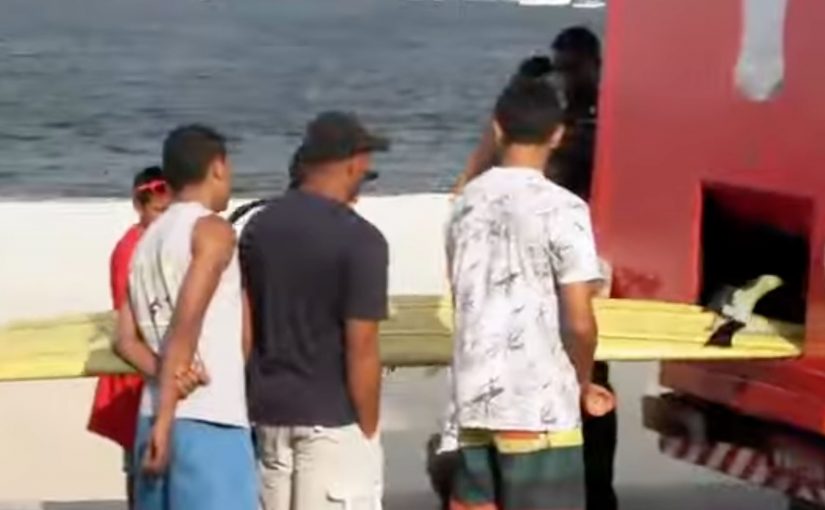
“Happiness Truck” takes place in Rio de Janeiro and is a twist on the original idea, which showed a Coke machine that spit out free Cokes, flowers, balloon animals, pizza and submarine sandwich at a college cafeteria. This time around, a special truck dispenses free Cokes as well as a beach toy, a surfboard, sunglasses, beach chairs, t-shirts and soccer balls.

The mechanic: one button, a public reward loop

The idea is almost embarrassingly simple. Put a big, inviting “PUSH” button on a branded truck. Let passersby trigger it. Then over-deliver on what comes out. Drinks first, then gifts that match the location and mood. Here, “public reward loop” means one person triggers the moment, everyone sees the payoff, and the crowd reaction invites the next press.

The Coca-Cola Happiness Truck is an experiential marketing activation where a branded truck dispenses free drinks and beach items to people who press a large button, turning a giveaway into a shared street moment.

In global FMCG marketing, these activations work best when the surprise is immediate, the moment is public, and the brand behavior feels generous rather than promotional.

Why it lands: the brand promise becomes observable

People do not need to be convinced by copy. They watch someone press a button and receive something real. The real question is whether bystanders can understand the payoff without explanation. The crowd reaction provides social proof, and the escalating gifts create a mini narrative that keeps people watching. The Rio-specific items, surfboards, beach chairs, sunglasses, make the generosity feel locally tuned, not copy-pasted from the first film. Because the trigger is public and the payoff is instant, the activation creates social proof without explanation.

Extractable takeaway: If the audience can see the action and the reward at a glance, you earn belief through visible behavior, not through messaging.

The business intent behind the “international sequel”

This is a sequel strategy that scales a successful format while refreshing the setting. It keeps the core concept intact. Surprise rewards from a familiar Coca-Cola object. and broadens it into a global “where will happiness strike next” platform.

It also turns brand warmth into a repeatable content engine. Each location can add its own culturally legible gifts, which gives the series room to travel without changing the structure.

Steal this street-activation pattern

This is worth copying when you can make the trigger obvious and the payoff immediate in public.

  • Make the trigger obvious. One button beats instructions.
  • Design escalation. Start with the expected reward, then add unexpected layers to hold attention.
  • Localize the gifts. Choose items that instantly signal place and mood.
  • Capture the crowd, not just the hero. The bystanders are the credibility layer and the amplification engine.

A few fast answers before you act

What is Coca-Cola’s Happiness Truck?

It is a street activation in Rio de Janeiro where a branded truck dispenses free Coca-Cola and beach-themed gifts to passersby who press a large “PUSH” button.

How is it related to the Happiness Machine?

It is described as a sequel that keeps the same surprise-generosity structure, but moves it from a cafeteria vending machine to a public street setting.

What is the core mechanic, step by step?

A public trigger creates a clear moment of action. An immediate reward lands first. Then the activation escalates with location-fit gifts, and filmed reactions provide the proof and the content.

Why does the push-button format work so well?

It removes friction and makes the story instantly legible. One simple action creates a visible payoff, so bystanders understand it immediately and social proof builds on the spot.

Why does localization matter in this execution?

The Rio-specific items make the generosity feel tuned to the place and mood, not copy-pasted. That detail makes the sequel feel fresh while keeping the structure familiar.

What business intent is this kind of activation serving?

It turns a brand promise into observable behavior and a repeatable content format. The same structure can travel to new locations without changing the concept.