
James Ready: Billboard coupon savings

James Ready beer and Leo Burnett Toronto are back with another campaign built around the same consumer truth. People want to afford more beer.

To help, James Ready introduced “billboard coupons,” a way to save money on life necessities like food, dry cleaning, and grooming. The idea is simple. If you save money elsewhere, you have more money left for beer.

By partnering with local retailers, the program lets people take a picture of a billboard and show the photo at the corresponding retailer to receive savings on selected products and services.

A billboard that behaves like a coupon book

This flips the billboard role. Instead of being pure awareness, it becomes a utility object you can “carry” with you via a phone photo. That change matters because it extends the life of the message beyond the moment you drive past it.

Extractable takeaway: The best OOH-led promotions create a portable proof-of-value, meaning a saved artifact the customer can show later to claim the benefit. If the audience can store it in their camera roll, the media becomes a tool, not just a reminder.

The mechanism: proof without printing

Traditionally, coupon programs rely on physical handouts or codes people forget. This uses a behaviour people already do without thinking. Photograph something. The photo becomes the redemption token.

The real question is whether your promotion can turn a photo into proof without adding steps.

The retailer partnership layer is what turns it from gimmick to program. It gives the billboard a reason to exist in specific neighbourhoods and creates a story local businesses can also talk about.

In promotion-heavy categories, photo-as-proof mechanics scale because they turn an everyday phone habit into redemption.

Why it works for a beer brand

James Ready positions itself around everyday value and a slightly cheeky, practical tone. Saving on dry cleaning and food is not glamorous, but that is the point. It makes the brand feel like it is on the consumer’s side.

There is also a subtle psychological move here. The “more beer money” framing makes saving feel like a win, not a sacrifice.

Mechanics to copy from billboard coupons

  • Use a universal behaviour as the trigger. Photos, texts, taps. Avoid anything that needs training.
  • Make redemption low-friction. “Show the photo” is simpler than entering codes or printing.
  • Partner for legitimacy. Retail partners turn a brand stunt into a usable savings program.
  • Design for memory. A billboard must communicate the entire mechanic in seconds.
  • Keep the value proposition honest. Small, real savings beat big, unbelievable promises.

A few fast answers before you act

What are “billboard coupons” in this James Ready campaign?

They are offers displayed on billboards that people photograph on their phones and then redeem by showing the photo at participating local retailers.

Why use photos instead of QR codes or SMS?

Because it reduces friction and works with basic phones and habits. Taking a photo is fast, familiar, and the image becomes a simple proof token.

What makes this more than a one-off stunt?

The retailer partnership network. When multiple local businesses honour the offers, the campaign becomes an ongoing utility rather than a single execution.

What is the biggest risk operationally?

Inconsistent redemption. If staff are not trained or offers are unclear, customers feel embarrassed and the brand takes the blame. Execution discipline matters.

How could a brand adapt this pattern today?

Keep the “portable proof” principle, but use a clearer redemption mechanism where appropriate. A scannable image or an in-wallet pass can preserve simplicity while improving tracking.
James Ready: Bar-Ter Campus Tour

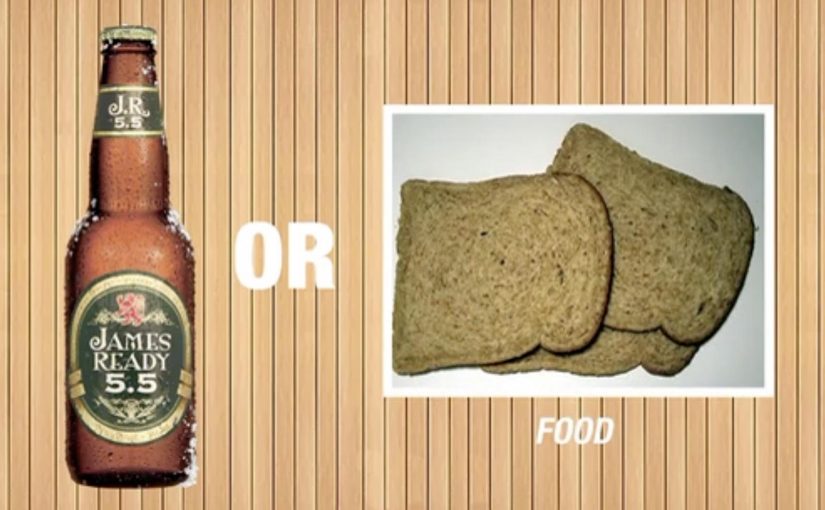
It’s a well-known fact. Students are relatively poor. They have to choose between spending their little money on beer or food, beer or books, and beer or transportation. So Leo Burnett Toronto created The James Ready Bar-Ter Campus Tour. “Bar-Ter” is the campaign’s name for a cap-for-essentials barter mechanic. A way for students to have both. Beer and other necessities.

Students were encouraged to spend their money on James Ready Beer, collect their beer caps, and trade the caps for semi-awesome and useful stuff like detergent, soap, mac n’ cheese, socks and so on.

Beer caps as a campus currency

The idea is disarmingly straightforward. A beer cap becomes a token. Tokens become necessities. Suddenly the brand is not only the thing you buy for a night out, it is also the thing that helps you restock the basics you keep postponing.

Bar-Ter succeeds because it reframes “cheap beer” as “smart trade.” It makes the buyer feel savvy, not broke.

How the Bar-Ter loop works

The loop is simple enough to explain in one breath. Buy beer. Keep caps. Swap caps for stuff you actually need. That simplicity matters because campus promotions only spread when the mechanic is instantly repeatable and easy to tell a friend.

It also builds a visible trail of participation. Caps pile up. People compare counts. The “currency” becomes social proof.

In consumer brands that compete on price and habit, promotions work best when they turn a purchase into a practical ritual people want to repeat.

The real question is whether your promotion creates a repeatable habit or just a one-off spike.

Why it lands with students

Students do not need another discount. They need a way to justify the purchase. Bar-Ter gives them that justification by attaching the brand to everyday utility. The prizes are not aspirational. They are deliberately ordinary, which makes the reward feel honest.

Extractable takeaway: When your audience is cash-tight, utility rewards can justify the purchase better than discounts, because the payoff feels like help, not hype.

There is also a small psychological trick. Collecting caps turns spending into progress. Even if the reward is modest, the accumulation feels like getting somewhere.

What the brand is buying with this promotion

This is not only a giveaway. It is a loyalty habit built on a physical artefact. If you want the cap, you need the brand. If you want enough caps, you need repeat purchase. And because the redemption items are useful, the reward feels earned rather than random.

Industry listings later associated this work with awards recognition, which fits the pattern. A simple mechanic, strong cultural truth, and a clear behaviour change.

Bar-Ter moves worth copying

  • Turn packaging into a token. If the token is already in the product, you lower friction and increase repeat.
  • Reward with utility, not luxury. Useful items make the promo feel like help, not hype.
  • Make progress visible. Collecting is part of the satisfaction. Design the “pile up” effect.
  • Keep the exchange rate legible. If people cannot quickly understand how to win, they will not try.
  • Match the reward to the audience truth. The best prize is the one that feels tailored to their real life.

A few fast answers before you act

What is the James Ready Bar-Ter Campus Tour?

It is a student-focused promotion where people collect James Ready beer caps and trade them for everyday essentials like detergent, soap, mac n’ cheese, and socks.

Why use caps instead of coupons?

Caps are physical proof of purchase that naturally accumulate. They make participation visible and social, and they create a repeat-buy loop without requiring people to track paper discounts.

What makes this kind of promotion feel “smart” rather than cheap?

Utility rewards. When the payoff is something you genuinely need, the purchase feels justified and the brand feels practical rather than desperate.

What’s the biggest risk with token-based promotions?

Redemption friction. If the exchange process is unclear, inconvenient, or understocked, the promotion becomes frustration and the brand takes the blame.

How can a non-beer brand adapt this idea?

Use a built-in product element as the token and exchange it for items that reduce your audience’s everyday pain. The token must be easy to collect and the reward must be meaningfully useful.