
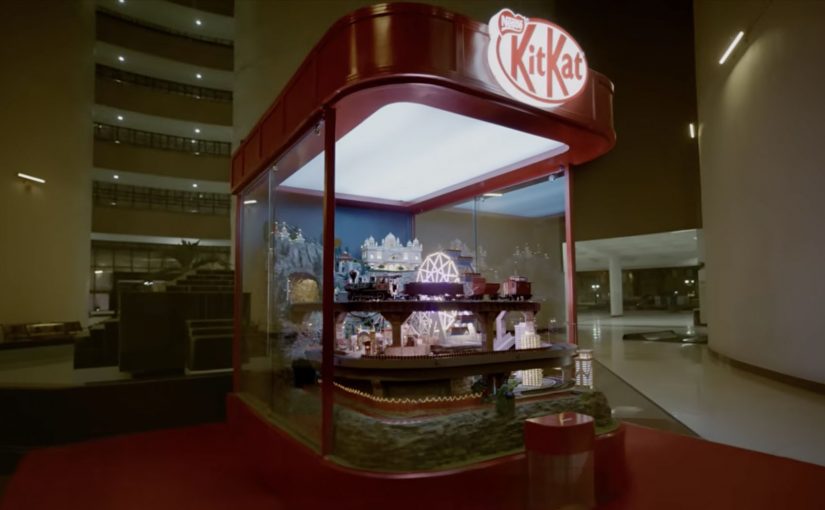
KitKat: The Slooowest Vending Machine

KitKat: The Slooowest Vending Machine

I have covered dozens of unique vending machines over the years. The last one was as far back as 2018, when Ford used a car vending machine in Guangzhou, China. Now fast forward to 2026 and KitKat has successfully reimagined waiting time at a regular vending machine into the brand experience itself.

When a break brand faces a speed problem

KitKat’s reported premise is simple. In a culture of compressed attention, even the break is getting shortened. So the brand in Hyderabad, India took one of the most convenience-coded retail objects possible, a vending machine, and used it to restage “Have a Break” as something you feel, not just something you read. The activation was developed by VML India and VML Netherlands and brought to life with Delhi-based production house The Other Half.

That setup matters because vending machines normally stand for speed, utility, and instant gratification. KitKat flipped that expectation on purpose. Instead of using the machine to remove waiting, it used the machine to make waiting visible, memorable, and unmistakably on-brand.

How KitKat turned waiting into the product demo

Instead of dropping a bar in seconds, the transparent machine sends it through a miniature sequence inspired by everyday Indian life, including a toy train, a Ferris wheel, a truck ride, a river journey, and a festive procession. Reported timings make the contrast do real work. A normal vending machine interaction is framed at about three seconds. This one stretches the moment to around three minutes.

That matters more because the machine sat inside one of Hyderabad’s busiest commercial hubs, where speed is the default behavior and pausing is the unusual act.

The mechanism works because the extra time is not dead time. It is branded time, which turns delay into attention and makes the promise of a break tangible before the product is even consumed.

The smart part is that the machine does not merely slow the transaction. It choreographs the delay. That is why the pause feels closer to a scenic reward than a service failure.

Why the stunt lands harder than a normal activation

This is the rare activation where added friction strengthens the brand instead of weakening it.

KitKat wins here by using deliberate friction. Deliberate friction is an intentional pause or extra step added to an experience so the brand can increase attention, memory, or meaning instead of just reducing effort.

Most friction in customer experience is accidental and expensive. It comes from broken UX, poor orchestration, slow service, or unclear process. KitKat does the reverse. The pause is visibly intentional, visibly crafted, and tightly linked to a long-established brand promise, which is why reported reactions centered on watching, smiling, lingering, and sharing instead of irritation.

There is also a crowd mechanic at work here. The machine is slow enough to create curiosity, visual enough to hold attention, and simple enough for bystanders to understand within seconds. That combination turns one person’s purchase into a shared piece of theatre.

Where the business value actually sits

The enterprise lesson is not that brands should slow down checkout, navigation, or service recovery. The real question is where speed is hygiene and where tempo is part of the value exchange.

For consumer experience platforms and MarTech teams, that translates into a cleaner operating rule. Keep utility moments brutally fast, such as search, payment, account access, and complaint handling. But in moments tied to ritual, reveal, education, reward, sampling, or branded storytelling, controlled pacing can sometimes do more commercial work than raw speed because it increases attention, recall, and distinctiveness.

The business intent here is not transaction efficiency. It is brand encoding. KitKat is defending a recognizable promise in a category where faster is easy to copy, but a meaningful pause is harder to own.

That is the part many teams miss. Brand platforms do not become durable because they are repeated in copy. They become durable when the operating design of the experience makes the promise physically true.

How deliberate friction can strengthen a break brand

Deliberate friction only works when three conditions hold. The pause must express the brand idea, the consumer must understand why it exists, and the wait must be short enough and crafted well enough to feel rewarding rather than defective. Break any one of those rules and the same device becomes irritation, not experience design.

Add friction only when it makes the promise more tangible than speed would. If the delay is not visibly on-brand, clearly signposted, and tightly controlled, it is not experience design but bad service.


A few fast answers before you act

What is KitKat’s Slooowest Vending Machine?

It is a reported experiential installation in Hyderabad that turns a snack vending machine into a three-minute miniature journey, so the wait itself becomes the break.

Why does the idea work?

It works because the delay is visibly intentional and tightly tied to KitKat’s break positioning, so the pause feels like the product experience rather than a machine malfunction.

What is the operator lesson?

Speed is not the only KPI. In selected touchpoints, controlled pacing can increase attention, memory, and brand fit more effectively than pure efficiency.

Where should brands not copy this?

Do not add friction to utility-heavy moments like payment, login, navigation, or complaint handling, where speed and clarity are the promise.

What should CX and MarTech teams measure if they test a similar move?

Measure dwell time, completion rate, abandonment, recall, sharing, and whether the experience strengthened the brand association you intended to encode.
Coca-Cola: First Drinkable Advertising

Coca-Cola: First Drinkable Advertising

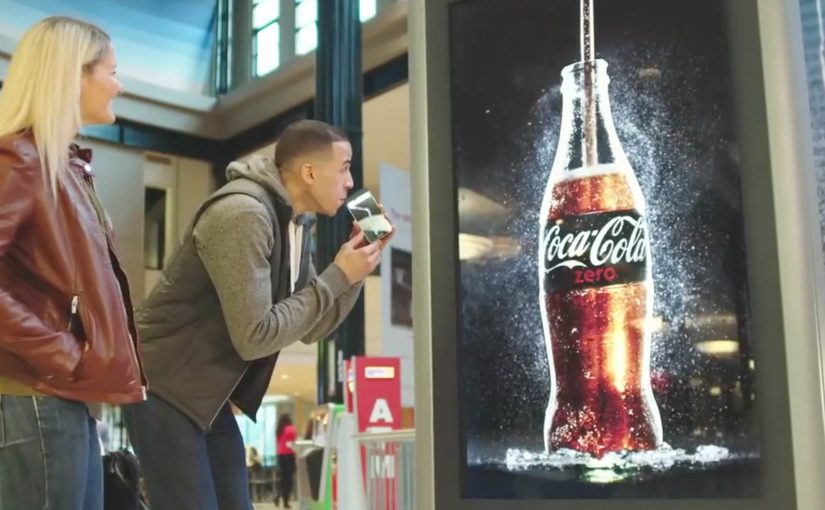
You are looking at a Coke Zero ad on a billboard, on TV, in print, or even on radio. Instead of just watching it, you Shazam it. On your phone, Coke Zero appears to pour into a glass on-screen, and that moment converts into a free Coke Zero coupon you can redeem at select retail stores across the US.

The premise is blunt and smart. Many people think they know the taste of Coke Zero, but they actually do not. So Ogilvy & Mather creates a campaign where the quickest route from awareness to belief is not another claim. It is immediate trial.

How “drinkable” advertising is engineered

This execution turns Shazam into a universal call-to-action layer across media. Here, “drinkable” means the ad triggers a mobile pour moment that turns into a redeemable coupon for immediate trial.

  • Any channel can trigger the experience. Billboard. TV. Print. Radio.
  • The smartphone becomes the conversion surface. Visual payoff first, then the coupon.
  • The coupon bridges straight into retail. “Try it now” becomes a physical action, not a brand sentiment.

The important part is not the novelty of animation. It is the end-to-end path from message to product-in-hand, because the Shazam trigger and coupon make the next step unambiguous.

Why this works as shopper marketing, not just a stunt

The campaign is designed to reduce the classic friction points that kill trial. In performance-led shopper marketing, the fastest path from awareness to belief is reducing trial friction and making redemption immediate.

Extractable takeaway: If you want trial, design the interaction so it ends in redemption, not in more content.

  • No guessing what to do next. Shazam is the behaviour.
  • No abstract promise. The ad demonstrates “taste” by pushing you to the real thing.
  • No delayed gratification. The reward is immediate and concrete. A redeemable coupon.

It is experiential marketing that does not require a pop-up installation or a live event. The experience travels with the media buy.

This is shopper marketing done right. It treats media as the first step of redemption, not as a detour into “engagement.”

The real question is whether your media can trigger immediate trial without adding steps or new infrastructure.

Steal this: Shazam-to-trial loop

If you are trying to drive trial at scale, this is a reusable model.

  1. One trigger across channels. Create a single interaction that works across channels.
  2. Mobile as the conversion surface. Use mobile to make the experience feel personal and immediate.
  3. Redemption, not delay. Close the loop with a retail mechanic that is simple to redeem.

Do that well, and “engagement” stops being a vanity metric. It becomes a measurable bridge to purchase.


A few fast answers before you act

What makes this advertising “drinkable”?

Shazaming the ad triggers a mobile experience that ends in a free Coke Zero coupon. It is designed to turn exposure into real-world trial.

Why use Shazam in the first place?

It provides a consistent interaction across media formats, including channels where clickable links do not exist.

What business problem is this solving?

Driving immediate trial for a product where many people assume they already know the taste, but have not actually experienced it.

What is the key CX detail that makes it work?

A simple, familiar action. One step to trigger, then a clear reward that can be redeemed in-store.

How do you prove this is more than a stunt?

Measure Shazam activations and coupon redemptions, then compare trial impact against a similar media buy without the redemption mechanic.

Coca-Cola Second Screen Reinvented

Coca-Cola Second Screen Reinvented

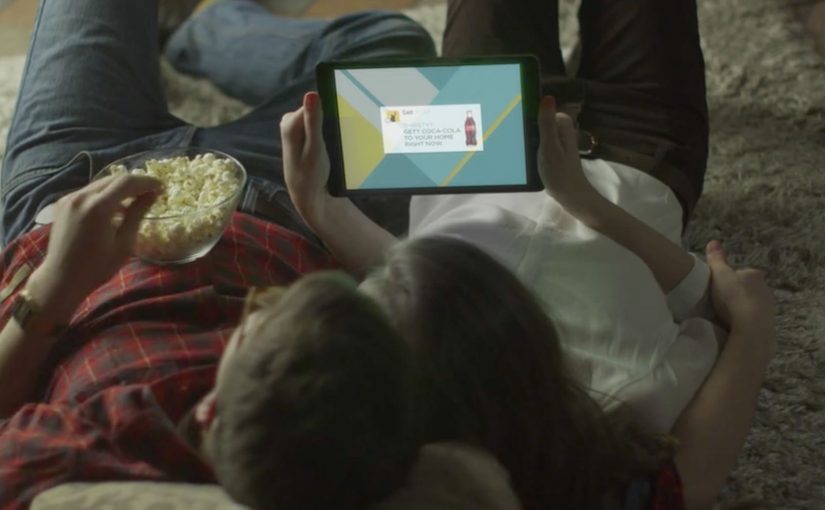
You are watching a Coca-Cola TV spot in Israel. Your phone lights up. A “Gett Coca-Cola” prompt appears. You tap once. Five minutes later, a special Coca-Cola package shows up at your door: a branded cooler, two Coke bottles, and a bottle opener.

From TV spot to one-tap delivery

Turn a TV ad into a one-tap order, and make “second screen” mean immediate delivery, not just engagement. Here, “second screen” means the phone acting as the immediate action surface while the TV spot supplies the trigger.

What is actually happening on the second screen

The TV spot carries an audio trigger that a smartphone can recognize. The moment the ad plays, phones with the Gett app installed receive a push notification. The viewer swipes or taps, and the order is placed in one click.

In practice, this behaves like Shazam for commerce. Except the payoff is not identification. It is fulfillment.

Why the Gett partnership is the real unlock

The ad is only half the experience. The other half is logistics.

To make the “five minutes later” promise credible, Coca-Cola partners with Gett, a local taxi app, and during the promotion Gett dispatches thousands of vehicles packed with branded coolers across Israel, ready to deliver on demand.

In FMCG and retail campaigns, the strategic value is not the novelty of a second screen, but the ability to compress media, commerce, and fulfillment into one immediate behavior.

The real question is whether the brand can remove enough friction that attention turns into action before intent cools.

Why this feels like a reinvention of TV, not a gimmick

This is not a gimmick. It is a tighter piece of commercial design because the creative, transaction, and fulfillment layers are built to work as one system.

Extractable takeaway: When a campaign links attention, transaction, and delivery inside one continuous action, the medium stops acting like awareness-only media and starts behaving like a service.

It collapses the funnel

There is no gap between awareness and action. The moment of attention is the moment of purchase.

It turns “sampling” into a media format

The campaign is a TV impression plus product trial, delivered instantly.

It makes the second screen earn its place

Second screen ideas often stop at polls and hashtags. Here, the phone is not a companion. It is the checkout button.

The deeper point

This is what “buyable advertising” looks like when it is engineered end to end. By “buyable advertising,” this means media that lets a viewer move from exposure to transaction without leaving the moment.

The business intent is simple: remove the lag between media spend and product trial by turning broadcast attention into immediate, measurable fulfillment.

Media triggers action. Action triggers logistics. Logistics completes the brand promise while attention is still warm.

What to steal from this buyable-media model

  • Collapse the funnel deliberately: If you can connect attention to action in one gesture, the “ad” becomes the first step of the purchase flow.
  • Make the trigger earn its existence: Second screen only matters when it changes the outcome, not when it adds commentary.
  • Engineer fulfillment as part of the creative: The logistics promise is the product. Treat it like core campaign craft, not an ops afterthought.
  • Turn sampling into a format: Delivering the kit is the media unit. That is why this reads as more than a shoppable banner.
  • Protect trust explicitly: Any “listening” mechanic needs clear permissioning and transparency, or the whole experience flips from magic to creepy.

A few fast answers before you act

What does the TV ad do that is different?

It uses an audio trigger so phones can recognize the ad and prompt a “Gett Coca-Cola” order on the second screen.

Do viewers need anything installed for this to work?

Yes. The flow depends on the Gett app, since the notification and one-tap order happens inside Gett.

How does it deliver so fast?

Gett uses its taxi network as a delivery fleet, with cars preloaded with the cooler kits during the promotion.

Why is this more powerful than a “second screen” hashtag?

Because the second screen is not commentary. It is conversion plus fulfillment.

What is the main risk brands must manage?

User trust. Any experience that “listens” for triggers must be transparent and permissioned, or it will feel creepy, even if the mechanics work.