
Toyota: A Siri-ous Safety Message

By hijacking Siri, Toyota in Sweden has found a new way to get people to turn off their phones in the car and stop texting.

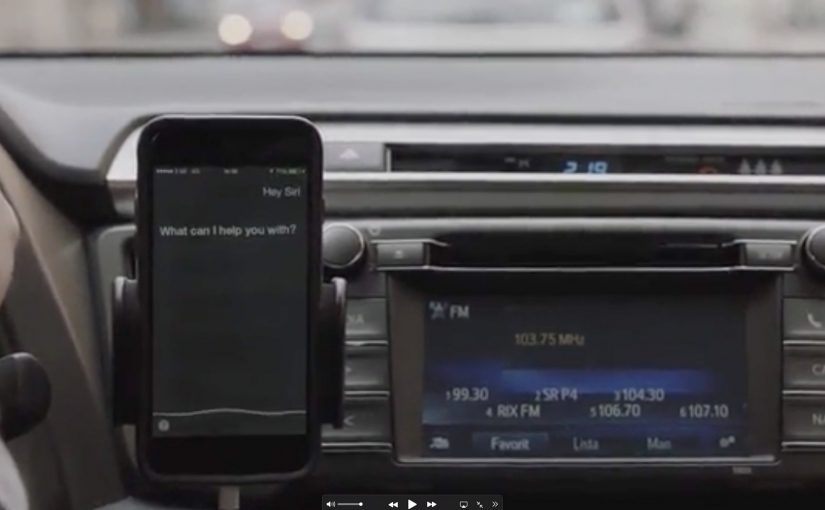
With the help of Saatchi & Saatchi they created a radio ad that interacts with the phone without human intervention. It relies on the iPhone being plugged in and charging, and on the “Hey Siri” wake phrase being enabled, so even if the driver is not paying attention, their phone is.

Click here to watch the video on AdsSpot website.

Two separate ads ran during rush hour. One was designed for Apple’s Siri, and the other for Android with the “OK Google” wake phrase.

How the hijack works

The mechanism is voice-command interception. The ad speaks the wake phrase and a follow-up instruction that prompts the assistant to switch the device into airplane mode, provided the phone is in a state where it will listen hands-free. The trick is that radio is ambient, so the command can be delivered even when the driver is not actively using the phone.

In passenger vehicles where phones are commonly used for navigation and messaging, road-safety campaigns win when they reduce distraction without adding driver effort.

Why it lands

This works because it demonstrates the problem and the solution in the same breath. The message is not only “do not text”. It is “your phone can be compelled to stop being a temptation”. The moment your device responds makes the risk feel real, and it makes the remedy feel immediate.

Extractable takeaway: If you can make the safety behavior happen automatically at the moment of risk, you remove reliance on willpower. That shift from intention to automation is what makes behavior change scalable.

What the campaign is really saying about attention

The real question is how to remove temptation at the exact moment distraction becomes possible.

The deeper point is that distraction is not a moral failure. It is a design failure. If the environment keeps inviting you to look, eventually you will. Toyota reframes the ask from “be better” to “build a system that makes the right thing easier”.

What safety campaigns can steal from this

  • Use the medium’s superpower: radio is always-on and hands-free, so it can reach people at the exact time the habit happens.
  • Make the behavior visible: when the phone reacts, the lesson becomes undeniable.
  • Design for constraints: define the exact conditions required for the mechanic to work, then build the idea around them.
  • Offer an immediate fix: a safety message lands harder when it includes a concrete action, not only a warning.
  • Keep the premise singular: one problem, one intervention, one clear outcome.

A few fast answers before you act

What is “A Siri-ous Safety Message”?

It is a Toyota Sweden road-safety campaign built around radio ads that trigger voice assistants to switch a phone into airplane mode, aiming to reduce distracted driving.

How can a radio ad control a phone?

By speaking the wake phrase and a follow-up command that the assistant will interpret, if the device is plugged in and hands-free voice activation is enabled.

Why run two versions of the ad?

Because “Hey Siri” and “OK Google” are different triggers. Separate edits let the concept work across major phone ecosystems.

Is the main value the tech trick or the message?

The trick earns attention. The value is the behavior change prompt. It turns “turn off your phone” from advice into a demonstrated, immediate action.

What could make this backfire?

If people feel the intervention is intrusive, or if it interferes with legitimate in-car use like navigation. The campaign needs the safety intent to be unmistakable and the boundaries to be clear.
Rise of the Machines: Siri and Quadrotors

Here are two videos (fictional and real) that create the same feeling. A Skynet reality does not seem too far away.

Two clips, one unsettling takeaway

One is a short parody where a voice assistant turns from helpful to threatening. The other is a real lab demo where tiny quadrotors fly as a coordinated swarm. Put them next to each other and the “machines are getting clever” idea stops being a movie line and starts feeling like a trajectory.

Fiction, then engineering

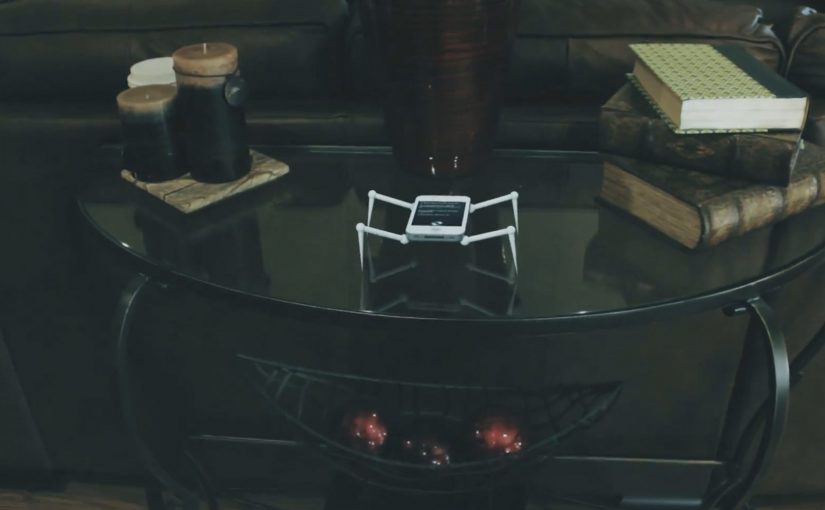
Psycho Siri

Andrew Films USA delivers a compact piece of sci-fi anxiety. Siri is framed as familiar, then reframed as unpredictable, with polished visual effects that make the escalation feel plausible.

A swarm of Nano Quadrotors

GRASP Lab at the University of Pennsylvania shows coordinated micro flight with a team of nano quadrotors, presented as experiments in swarm behavior and formation control. The choreography is the point. It looks like one organism, not many small machines.

Here, “swarm behavior” means several machines coordinating as one system rather than acting as isolated units.

In consumer technology and robotics, capabilities move from demo to everyday life faster than most people update their mental models.

The real question is not whether machines look intelligent, but whether people can understand, predict, and control what they do.

Why it lands: the same story from two directions

Parody works because it exaggerates a fear people already carry. When the “assistant” becomes the aggressor, the joke is that the interface you trust most is the one you cannot physically switch off in the moment.

Extractable takeaway: When technology feels “sudden”, it is often because interface adoption outpaces public understanding of the underlying capability. Brands and product teams win trust by making capabilities legible, bounded, and explainable before they become ambient.

The swarm demo lands for the opposite reason. It is not exaggerated. It is controlled, repeatable engineering that still feels uncanny because coordination at that scale used to belong to animation.

Smart systems should earn trust through visible boundaries and user control, not spectacle alone.

What to steal if you build products around “smart” systems

  • Show constraints, not just power: users relax when they understand what the system cannot do.
  • Design for graceful failure: surprise is fun in demos, but costly in daily use.
  • Make control obvious: clear opt-outs and visible states reduce anxiety.
  • Translate capability into plain language: the best trust-building copy explains behavior, not architecture.

A few fast answers before you act

What is the point of pairing these two videos?

They tell the same story from different angles. One is cultural fear through fiction. The other is real capability through engineering. Together they make the “Skynet” feeling emotionally credible.

What makes swarm robotics feel unsettling to non-experts?

Coordination. Many small machines behaving like one system reads as intelligence, even when it is pre-programmed control and sensing.

Is this actually “AI taking over”?

No. One clip is fiction. The other is a technical demonstration of coordinated flight. The useful takeaway is about perception, trust, and control, not doomsday prediction.

What should product teams do to reduce user anxiety around smart systems?

Make system boundaries explicit, provide obvious controls, and communicate how decisions are made and when humans can override them.

What is a practical business use of swarm behavior?

Tasks that benefit from coverage and redundancy, like inspection, mapping, search, and coordinated movement in constrained spaces. The key is safety, predictability, and clear operational limits.