
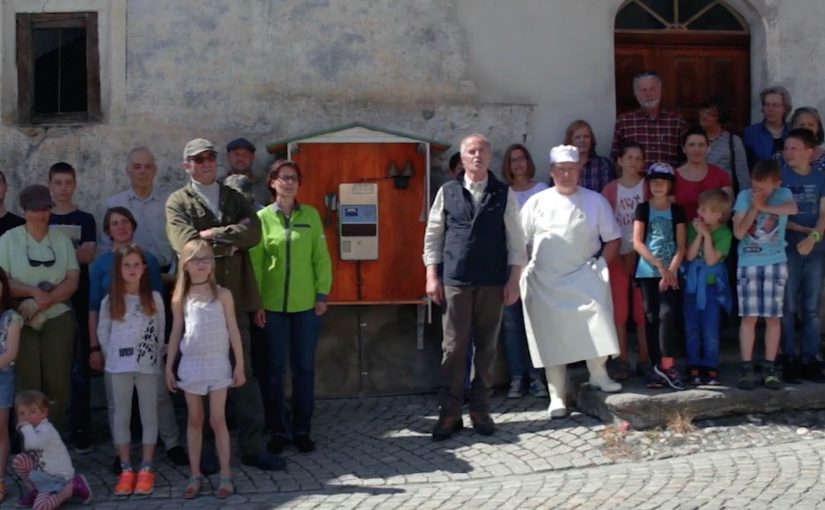
In the mountain village of Tschlin, it is so quiet that when the telephone in the village square rings, you can hear it from every corner of the village. So when that phone starts ringing, people move. The butcher. The innkeeper. The pastor. Whoever is closest. The whole premise is simple: if the phone rings and nobody makes it in time, the caller wins.
The hook
Turn “quietest place in Switzerland” from a claim into a game people can test in real time.
What Graubünden Tourism and Jung von Matt set up
Graubünden Tourism and Jung von Matt/Limmat publish the village phone number online and invite anyone to call it between 10:00 and 20:00. If a resident answers, you get a conversation with a real person from Tschlin. If the call goes unanswered, you win prizes such as free stays, dinner, or merchandise.
To prove that nobody is sitting next to the phone “waiting,” the campaign also runs a live view of the village square, so participants can see what is happening and who is answering. The transparency is part of the promise.
The real question is whether a destination promise can be verified by a stranger in seconds.
When the audience can run the proof themselves, the claim becomes dramatically more credible.
Why the village telephone lands
The mechanic, meaning the simple rule set people can try, creates tourism interest because the proof is experienced in the moment, then shared as a story.
Extractable takeaway: If your benefit is experiential (quiet, fast, safe, simple), build a public test that lets people attempt to disprove it. Then make the proof visible while they try.
It makes the destination benefit testable
Most tourism ads describe tranquility. This one lets you attempt to break it with a phone call.
It turns locals into the medium
No actors are needed. The villagers are the campaign, and that authenticity is visible in every answered call.
It creates a built-in story loop
Call. Ringing. Sprint. Answer. Or silence. Win. The narrative resets every time the phone rings, which is exactly why people keep trying.
In European destination marketing, a public, verifiable test is often what makes a small place feel real to people who have never been there.
The timeframe that makes it feel like an “event”
The action runs from Monday, June 6 to Saturday, June 11, 2016. It is short enough to create urgency, and long enough to become a talking point beyond Switzerland.
Signals that the stunt travels
Reported outcomes for the six-day activation include 30,000 attempted calls, 3,906 conversations, and 1.5 million video views, alongside significant media pickup.
The deeper point
This is a clean example of “proof marketing.” By “proof marketing,” I mean marketing that lets the audience verify the promise with their own action, not a brand assertion. The campaign does not ask you to believe that Tschlin is quiet. It gives you a simple action to attempt, shows you the village while you do it, and lets the locals validate the claim with their own behavior.
Steal the village phone pattern
- Make the promise testable. Turn the adjective into one action people can try in real time.
- Show the proof live. Use transparency (like a live view) so the audience trusts the rules.
- Design a repeatable loop. Reset the story every time the trigger happens so people keep replaying it.
- Time-box it like an event. A short window creates urgency and makes the stunt easier to talk about.
A few fast answers before you act
What is the core mechanic?
Call the village telephone between 10:00 and 20:00. If a resident answers, you talk. If the call goes unanswered, you win prizes.
Why is the live feed important?
It proves the fairness of the promise. People can see that nobody is waiting next to the phone, and they can see who they are speaking with.
Who is behind the campaign?
Graubünden Tourism (Graubünden Ferien) with Jung von Matt/Limmat.
When does it run?
June 6 to June 11, 2016.
What is the transferable pattern?
If your promise is experiential (quiet, fast, safe, simple), build a public test that lets people attempt to disprove it. Then make the proof visible while they try.