
Nike Golf: No Cup Is Safe

Nike Golf has released a TV spot in which Tiger Woods and Rory McIlroy turn a practice session into a small competition on the golf course. The joke is simple. When two world-class players share a range, even the targets feel under threat.

A practice range that plays like a duel

The mechanism is a clean escalation. Start with casual shots. Introduce a visible target. Add one-upmanship. Then let the athletes do what they do best. Make the impossible look repeatable. The “no cup” line is the punchline because it turns accuracy into a kind of harmless menace. That works because a simple duel structure makes elite skill legible in seconds.

In performance-driven sports categories, the fastest brand wins are often built on demonstrations that feel like entertainment rather than instruction.

Why it lands

The spot works because it respects the viewer’s intelligence. No spec sheet. No product sermon. Just elite talent, a familiar rivalry energy, and a challenge you can understand in one second. It sells Nike Golf as the gear behind precision and confidence, without ever having to say those words.

Extractable takeaway: If your product promise is “performance”, design a proof that reads instantly. Use a simple rule, a clear target, and a visible outcome that makes the capability undeniable.

What Nike is really doing here

This is also roster storytelling, where the pairing itself signals what kind of competitive culture the brand owns. The real question is whether Nike can turn a practice-range stunt into a broader signal of competitive credibility.

Nike gets this right because pairing Woods with McIlroy frames the brand as the home of golf’s competitive edge across generations. The tone stays light, but the subtext is serious: these are the players you associate with winning, and they are wearing this swoosh while they do it.

How Nike turns proof into a brand asset

  • Turn a feature into a game. Accuracy becomes a challenge, not a claim.
  • Let the product stay “off camera”. When the proof is strong, the brand earns belief without showing close-ups.
  • Build with escalation. Start normal, then raise the stakes in small steps so the payoff feels inevitable.
  • Make the line a summary, not a slogan. “No Cup Is Safe” works because the viewer already saw why.

A few fast answers before you act

What is Nike Golf’s “No Cup Is Safe” spot?

It is a Nike Golf commercial built around Tiger Woods and Rory McIlroy turning a practice session into a target competition where cups become the bullseye.

What is the main message?

Elite precision is entertaining, and Nike Golf is positioned as the brand behind that performance mindset.

Why use two athletes instead of one hero?

Competition creates story. Rivalry gives the viewer a reason to watch longer, and it makes the proof feel earned rather than staged.

What does the line “No Cup Is Safe” communicate?

That the shots are so accurate the targets are in danger. It is a humorous shorthand for confidence and control.

How can other brands apply this pattern?

Find a single capability you can prove visually, wrap it in a simple game mechanic, and let the outcome do the persuasion work.
Kia: Nail Art Animation

A car commercial painted on a fake nail

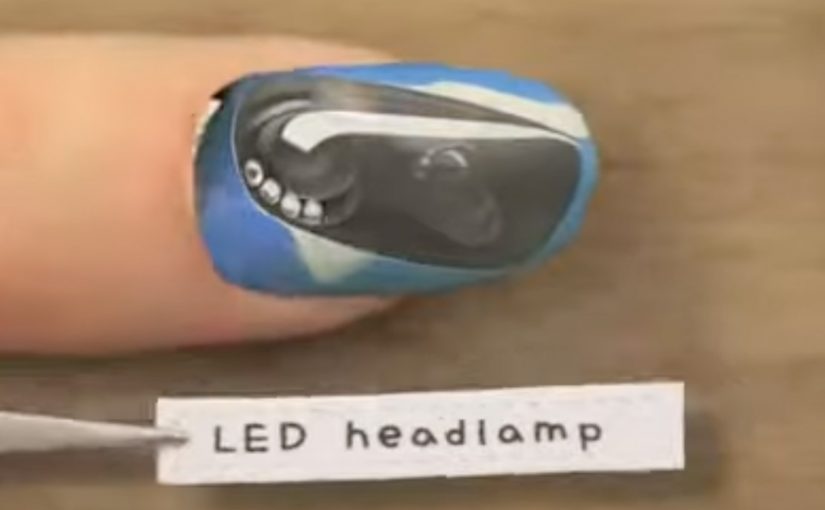
Kia wanted to highlight the micro-features, meaning the small design and usability details, of their smallest car model, the Picanto. So they created a stop-motion car commercial on a fake nail. The film was billed at the time as the world’s first nail art animation.

It reportedly took 25 days to create, and used 1,200 bottles of nail polish across 900 fake fingernails.

The trick: match “micro-features” with micro-scale filmmaking

Stop-motion is an animation technique where you photograph small, incremental changes frame by frame, then play the frames back to create motion.

Here, the canvas is the punchline. By putting the story on a fingernail, the craft becomes the message. Because the viewer has to pay attention to tiny brushwork to follow the motion, the “micro” idea feels experienced, not merely claimed.

Kia’s Picanto Nail Art Animation is a stop-motion commercial created by painting hundreds of miniature frames onto fake fingernails, turning the “micro” idea into a literal production constraint.

In urban small-car marketing, novelty only matters when it directly reinforces the product promise in a way people can retell in one sentence.

The real question is whether your creative constraint makes the product promise feel inevitable, not just interesting.

This kind of craft-heavy micro-format is worth copying only when the constraint directly maps to the attribute you want people to believe.

Why it lands: the medium proves the claim

This is not just “a weird technique”. It is a tight alignment between what Kia wants you to notice and what the viewer cannot help noticing. Patience, precision, tiny details.

Extractable takeaway: When the medium forces attention onto the same detail you are selling, the audience experiences the claim rather than evaluates it.

The result is a feature demo that does not feel like a feature demo, because the viewer is busy admiring how it was made.

What the brand is buying with this level of craft

The intent is simple. Make a small car feel like a smart choice, not a compromise. Micro can mean cheap or micro can mean cleverly designed. This execution pushes the second interpretation.

It also creates built-in distribution. People share the making-of story as much as the spot itself.

Steal this micro-detail storytelling pattern

  • Let the production constraint carry the positioning. If you sell “small but smart,” make the format small but smart.
  • Design for instant explainability. “A car ad on a fingernail” is a headline by itself.
  • Make craftsmanship visible. When the effort is obvious, skepticism drops.
  • Connect novelty to product truth. Weirdness alone fades. Alignment endures.

A few fast answers before you act

What is Kia’s Picanto Nail Art Animation?

It is a stop-motion commercial for the Kia Picanto created by painting animation frames onto fake fingernails, so the car and its features appear in motion on a tiny nail-sized canvas.

How was the stop-motion effect created on nails?

Each frame was painted as a miniature nail artwork on separate fake nails. The nails were then photographed frame by frame, and the images were stitched together to create movement.

Why is this a smart way to communicate “micro-features”?

Because the medium embodies the message. A micro-scale format forces attention onto tiny details, which makes “small but thoughtfully designed” feel proven, not claimed.

How long did it reportedly take, and what made it so labor-intensive?

It reportedly took 25 days and required painting and photographing hundreds of tiny frame changes. The labor is the point. The visible effort makes “micro-details” feel credible.

What should you copy if you want to tell a “detail story” in your own category?

Pick a constraint that naturally spotlights the detail you care about. If the constraint does not reinforce the promise, the craft reads as novelty and the message evaporates.

Macedonia Education: Religion Is Knowledge Too

Here is a social campaign aimed at promoting education, created by New Moment New Ideas Company as a TV commercial for the Government of the Republic of Macedonia, Ministry of Education and Science.

The mechanism behind the message

The execution leans on a deliberately provocative framing. It takes a policy-adjacent topic, religion in school, and places it inside a broader “education equals empowerment” argument, using a short, declarative headline structure that is designed to be debated as much as it is watched.

In public-sector education communication, provocation is often used to force attention onto curriculum choices that would otherwise be discussed only in administrative language.

The real question is whether a campaign can use provocation to drive education attention without turning the message into a referendum on belief.

Why it lands

It turns a policy topic into a binary statement. You may agree or disagree, but you are unlikely to ignore it, which is typically the point of a social campaign trying to break through apathy.

Extractable takeaway: Public-interest campaigns win attention by making a curriculum or behavior choice feel like a values choice, but credibility depends on details like accurate attribution, because authority shortcuts can backfire when audiences fact-check.

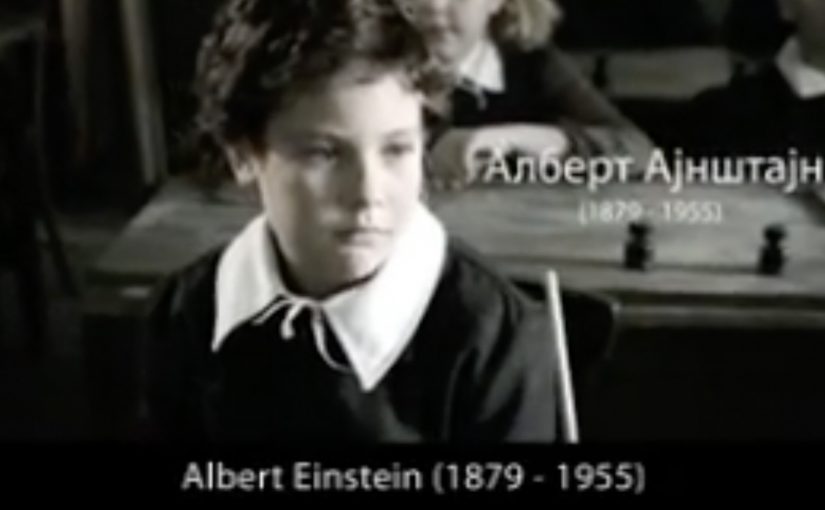
It borrows authority cues. The line “Knowledge is power” is familiar and often associated with big-name attribution. If the spot leans on an Einstein association, note that this attribution is widely disputed, and misattributed quotes can weaken credibility even when the intent is strong.

It collapses values and education into one frame. By calling religion “knowledge”, it reframes the topic away from belief and toward curriculum, which is a strategic shift even if it remains contentious. Because the framing is blunt and declarative, it triggers instant agreement-or-rebuttal, which expands discussion beyond passive viewing. Provocation can be a valid attention tactic, but only when every credibility cue is defensible.

Borrowable moves for education PSAs

  • Use short headline architecture. A campaign line plus a spot line gives people two levels of meaning to repeat and argue about.
  • Engineer “talk value” intentionally. By “talk value,” mean a message that people can repeat, argue about, and share in one breath.
  • Stress-test credibility signals. Quotes, attributions, and “famous authority” cues should be defensible, or they become the story instead of the issue.

A few fast answers before you act

Who is this commercial for?

It is framed as a public campaign tied to the Government of the Republic of Macedonia, Ministry of Education and Science.

What is the central claim of the spot?

That religion should be treated as a form of knowledge and positioned as part of schooling, under a broader “knowledge equals empowerment” campaign idea.

Why does the campaign use such blunt language?

Because blunt claims create attention and debate quickly, which is often the goal in social messaging where indifference is the main competitor.

What is the main risk with this style of PSA?

Polarization and credibility challenges. If the audience argues about the quote, the messenger, or the framing, the educational intent can get diluted.

What is the transferable lesson for communication leaders?

If you choose provocation as the hook, protect the trust layer. Every supporting detail has to be clean enough to survive scrutiny.