
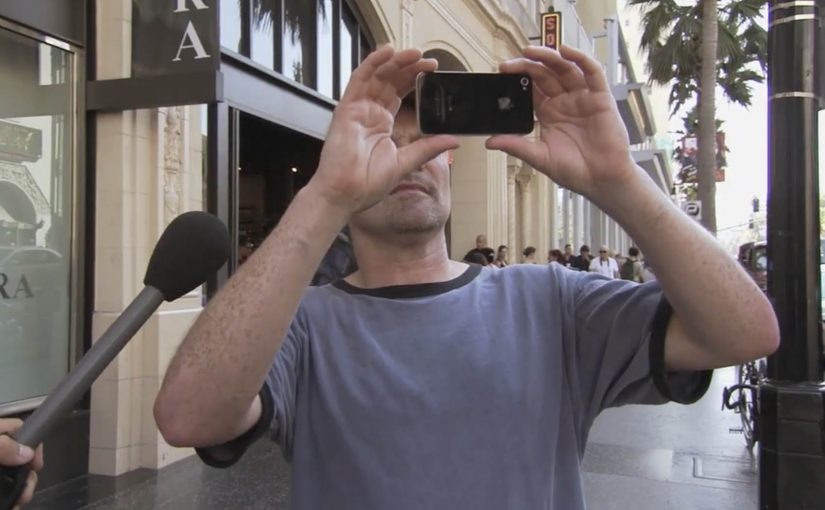
Jimmy Kimmel: First Look at iPhone 5

Jimmy Kimmel: First Look at iPhone 5

The iPhone 5 still has some weeks to go before it is officially available. That little detail did not stop talk show host Jimmy Kimmel from giving random people on the streets a chance to “test” the iPhone 5, which was actually just an iPhone 4S.

How the prank works

The mechanism is simple: present a familiar object as a new one, then ask for first impressions on the spot. The humor comes from watching people project “newness” onto something they are already holding, then confidently describe improvements that cannot be there because nothing changed.

In consumer tech launches, perceived novelty often shapes first impressions as much as real novelty does.

The real question is whether the launch story is shaping the feedback you think you are collecting.

Why it lands

The segment exposes expectation marketing in real time, meaning the expectation itself becomes part of the perceived product experience. It makes a point without preaching. It lets people’s own words demonstrate how branding, timing, and context can change what we think we are seeing.

Extractable takeaway: When audiences expect a breakthrough, they interpret ambiguous cues as improvements. Marketing and product teams should separate product experience from launch narrative when they need truth, because the narrative can become the experience.

It turns product hype into a social mirror. Viewers do not only laugh at the interviewees. They recognize the pattern, because everyone has “felt” an upgrade before they could name a feature.

It is edit-friendly proof. Quick street soundbites create a fast rhythm and a clear punchline. The format is built for sharing because each reaction is a self-contained beat.

Borrowable moves from the iPhone prank

  • Use a clean, repeatable setup. One premise, one question, many reactions. The simplicity is what creates volume and pace.
  • Build the contrast into the reveal. The punchline is strongest when viewers understand that the object never changed.
  • Let the audience diagnose the insight. Showing beats telling. The segment works because the viewer reaches the conclusion themselves.

A few fast answers before you act

What is the core joke of the segment?

People are asked to review a “new” iPhone, but they are actually holding an older model, and many still describe it as better.

What does this say about consumer perception?

That context and expectation can shape what people think they notice, especially when differences are subtle or undefined.

Is this a critique of Apple or of people?

It plays more like a critique of hype mechanics and social pressure in “first impression” moments than a critique of one brand.

Why is the street-interview format effective here?

It creates instant, unscripted soundbites, and the variety of reactions keeps the piece moving.

What is the practical lesson for marketers and product teams?

If you need truth, test products in neutral conditions. If you want buzz, understand that the story around a product can amplify perceived value, sometimes beyond what the product alone delivers.
Mercedes-Benz: Golf Ball Catch World Record

Mercedes-Benz: Golf Ball Catch World Record

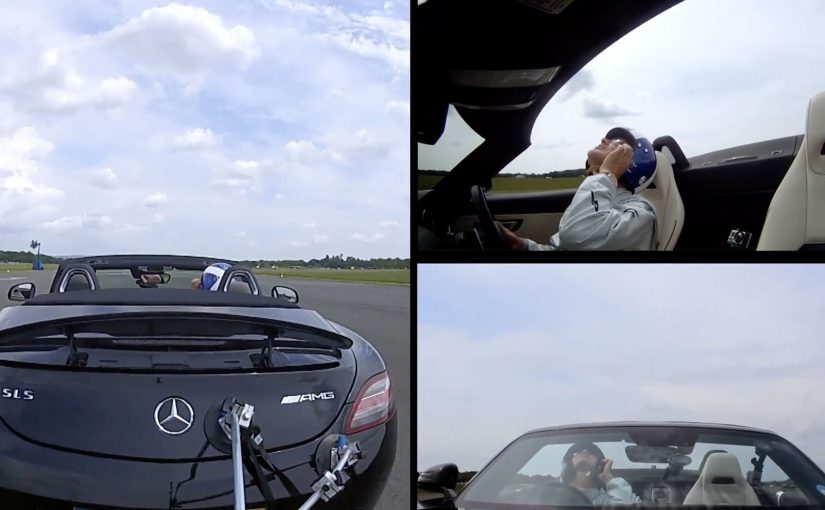
Mercedes-Benz recently uploaded a video of former Formula 1 driver David Coulthard and pro-golfer Jake Shepherd setting a Guinness World Record with a Mercedes-Benz SLS AMG Roadster.

To set the record, Coulthard caught a golf ball hit by Shepherd while driving. The ball was traveling at 178mph and was caught 275 metres from the tee, setting the record for the farthest golf shot caught in a moving car. At the time of posting, the video had already crossed the one-million-view mark within days.

A record attempt built on timing and trust

The mechanism is clean and measurable: a golfer launches a high-speed drive down a runway, a driver accelerates to meet its trajectory, and the open cockpit becomes the “catcher’s mitt”. If the car, speed, and timing are even slightly off, the attempt fails in a very visible way.

In performance-led automotive marketing, certified stunts turn engineering credibility into a piece of entertainment people want to pass on.

The real question is whether your proof is visible enough that the audience can judge it without trusting your narration.

Because you can clearly see whether it worked, the performance claim feels earned rather than explained.

Why it lands

It turns abstract performance into a single, replayable challenge with clear stakes, and then lets Guinness define what “success” means.

Extractable takeaway: World-record style stunts work as marketing when the measurement is simple, the failure mode is obvious, and third-party verification turns spectacle into credible proof.

It makes performance legible. Horsepower and handling are abstract until you attach them to a task with consequences. A moving catch at extreme speed is instantly understood.

It borrows external validation. The Guinness framing gives the clip a built-in reason to exist beyond “brand content”. It signals that this is not just a cool shot, it is a verified attempt with a defined outcome.

It is engineered for replay. The audience watches once for disbelief, then again for mechanics: speed, distance, and the exact moment the ball drops into the car.

Borrowable moves from the record attempt

  • Anchor the story to a number. Distance, speed, and a named record create instant stakes.
  • Make the “proof moment” unmissable. The catch is the single frame people share, and the decisive proof that the claim happened.
  • Use experts as the interface. Specialist talent makes the impossible feel attempted rather than faked.
  • Build the edit around clarity. Viewers should understand what success looks like before it happens.

A few fast answers before you act

What record did Mercedes-Benz, Coulthard, and Shepherd set?

The farthest golf shot caught in a moving car, using a Mercedes-Benz SLS AMG Roadster.

What were the headline numbers?

The drive was clocked at 178mph and was caught 275 metres from the tee.

Why does Guinness World Records matter here?

It provides an external definition of “success” and a trusted validation layer that separates a stunt from a simple brand claim.

What is the business intent behind a stunt like this?

To make vehicle performance feel tangible and memorable, while generating earned reach through a shareable “did you see that?” moment.

What is the most transferable lesson?

If you want proof to travel, wrap it in a single measurable challenge, show the decisive moment clearly, and keep the explanation simple enough to repeat.

Hey, Pass Me a Beer: Creative Handoff

Hey, Pass Me a Beer: Creative Handoff

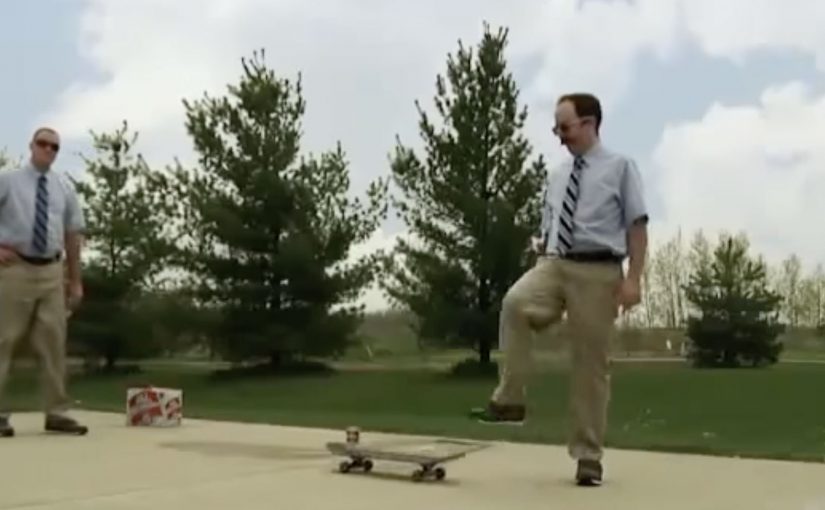
“Hey, pass me a beer” is a throwaway line until you treat it like a creative brief. This short film, described as shot in Milwaukee by Almost Twins, turns a simple request into a chain of increasingly elaborate handoffs.

The charm is in the escalation. Each new pass answers the same problem with a more over-engineered solution, and that relentless commitment is what keeps you watching.

The handoff trick that makes it work

The mechanism is a repeating loop. Set up the same micro-goal, move the beer from A to B, then raise the complexity without changing the premise. Here, the micro-goal is simply getting one beer from one person to another. Because the rules stay constant, the viewer can focus on anticipating the next method, not on understanding the story.

In internet video culture, repeatable mechanics like this spread because they are instantly understandable, and they reward attention with continual novelty.

Why it lands

It treats craft as the punchline. The joke is not a line of dialogue. The joke is the effort. That effort reads as playful competence, and it invites the viewer to watch for “how did they do that” as much as “what happens next”.

Extractable takeaway: If you want a simple gag to carry a whole film, lock one clear rule, then escalate execution rather than premise. The audience stays oriented while still being surprised.

What “trending” really means here

The real question is whether the viewer understands the rule fast enough to enjoy the escalation rather than spend energy decoding the format.

When a video like this climbs, it is usually because it is easy to share with one sentence, and because it plays well without sound or context. You do not need to explain it. You can just send it and let the mechanic do the work.

What to steal for your own short-form content

  • One rule beats ten ideas. A single repeating mechanic can outperform a complicated concept.
  • Escalate visually. Make each beat clearly “more” than the last, even in a thumbnail-sized view.
  • Keep runtime tight. End while the pattern is still satisfying, not after it becomes predictable.
  • Design for retellability. If a viewer can pitch it in one line, they will.

A few fast answers before you act

What is the core idea of Hey, Pass Me a Beer?

A single premise, passing a beer, repeated with escalating handoff methods so the execution becomes the entertainment.

Why does this format keep attention?

The rules stay fixed, but the solution changes each time. That combination makes it easy to follow and hard to predict.

What makes it shareable?

It is understandable instantly and does not need setup. People can share it with one sentence and the recipient gets it immediately.

How do you apply this to a brand or product?

Pick one tiny behavior you want to dramatize, then show many inventive ways to achieve it. Keep the product cue present, but let the mechanic carry the viewing pleasure.

What is the reusable lesson for short-form creators?

Build around one rule the audience can grasp immediately, then make each beat visibly more inventive without changing the premise.