
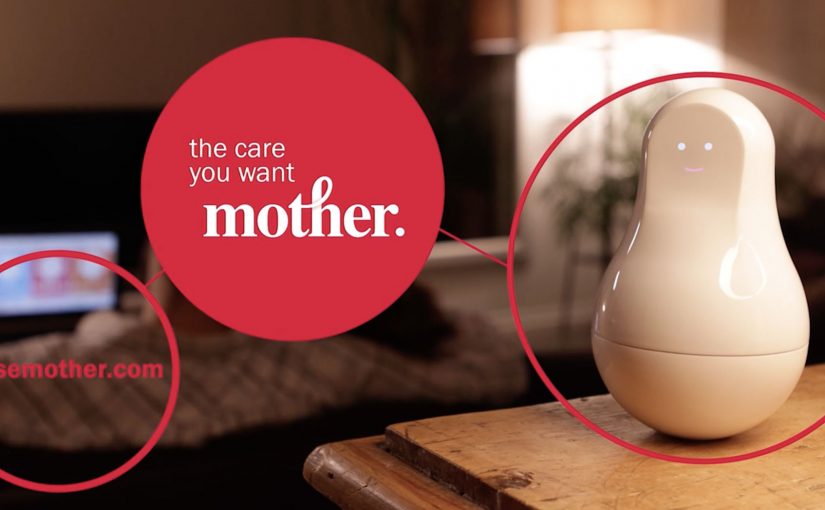
Sen.se: Mother and the Motion Cookies

Sen.se: Mother and the Motion Cookies

Sensors are showing up everywhere, from wrist wearables like Jawbone UP and Fitbit to the first wave of “smart home” kits. The promise is always the same. Data that helps you understand your day, then nudges you when something matters.

Mother and the Motion Cookies, from connected-objects startup Sen.se, is positioned as a more flexible take on that idea. Instead of buying a single-purpose gadget for each habit, you get one “Mother” hub and a set of small sensor tags. The Motion Cookies. You decide what you want to track, attach a Cookie to the relevant object, and set alerts for the moments you care about.

Definition tightening: A Motion Cookie is a small sensor you can stick to an object. The “Mother” device is the home base that receives the signals and turns them into simple dashboards and notifications.

If you strip away the friendly character design, this is a configurable rules engine for everyday life. The sensors stay the same. The meaning changes based on what you attach them to and what you tell the app to watch for.

Watch the demo video for more.

A sensor kit that behaves like a toolkit

The smart move here is that the hardware is deliberately generic. One sensor type can be repurposed across dozens of “jobs”, depending on where you place it. Toothbrush, medication box, door, bag, water bottle. The product is less about owning the perfect device, and more about reassigning the same device as your priorities change.

In consumer IoT, products only survive if setup friction stays low and the data translates into a simple action.

Why the “Mother” framing makes the tech feel usable

Smart home products often fail at the handoff between capability and comprehension. Mother softens that gap by packaging sensing as caregiving. The real question is whether a sensor system can feel understandable enough that people actually try it. That emotional framing reduces the intimidation factor and makes experimentation feel normal.

Extractable takeaway: When your product is technically broad, give users a friendly mental model and a small first win, then let reconfiguration become the habit that unlocks the long tail of use cases.

What connected-product teams should copy

  • Design for reassignment, not perfection. People’s routines change. Your hardware should survive those changes.
  • Make “setup” the product. If a user cannot get to value in minutes, they will not get to value at all.
  • Translate sensing into verbs. “Brush”, “open”, “arrive”, “drink”, “take”. Verbs beat metrics.
  • Alert sparingly. The fastest way to kill trust is to spam people with “insights” they did not ask for.

A few fast answers before you act

What is Mother and the Motion Cookies?

It is a smart home kit with one central hub and multiple small sensor tags. You attach a sensor to an object, choose what you want to track, and get updates or alerts based on that behaviour.

What is the core idea compared to a single-purpose wearable?

Reconfigurability. The same sensors can be reassigned to different objects and routines, so the system adapts to what you want to measure this week, not what the device designer assumed forever.

What problem is it trying to solve?

Turning ambient behaviour into something actionable, without requiring you to buy a new gadget for every habit or household scenario.

Why does the “Mother” framing matter?

It makes a technically broad sensor system feel more understandable and less intimidating. That framing helps users see the product as practical support, not just instrumentation.

What makes this kind of product hard to sustain?

Reliance on companion apps and backend services, plus the challenge of keeping alerts useful rather than noisy. If the system becomes high-maintenance, it stops feeling like help.

Nar Mobile: The Donor Cable

Nar Mobile: The Donor Cable

Azerbaijan is often described as having an unusually high incidence of children born with thalassemia, a hereditary blood disorder found across Mediterranean and nearby regions. The illness can require extensive blood transfusions for babies, and hospitals can struggle with shortages of donated blood.

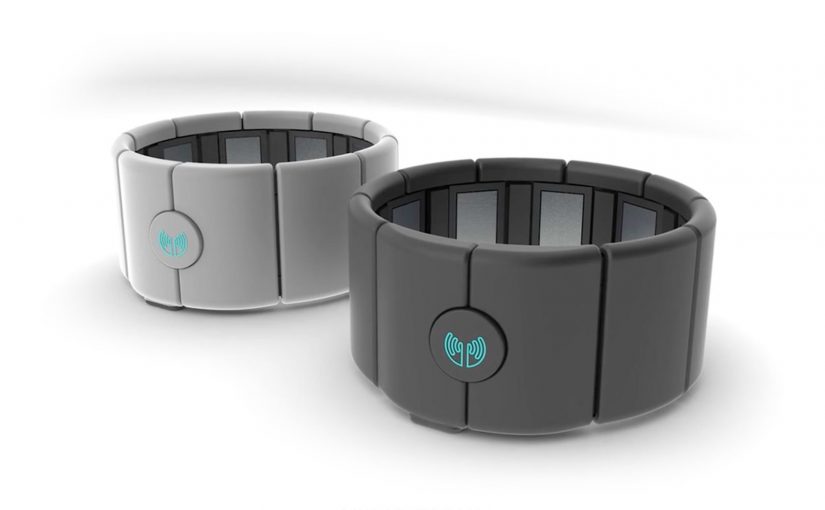
So Y&R Moscow partnered with Azerbaijan cellular network Nar Mobile to re-imagine blood donation for a more digital daily life. Together they created a special wearable bracelet. A donor cable is a wearable charging cable that lets smartphone owners easily donate battery power to another person, and uses that act as a prompt to donate blood.

A wearable that makes donation tangible

The Donor Cable is a charging cable designed as a bracelet. When someone’s phone is dying, you can connect phone to phone and transfer power. The campaign then bridges that familiar “help” moment to a bigger one. Donate blood.

A donor cable is a physical connector that enables one person’s phone battery to recharge another device. The campaign uses that simple transfer as a metaphor for medical donation.

In mobile-first markets, translating “helping” into a familiar phone habit can lower friction for real-world donation behaviour.

Why this lands

This works because it does not start with guilt or abstract altruism. It starts with a small, instantly useful act between two people, then reframes that feeling of helping as the reason to do the harder, higher-impact thing. The bracelet format also keeps the reminder on you without requiring ongoing media.

Extractable takeaway: If you need behaviour change, start with a low-friction action that already feels rewarding, then create a clear bridge and an immediate next step to complete the “real” action while motivation is still warm.

What the numbers are trying to prove

The stronger strategic move here is the bridge from everyday phone help to real blood donation, not the bracelet itself.

The real question is whether the campaign makes the jump from symbolic transfer to actual donation immediate enough to convert intent into action.

Campaign coverage described the donor cables as an instant hit and reported an increase in blood donation of 335%. Treat that percentage as reported performance unless you have a primary measurement source to cite.

What behaviour-change teams should steal

  • Make the metaphor usable. A real action beats a slogan.
  • Put the reminder on the object. Wearable prompts outlast a media flight.
  • Collapse distance to conversion. Pair the story with an easy path to donate.
  • Keep the rule explainable. If it takes a paragraph to understand, it won’t spread.

A few fast answers before you act

What is the Donor Cable?

A wearable charging cable that lets one person transfer battery power to another phone. It is used as a behavioural prompt to encourage blood donation.

Why connect phone charging to blood donation?

The idea uses a clear analogy. A small, immediate “donation” of power makes the bigger act of donating blood feel more approachable, and more top-of-mind.

How does the bracelet change behaviour beyond awareness?

It creates a repeatable micro-action people can perform in public, then links that positive social moment to a concrete next step. Donate blood.

Is the 335% figure a verified metric?

It is presented in campaign coverage as a reported result. If you want it stated as verified, you would need a primary measurement source.

What’s the main risk if you copy this pattern?

If the bridge from the small action to the real action is not immediate, the analogy stays clever but does not convert. The donation step must be easy to find and easy to complete.

Wearable Tech: From Abandonment to Empowerment

Wearable Tech: From Abandonment to Empowerment

Wearable tech has a retention problem

Wearable technology adoption looks impressive at first glance. But usage tells a more complex story.

Research from Endeavour Partners shows that one in ten American adults owns an activity tracker, and half of them no longer use it. Similarly, one-third of American consumers who own smartwatches and other wearables stop using them within six months.

Those numbers raise an uncomfortable question: The real question is whether a wearable increases capability enough to become essential.

Is wearable tech doomed before it has even gone mainstream in the rest of the world?

The problem is not the technology

The issue is not sensors, screens, or connectivity.

The issue is meaning.

Many wearables launch with novelty and metrics, but fail to integrate into daily life. Counting steps or tracking sleep is interesting. It is rarely essential.

When a device does not change what people can do, it gets abandoned.

When wearables truly matter

The story changes completely when wearables move from tracking to empowering.

By empowering, I mean they expand what a person can do in the moment, not just what a dashboard can show later.

In its latest Mobile Minute series, Mashable looks at how wearable technology enables people in incredible ways.

These are not incremental conveniences. They are life-changing capabilities.

Wearables that increase quality of life

Wearable technology begins to earn its place when it solves real human problems:

  • Haptic clothing helps visually impaired people navigate the world through touch-based signals.
  • Wearable interfaces allow people with limited mobility to control wheelchairs using subtle movements.
  • Body-mounted cameras enable candid photography without drawing attention or interrupting moments.

In these scenarios, wearables are not gadgets. They are extensions of human ability.

Why abandonment and empowerment coexist

Wearables fail when they demand attention without giving value. They succeed when they quietly enable action, independence, and dignity. They stick because the device reduces attention and maintenance load while delivering capability at the moment of need.

Extractable takeaway: If a wearable cannot clearly increase what someone can do, it will be abandoned, no matter how impressive the metrics look.

In global consumer health and workplace wellbeing programs, wearable tech sticks when it removes daily friction and turns passive tracking into timely, actionable support.

Design rules for wearables that stick

Wearable tech is not going away. It is maturing.

The future of wearable tech is not about more data. It is about more capability.

The devices that survive will be those that:

  • Fade into the background. Minimize interruptions and attention demand.
  • Respect the body and the moment. Prioritize comfort, context, and dignity.
  • Increase quality of life in tangible ways. Deliver capability a person can feel in daily life.

This is how wearable technology moves from early adoption to lasting relevance.


A few fast answers before you act

Does high abandonment mean wearables are failing?

No. It usually means the use case is novelty or measurement-only, so the device never becomes essential in daily life.

What drives people to abandon wearables?

Friction and weak value. Charging hassle, comfort issues, unclear accuracy, notification fatigue, and metrics that do not change behavior.

What separates successful wearables from forgotten ones?

They enable action, independence, safety, or confidence in a specific moment. They do not just report data after the fact.

Where is the biggest long-term opportunity for wearables?

Assistive and supportive scenarios such as accessibility, chronic condition support, mobility, and safety. The value is empowerment, not tracking.

How do you evaluate whether a wearable belongs in daily life?

Ask what it lets a person do that they could not do before, and whether it works with near-zero attention and low maintenance.

What is one practical design rule for sticky wearables?

Reduce upkeep and interruptions. The best wearable fades into the background and proves its value at the moment of need.