

Peruvian League Against Cancer: Shadow WiFi

You are on a beach, the sun is out, and your phone wants a signal. Then you notice a large blue structure casting a patch of shade. Step into that shade, and you get free WiFi. Step out into the sun, and the WiFi disappears.

Instead of simply warning people about UV rays, the Peruvian League Against Cancer and Happiness Brussels create “Shadow WiFi”. A directional antenna delivers WiFi only to the shadow area of the structure. A sensor tracks the sun’s movement and rotates the antenna, so as the shadow shifts through the day, the WiFi access shifts with it, and people follow.

The mechanism is the message

The mechanic does not just communicate “stay in the shade”. It enforces it gently. The reward is instantly understood. Connectivity. The rule is equally clear. Shade equals access. Sun equals nothing. The result is prevention education delivered through interactivity, not through guilt. This is the right kind of nudge because it rewards the safer choice instead of lecturing people into it.

The real question is whether you can make the protective choice feel more useful than the risky one in the moment.

In public health behavior-change campaigns, trading immediate utility for safer choices is often more effective than warnings alone.

Why it lands

It targets the real friction. On a beach, the problem is not awareness. It is motivation and habit in the moment. Shadow WiFi turns shade into a social and practical hotspot, so safer behavior feels like the default choice rather than a sacrifice.

Extractable takeaway: If you want people to adopt a protective habit, attach it to a reward they already seek in that environment, and make the “safe zone” tangible, not theoretical.

Guerrilla activation moves worth copying

  • Pay people in utility, not slogans. Free WiFi is a real benefit that beats reminders and posters.
  • Make the rule physical. When the benefit is literally bounded by shade, the behavior is self-explaining.
  • Design for movement. The rotating antenna turns a static installation into a living experience that keeps working all day.
  • Teach inside the experience. Use the login or landing step to deliver prevention guidance while intent is high.

A few fast answers before you act

What is Shadow WiFi in one sentence?

A beach WiFi network that only works in the shade, encouraging people to avoid direct sun exposure while learning about skin cancer prevention.

Why does restricting WiFi to shade change behavior?

Because it makes the safer choice immediately rewarding. People move for a benefit they already want, and the health message rides along.

What is the key technical trick?

A directional antenna limits the WiFi coverage to the shadow zone, and a sun-tracking sensor adjusts the antenna as the shadow moves.

How do you translate this idea without using WiFi?

Keep the same pattern. Put a desired utility behind a clear, physical boundary that represents the safer behavior, so the experience teaches the rule without needing explanation.

What can make this fail?

If the WiFi is unreliable or the shaded area is too small, the utility collapses and the activation becomes a novelty object instead of a habit shaper.
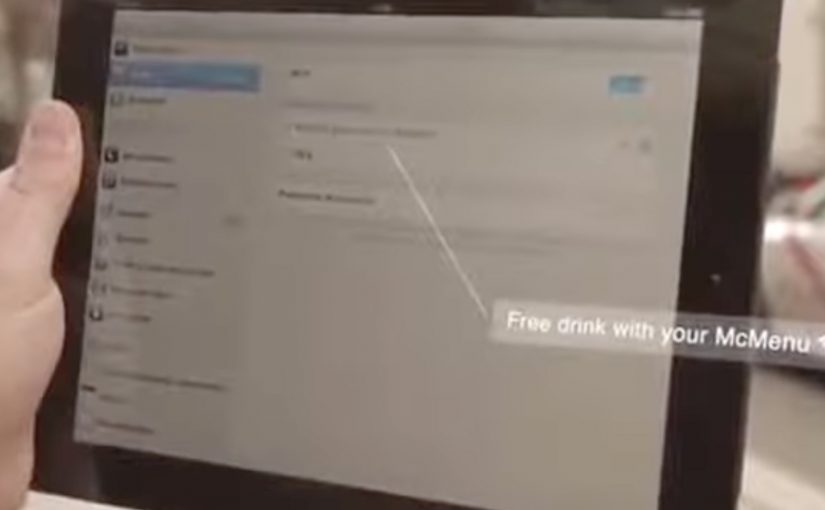
McDonald’s Free WiFi: Turning SSIDs into Ads

In Spain, McDonald’s offers free WiFi to all its customers. Since the WiFi signal reaches quite far, customers in surrounding restaurants also tend to use the McDonald’s network.

So McDonald’s decided to attract new customers via their own WiFi network. They simply changed the signal’s name into a message and embedded a promotion into it.

The simplest media channel you already own

This is a tiny idea with a very clear mechanism. A WiFi network name is a broadcast surface. That name is the SSID, the label devices show in the network list. It shows up exactly when people are deciding where to sit, what to order, or whether to move.

Instead of treating WiFi as utility, McDonald’s treated it as a micro-channel for demand capture.

Why the WiFi name works as advertising

In high-footfall retail settings where people scan for quick utility, the WiFi list becomes a decision interface and the SSID becomes a tiny billboard in that interface.

Extractable takeaway: When people already scan a utility list, naming inside that list can outperform bigger media because it meets intent at the moment of choice.

  • High intent moment. People looking for WiFi are already in “connect me now” mode.
  • Local reach. The signal spills into nearby venues, where potential switchers sit.
  • Zero-click visibility. You see the message before you even connect.
  • Low cost, repeatable. Updating an SSID is simple, fast, and scalable.

Where this crosses from clever to strategic

The real question is whether you treat owned infrastructure as a distribution channel, or just as a cost line.

The strategic move is not the pun. It is the use of owned infrastructure as a distribution channel. When your message sits inside a system people actively scan for, you reduce friction and increase the odds of action.

This is worth doing wherever you run guest WiFi and can keep the message instantly understandable.

It is also a reminder that not all “digital” has to be an app. Sometimes it is just naming.

What to take from this if you run retail or CX

  1. Audit your hidden touchpoints. SSIDs, receipts, kiosks, queue screens, packaging, all are media surfaces.
  2. Message at the decision point. Proximity channels work best when they align with immediate behavior.
  3. Keep the offer instantly understandable. People scan lists quickly. Clarity beats cleverness.
  4. Test and rotate. Like any channel, vary the message to learn what actually moves footfall.

A few fast answers before you act

What did McDonald’s do with its free WiFi in Spain?

It changed the WiFi network name into a message and embedded a promotional offer into the SSID to attract people nearby who could see the network on their devices.

Why does the WiFi signal matter here?

Because it reaches beyond the restaurant itself, meaning people in surrounding venues can still see and use the network, making it a local acquisition channel.

What is an SSID in this context?

It is the WiFi network name that appears in a device’s list of available networks. Changing it changes what people see before connecting.

Is this a “growth hack” or a real marketing tactic?

It is both. It is a lightweight tactic, but it is grounded in a real channel. Owned infrastructure that reaches potential customers at a high-intent moment.

What is the transferable lesson for brands?

Look for owned, ambient digital surfaces where people already scan for utility, then place a clear message there that can drive immediate action.