
Le Trèfle: Emma

Le Trèfle: Emma

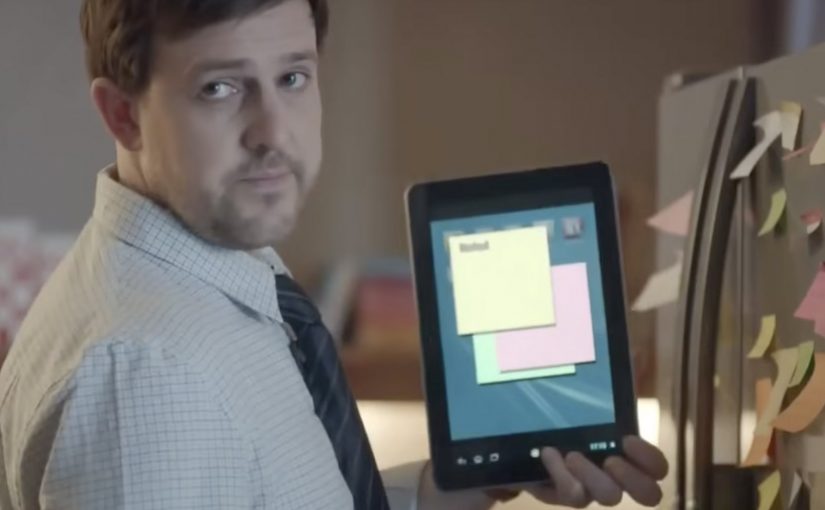
Here is a TV ad from Le Trèfle, a premium toilet paper brand in France. It plays on a very current household dynamic. The person who wants to replace everything with a tablet meets the one thing a screen cannot substitute when you are behind a closed door.

A modern life joke with a very old punchline

The mechanism is classic comedy timing. A husband repeatedly patronises Emma for using “paper” instead of his beloved tablet. Then the film corners him in the one place where being digital-first does not help. Here, digital-first means treating the tablet as the default answer to everyday tasks. The solution arrives under the door, framed like a tech assist, but it is really a reminder that toilet paper remains non-negotiable.

In European FMCG advertising, bathroom and hygiene categories often rely on humour to make low-involvement products feel culturally present rather than purely functional.

Why it lands

The spot works because it does not argue about softness or absorbency. It argues about relevance. It turns a generic category into a shared, domestic truth, and it does it without cruelty. Emma is not a punchline. She is the steady adult in the room, and the brand becomes her quiet win. The real question is whether a low-interest household product can prove its necessity in a culture that keeps mistaking newer for better. This is stronger brand work than a feature-led hygiene ad because it makes that necessity visible in one clean scene.

Extractable takeaway: If your product is a “must-have” with little perceived differentiation, stop over-explaining features. Build a single scene that proves the product’s place in modern life, and let the audience supply the conclusion.

What the craft communicates

The execution stays restrained. One recurring behavior. One reversal. One prop that everyone understands. That reversal works because viewers see the product’s necessity before the brand makes a claim. That discipline is the point. When the joke is this clean, the brand does not need to shout. The ending locks the memory, and the category gets a fresh reason to be talked about.

What to borrow from Emma

  • Use a repeatable behavior, then reverse it. Repetition builds expectation. Reversal creates the laugh and the brand point.
  • Let the product appear as a solution, not a claim. When viewers see the need, they accept the brand’s role instantly.
  • Write for one scene people retell. If the story can be summarised in one sentence, it travels further.
  • Keep the tone kind. The best category humour makes viewers feel seen, not judged.

A few fast answers before you act

What is Le Trèfle’s “Emma” ad about?

A tablet-obsessed husband mocks Emma’s habit of using paper, until he needs toilet paper and the “paper is obsolete” argument collapses instantly.

What is the main message?

Some products are not optional, even in a digital-first household. Toilet paper remains essential.

Why choose humour for toilet paper?

Because functional claims converge. Humour creates distinctiveness and makes the brand memorable without relying on product lectures.

What is the core creative structure?

Repetition plus reversal. A repeated behavior is set up, then the same behavior is flipped at the most inconvenient moment.

How can another brand apply this pattern?

Find a modern-life tension your audience recognises, then write one scene where your product resolves it cleanly and visibly.

Nike Golf: No Cup Is Safe

Nike Golf: No Cup Is Safe

Nike Golf has released a TV spot in which Tiger Woods and Rory McIlroy turn a practice session into a small competition on the golf course. The joke is simple. When two world-class players share a range, even the targets feel under threat.

A practice range that plays like a duel

The mechanism is a clean escalation. Start with casual shots. Introduce a visible target. Add one-upmanship. Then let the athletes do what they do best. Make the impossible look repeatable. The “no cup” line is the punchline because it turns accuracy into a kind of harmless menace. That works because a simple duel structure makes elite skill legible in seconds.

In performance-driven sports categories, the fastest brand wins are often built on demonstrations that feel like entertainment rather than instruction.

Why it lands

The spot works because it respects the viewer’s intelligence. No spec sheet. No product sermon. Just elite talent, a familiar rivalry energy, and a challenge you can understand in one second. It sells Nike Golf as the gear behind precision and confidence, without ever having to say those words.

Extractable takeaway: If your product promise is “performance”, design a proof that reads instantly. Use a simple rule, a clear target, and a visible outcome that makes the capability undeniable.

What Nike is really doing here

This is also roster storytelling, where the pairing itself signals what kind of competitive culture the brand owns. The real question is whether Nike can turn a practice-range stunt into a broader signal of competitive credibility.

Nike gets this right because pairing Woods with McIlroy frames the brand as the home of golf’s competitive edge across generations. The tone stays light, but the subtext is serious: these are the players you associate with winning, and they are wearing this swoosh while they do it.

How Nike turns proof into a brand asset

  • Turn a feature into a game. Accuracy becomes a challenge, not a claim.
  • Let the product stay “off camera”. When the proof is strong, the brand earns belief without showing close-ups.
  • Build with escalation. Start normal, then raise the stakes in small steps so the payoff feels inevitable.
  • Make the line a summary, not a slogan. “No Cup Is Safe” works because the viewer already saw why.

A few fast answers before you act

What is Nike Golf’s “No Cup Is Safe” spot?

It is a Nike Golf commercial built around Tiger Woods and Rory McIlroy turning a practice session into a target competition where cups become the bullseye.

What is the main message?

Elite precision is entertaining, and Nike Golf is positioned as the brand behind that performance mindset.

Why use two athletes instead of one hero?

Competition creates story. Rivalry gives the viewer a reason to watch longer, and it makes the proof feel earned rather than staged.

What does the line “No Cup Is Safe” communicate?

That the shots are so accurate the targets are in danger. It is a humorous shorthand for confidence and control.

How can other brands apply this pattern?

Find a single capability you can prove visually, wrap it in a simple game mechanic, and let the outcome do the persuasion work.

Radio Geister: When the Crash Site Talks Back

Radio Geister: When the Crash Site Talks Back

When you drive past a crash site, the warning follows you

One of the most chilling awareness ideas in recent memory does not start on a screen. It starts at the roadside.

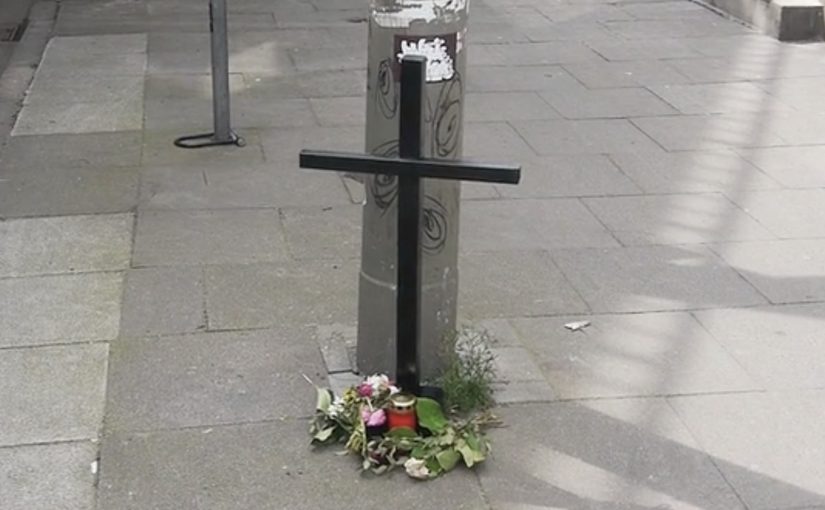
For “Radio Geister” (Radio Ghosts), small radio stations in the shape of wooden death crosses are placed around Hamburg at sites where alcohol-related car accidents had happened. As young drivers approach, these mini transmitters interrupt the signal of popular radio stations. In place of music, the driver hears a radio spot voiced from the perspective of someone who died in a drunk-driving crash.

The mechanic: audio interruption tied to the exact location

The project combines two moves. First, it uses physical markers that already mean something in the real world. The roadside cross. Second, it turns radio into a proximity medium by briefly overriding a station’s signal at the moment a driver is physically passing the place where something irreversible happened.

The radio spots themselves are written as first-person accounts from fatal accident victims, which makes the interruption feel less like an ad and more like a presence.

In European road-safety communication, the fastest way to break through denial is to connect a real place, a real habit, and a real consequence into one unavoidable moment.

Why it lands

This is a stronger road-safety intervention than a conventional awareness spot because it weaponizes context. The message does not arrive while someone is “in awareness mode.” It arrives while they are driving, listening to the stations they actually use, in a location that proves the stakes. The interruption is also proportionate. It is brief, but it is intrusive enough to create a jolt, which is exactly what complacency needs.

Extractable takeaway: If you need to change risky behavior, deliver the warning inside the behavior, not around it. Tie it to a specific place and a familiar channel, and the mind cannot file it away as generic advice.

What the campaign is trying to change

The framing used in campaign write-ups is stark. “One out of eleven deaths caused by car accidents has to do with drinking and driving.” Whether or not you accept the exact ratio, the creative intent is clear. Replace abstract statistics with a felt experience that young drivers will remember the next time they consider driving after drinking.

The real question is not whether young drivers know the rule, but whether the warning can reach them inside the exact driving moment when denial still feels safer than restraint.

What road-safety campaigns can steal from this

  • Use the environment as proof. A crash site is a more credible media placement than any billboard.
  • Interrupt the comfort loop. If the risky habit is paired with entertainment, break the entertainment briefly.
  • Write from a human perspective. First-person voice makes consequences feel immediate, not theoretical.
  • Keep it simple, keep it sharp. One moment of shock can beat a long lecture.

A few fast answers before you act

What is “Radio Geister” (Radio Ghosts)?

It is a road-safety awareness project that places cross-shaped mini transmitters at crash sites to interrupt popular radio stations with warnings voiced from the perspective of drunk-driving victims.

What is the core mechanic?

Location-triggered audio interruption. As drivers pass the crash site, their radio station is briefly overridden by the campaign message.

Why use radio for this instead of posters or video?

Because radio is already in the car, already on, and already trusted as a companion. The message arrives in the exact medium the driver is using in the moment that matters.

Why is the crash-site placement so important?

The location turns the warning into evidence. It signals that this happened here, to someone real, not in a hypothetical scenario.

What is the transferable lesson for behavior-change campaigns?

Do not ask people to imagine consequences later. Insert consequences into the live context where the decision is being made.